
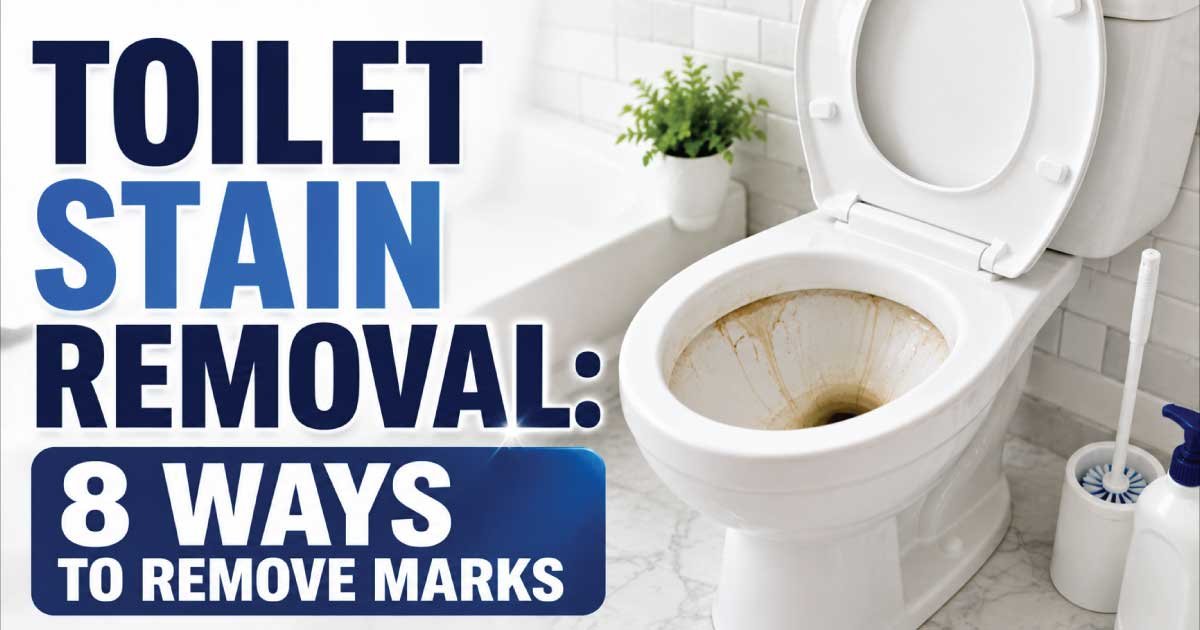
A stained toilet can make an otherwise clean bathroom look unpleasant. Over time, toilets may develop marks caused by hard water, mineral deposits, rust, limescale, bacteria buildup, and regular use. While many commercial cleaners contain strong chemicals, there are safer and more affordable ways to remove toilet stains using simple household ingredients.
Removing toilet marks does not always require harsh scrubbing or expensive products. The right cleaning method depends on the type of stain and how long it has been present. Regular maintenance, proper cleaning tools, and natural cleaning solutions can help keep your toilet fresh and stain-free.
The following eight methods can help remove different types of toilet stains and restore the clean appearance of your bathroom fixture.
Why Toilet Stains Develop
Toilet stains usually appear because minerals and waste materials build up on the porcelain surface. Common causes include:
- Hard water deposits
- Rust from old pipes or water systems
- Limescale buildup
- Infrequent cleaning
- Bacteria growth
- Standing water inside the bowl
- Use of unsuitable cleaning products
Understanding the cause of the stain makes it easier to choose the most effective removal method.
8 Effective Ways to Remove Toilet Marks
1. Use Baking Soda and Vinegar for General Stains
Baking soda and vinegar are popular natural cleaning ingredients that can help remove light stains, odors, and buildup from toilet bowls.
To use this method:
- Pour one cup of baking soda into the toilet bowl.
- Add one cup of white vinegar.
- Allow the mixture to fizz for 10–15 minutes.
- Scrub the bowl with a toilet brush.
- Flush with clean water.
This method works best for fresh stains and regular toilet maintenance.
2. Remove Hard Water Stains With Vinegar
Hard water stains are caused by mineral deposits that collect around the waterline and inside the bowl. White vinegar can help dissolve these deposits because of its natural acidity.
Steps:
- Lower the water level in the toilet bowl.
- Pour vinegar directly onto stained areas.
- Let it sit for several hours or overnight.
- Scrub gently with a toilet brush.
- Flush thoroughly.
For stubborn mineral marks, repeated treatments may be needed.
3. Clean Rust Marks With Lemon Juice and Salt
Rust stains often appear as orange or brown marks inside the toilet bowl. Lemon juice and salt can help loosen these stains naturally.
Method:
- Apply lemon juice directly to the rust area.
- Sprinkle a small amount of salt over the surface.
- Leave it for 15–30 minutes.
- Scrub gently.
- Rinse with water.
This method is useful for mild rust stains, but older stains may require additional treatments.
4. Try Hydrogen Peroxide for Organic Stains
Hydrogen peroxide can help remove certain organic stains and support bathroom hygiene. It is commonly used as a mild disinfecting cleaner.
How to use:
- Apply hydrogen peroxide around stained areas.
- Leave it for several minutes.
- Scrub with a toilet brush.
- Flush the toilet.
Always test cleaning solutions on a small area first and avoid mixing hydrogen peroxide with other cleaners.
5. Use a Pumice Stone for Tough Mineral Marks
A pumice stone can help remove stubborn mineral deposits from porcelain toilets when used correctly.
Follow these steps:
- Soak the pumice stone in water before use.
- Keep both the stone and toilet surface wet.
- Rub gently over stained areas.
- Avoid applying too much pressure.
- Flush after cleaning.
A wet pumice stone is less likely to scratch the porcelain surface. Use this method carefully and only on suitable toilet materials.
6. Apply Dish Soap for Grease and Surface Buildup
Although dish soap is mainly used for kitchen cleaning, it can help loosen certain types of toilet buildup.
Steps:
- Add a few drops of liquid dish soap to the bowl.
- Pour warm water into the toilet.
- Allow it to sit for 15–20 minutes.
- Scrub and flush.
Dish soap can help break down residue and make regular cleaning easier.
7. Use a Toilet Cleaning Paste for Deep Stains
A homemade cleaning paste can provide extra scrubbing power for difficult marks.
A simple mixture:
| Ingredient | Amount |
|---|---|
| Baking soda | ½ cup |
| Water | 2 tablespoons |
| Vinegar | 1 tablespoon |
Apply the paste to stained areas and leave it for several minutes before scrubbing. This method can help with stubborn discoloration caused by mineral buildup.
8. Prevent Future Toilet Stains With Regular Care
Prevention is the best way to reduce difficult stains. A consistent cleaning routine keeps deposits from becoming permanent.
Helpful habits include:
- Cleaning the toilet bowl weekly
- Flushing after using cleaning solutions
- Keeping the bathroom well ventilated
- Removing standing water when possible
- Addressing hard water buildup early
- Using a toilet brush regularly
Small cleaning efforts can prevent major stain problems later.
Different Types of Toilet Stains and Best Solutions
| Type of Stain | Recommended Method |
| Hard water marks | White vinegar treatment |
| Rust stains | Lemon juice and salt |
| Light discoloration | Baking soda and vinegar |
| Organic stains | Hydrogen peroxide |
| Heavy mineral deposits | Pumice stone |
| General buildup | Dish soap and scrubbing |
Choosing the correct method saves time and prevents unnecessary damage to the toilet surface.
Toilet Cleaning Mistakes to Avoid
Some cleaning habits can make stains worse or damage the toilet.
Avoid these mistakes:
- Using metal scrubbers that scratch porcelain
- Mixing different cleaning chemicals
- Leaving acidic cleaners on surfaces too long
- Scrubbing too aggressively
- Ignoring stains until they become severe
Gentle and consistent cleaning is usually more effective than harsh treatment.
How Often Should You Remove Toilet Stains?
The frequency of cleaning depends on water quality and household usage. Homes with hard water may need more frequent attention.
A general schedule:
| Cleaning Task | Suggested Frequency |
| Quick bowl cleaning | Several times per week |
| Deep stain removal | Monthly or as needed |
| Toilet brush cleaning | Weekly |
| Check for mineral buildup | Regularly |
Early stain removal prevents marks from becoming harder to remove.
Conclusion
Toilet stains are common, but they do not require aggressive chemical cleaners to remove. Simple methods using ingredients such as baking soda, vinegar, lemon juice, hydrogen peroxide, and gentle scrubbing tools can effectively tackle many types of marks.
The key to a clean toilet is identifying the type of stain, choosing the right cleaning approach, and maintaining a regular routine. With proper care, you can keep your toilet fresh, hygienic, and free from unwanted marks using safer cleaning methods.