
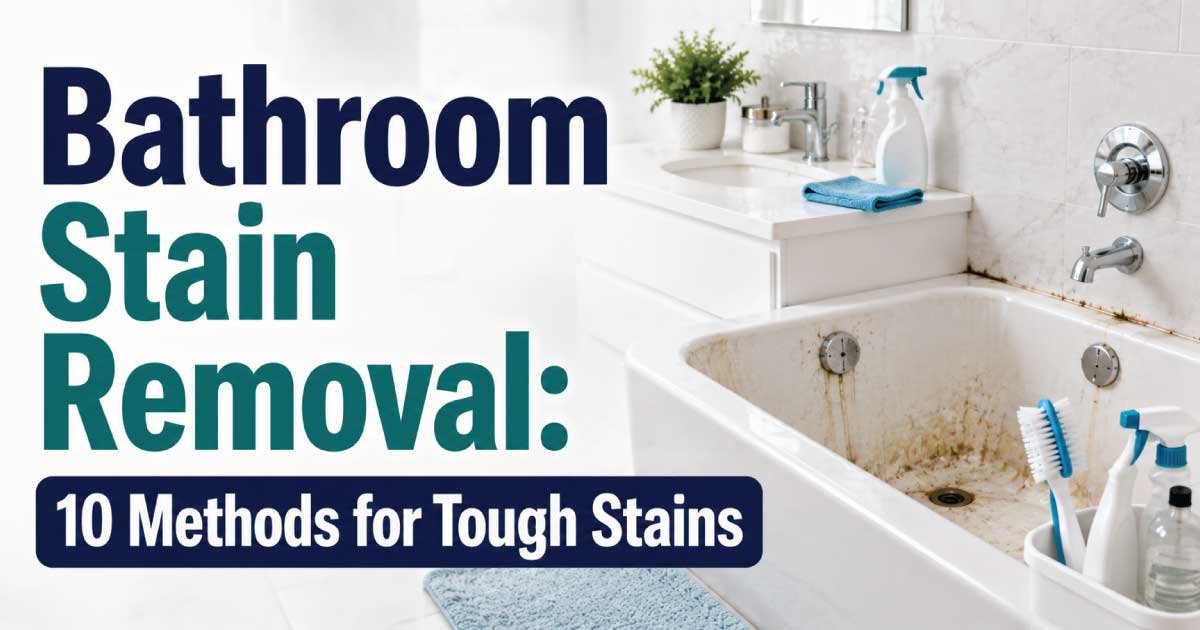
A clean bathroom is essential for maintaining a healthy and comfortable home, but stubborn stains can quickly make even the tidiest space look neglected. Hard water deposits, soap scum, mold, mildew, rust, and mineral buildup are common culprits that can leave unsightly marks on sinks, toilets, showers, bathtubs, and tiles. While regular cleaning helps prevent these issues, some stains require specialized methods to remove them effectively.
The good news is that you don’t always need expensive commercial cleaners. Many tough bathroom stains can be eliminated using common household ingredients such as vinegar, baking soda, lemon juice, and hydrogen peroxide. For more persistent stains, specially formulated bathroom cleaning products can restore surfaces without causing damage.
In this guide, you’ll discover 10 proven methods for bathroom stain removal, along with practical tips to keep your bathroom spotless and prevent future staining.
Why Bathroom Stains Are So Difficult to Remove
Bathroom stains often develop because of constant exposure to moisture, minerals, soap residue, and bacteria. The most common causes include:
- Hard water deposits that leave white or chalky residue.
- Soap scum from body wash and shampoo.
- Rust stains caused by metal fixtures or iron-rich water.
- Mold and mildew due to poor ventilation and humidity.
- Mineral buildup around faucets and showerheads.
- Toilet bowl stains from standing water and mineral deposits.
Identifying the type of stain helps you choose the most effective cleaning method.
1. Remove Hard Water Stains with White Vinegar
Hard water stains are one of the most common bathroom cleaning challenges. These stains appear as white, cloudy, or chalky deposits on faucets, shower doors, sinks, and tiles.
How to Use White Vinegar
- Fill a spray bottle with undiluted white vinegar.
- Spray the stained area generously.
- Let it sit for 20–30 minutes.
- Scrub with a soft brush or sponge.
- Rinse thoroughly with warm water.
Best For
- Glass shower doors
- Chrome faucets
- Ceramic sinks
- Bathroom tiles
Benefits
- Natural and affordable
- Dissolves mineral deposits effectively
- Eco-friendly and non-toxic
Tip: Avoid using vinegar on natural stone surfaces like marble or granite, as its acidity can damage the finish.
2. Baking Soda Paste for Soap Scum
Soap scum forms when soap combines with minerals in hard water, creating a stubborn film on tubs, sinks, and shower walls.
How to Make the Paste
Mix:
| Ingredient | Amount |
|---|---|
| Baking soda | ½ cup |
| Water | Enough to form a thick paste |
Cleaning Steps
- Apply the paste directly onto the stain.
- Let it sit for 15 minutes.
- Scrub gently using a non-abrasive sponge.
- Rinse with warm water.
Why It Works
Baking soda acts as a mild abrasive that removes grime without scratching most bathroom surfaces.
3. Hydrogen Peroxide for Mold and Mildew Stains
Dark stains around grout lines, shower curtains, and tile corners often indicate mold or mildew growth.
Steps
- Pour 3% hydrogen peroxide into a spray bottle.
- Spray directly onto affected areas.
- Leave for 15–20 minutes.
- Scrub with an old toothbrush.
- Rinse and dry completely.
Ideal Surfaces
- Tile grout
- Shower walls
- Silicone caulking
- Bathroom ceilings
Advantages
- Kills mold spores
- Brightens stained grout
- Helps disinfect surfaces
4. Lemon Juice for Rust Stains
Rust stains typically appear around metal fixtures, drains, and toilet bowls.
The natural acidity of lemon juice helps dissolve rust without harsh chemicals.
Method
- Squeeze fresh lemon juice over the stain.
- Sprinkle salt on top.
- Leave for 30 minutes.
- Scrub gently.
- Rinse thoroughly.
Benefits
- Pleasant natural fragrance
- Safe for many bathroom surfaces
- Effective on light rust stains
5. Toilet Bowl Cleaner for Deep Mineral Stains
Toilet bowls often develop stubborn brown or yellow stains due to mineral deposits and standing water.
Cleaning Process
- Apply a toilet bowl cleaner under the rim.
- Allow it to coat the bowl for 20–30 minutes.
- Scrub thoroughly using a toilet brush.
- Flush to rinse.
Extra Tip
For extremely stubborn stains:
- Sprinkle baking soda.
- Add white vinegar.
- Allow the fizzing reaction to loosen buildup before scrubbing.
6. Magic Eraser for Scuff Marks and Surface Stains
A melamine foam sponge, commonly called a Magic Eraser, is highly effective for removing marks without using harsh chemicals.
Works Well On
- Bathtubs
- Bathroom counters
- Sink edges
- Painted walls
- Light scuff marks
How to Use
- Wet the sponge slightly.
- Gently rub the stained area.
- Wipe clean with a damp cloth.
Important Note
Always test in an inconspicuous area first, as excessive scrubbing may dull glossy finishes.
7. Steam Cleaning for Tile and Grout
Steam cleaners use high-temperature steam to loosen dirt, bacteria, mold, and grime without chemicals.
Advantages
- Sanitizes naturally
- Removes deep grime
- Reaches tight grout lines
- Reduces chemical use
Best Applications
- Floor tiles
- Shower walls
- Grout joints
- Bathroom corners
Steam cleaning is especially effective for households with children or pets because it minimizes chemical exposure.
8. Commercial Calcium, Lime, and Rust Removers
Some stains simply require stronger cleaning products, particularly severe hard water buildup.
These Products Help Remove
- Calcium deposits
- Lime scale
- Rust stains
- Heavy mineral buildup
Usage Tips
- Always wear gloves.
- Follow manufacturer instructions carefully.
- Ensure proper ventilation.
- Never mix different cleaning chemicals.
When to Use
Commercial removers are ideal when natural remedies fail to produce satisfactory results.
9. Bleach Solution for White Surfaces
Bleach is highly effective for whitening surfaces affected by mildew, mold, or discoloration.
Prepare a Cleaning Solution
| Ingredient | Amount |
|---|---|
| Bleach | ¼ cup |
| Water | 1 gallon |
Instructions
- Apply the solution using a sponge.
- Leave for 10 minutes.
- Scrub lightly.
- Rinse thoroughly with clean water.
Safety Tips
- Wear gloves.
- Open windows for ventilation.
- Never mix bleach with ammonia or vinegar.
10. Prevent Future Stains with Regular Maintenance
Preventing stains is easier than removing them. Consistent cleaning routines significantly reduce buildup.
Simple Maintenance Checklist
- Wipe down shower walls after every use.
- Dry faucets to prevent water spots.
- Use an exhaust fan to reduce humidity.
- Clean grout weekly.
- Wash shower curtains monthly.
- Deep clean the bathroom every two weeks.
- Repair leaking faucets promptly.
- Replace moldy caulk when needed.
A few minutes of maintenance each week can save hours of deep cleaning later.
Comparison of Bathroom Stain Removal Methods
| Method | Best For | Natural | Difficulty | Effectiveness |
|---|---|---|---|---|
| White Vinegar | Hard water stains | ✅ | Easy | High |
| Baking Soda Paste | Soap scum | ✅ | Easy | High |
| Hydrogen Peroxide | Mold and mildew | ✅ | Easy | High |
| Lemon Juice | Rust stains | ✅ | Easy | Moderate |
| Toilet Bowl Cleaner | Mineral deposits | ❌ | Easy | Very High |
| Magic Eraser | Scuff marks | ❌ | Easy | High |
| Steam Cleaner | Grout and tiles | ✅ | Moderate | Very High |
| CLR-Type Cleaner | Calcium and lime | ❌ | Moderate | Very High |
| Bleach Solution | Whitening surfaces | ❌ | Moderate | High |
| Preventive Maintenance | All stain types | ✅ | Easy | Excellent |
Common Mistakes to Avoid
When removing bathroom stains, avoid these common errors:
- Using abrasive scrubbers on delicate surfaces, which can cause scratches.
- Mixing cleaning chemicals, especially bleach with ammonia or vinegar, as this can produce dangerous fumes.
- Leaving cleaners on surfaces too long, potentially damaging finishes.
- Ignoring ventilation, which encourages mold and mildew growth.
- Skipping regular cleaning, allowing stains to become more difficult to remove over time.
Following product instructions and testing new cleaners on a small, hidden area first can help protect your bathroom surfaces.
Tips for Keeping Your Bathroom Stain-Free
Maintaining a clean bathroom doesn’t have to be time-consuming. Incorporate these habits into your routine:
- Wipe wet surfaces after showers.
- Keep the room well-ventilated.
- Clean mirrors and glass weekly.
- Remove standing water around faucets.
- Wash bath mats regularly.
- Clean drains to prevent buildup.
- Inspect grout and caulk for signs of mold.
- Schedule a monthly deep-cleaning session.
These simple practices reduce moisture and residue, minimizing the conditions that allow stains to develop.
Conclusion
Bathroom stain removal becomes much easier when you use the right cleaning method for each type of stain. Natural solutions like white vinegar, baking soda, hydrogen peroxide, and lemon juice are excellent for tackling many everyday stains while remaining affordable and environmentally friendly. For more stubborn mineral deposits, rust, or heavy discoloration, commercial cleaners and steam cleaning offer powerful results.
Most importantly, consistent maintenance is the key to preventing tough stains from forming in the first place. By wiping down surfaces, improving ventilation, and following a regular cleaning schedule, you can keep your bathroom looking fresh, hygienic, and inviting all year round. Whether you’re dealing with hard water stains, soap scum, mold, or rust, these ten proven methods will help restore your bathroom to its best condition with minimal effort.