
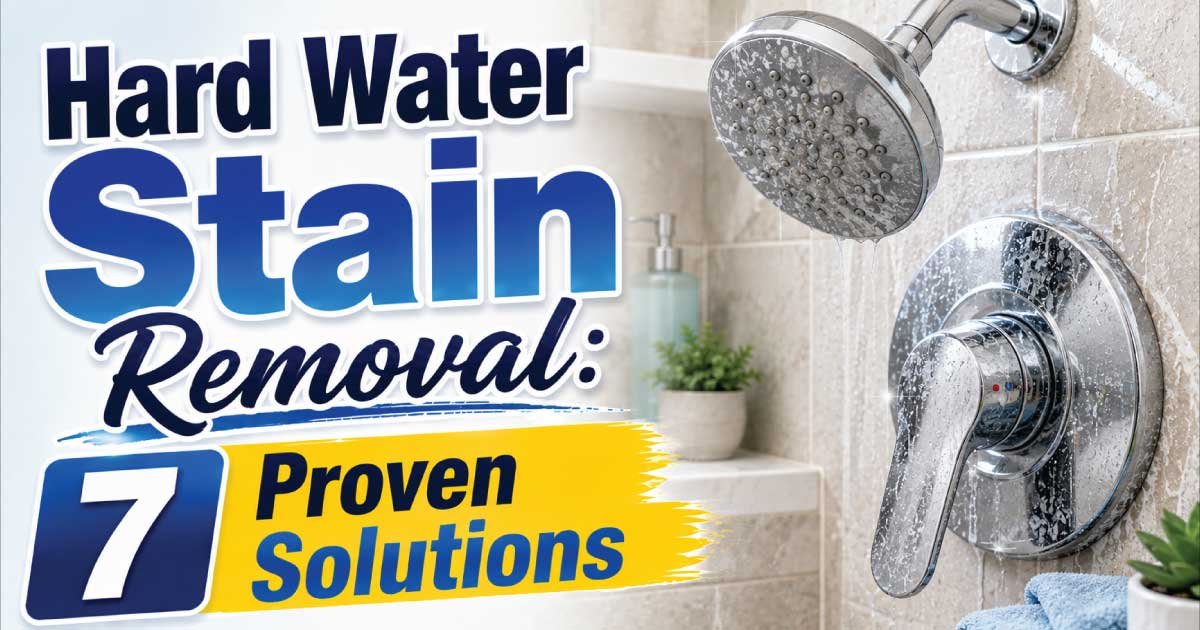
Hard water stains are a common household problem, especially in bathrooms and kitchens. These stubborn white, chalky, or cloudydeposits form when water containing high levels of calcium and magnesium evaporates, leaving mineral residue behind. Over time, hard water stains can build up on faucets, shower doors, sinks, toilets, tiles, and glass surfaces, making them look dull and difficult to clean.
The good news is that hard water stain removal doesn’t have to be a frustrating task. With the right cleaning methods and consistent maintenance, you can remove mineral deposits, restore shine, and prevent future buildup. In this guide, you’ll learn 7 proven solutions for tackling hard water stains safely and effectively.
Why Hard Water Stains Form
Hard water contains dissolved minerals, primarily calcium and magnesium. When water dries on surfaces, these minerals remain behind, creating stubborn stains that become harder to remove over time.
Common Areas Affected by Hard Water Stains
- Shower doors
- Bathroom tiles
- Toilet bowls
- Bathroom and kitchen sinks
- Faucets and fixtures
- Bathtubs
- Glass surfaces
- Shower heads
Regular cleaning helps prevent these mineral deposits from becoming permanent.
Solution 1: Remove Stains with White Vinegar
White vinegar is one of the most effective natural cleaners for dissolving hard water deposits because of its mild acidity.
How to Use White Vinegar
- Mix equal parts white vinegar and warm water in a spray bottle.
- Spray the solution directly onto the stained surface.
- Let it sit for 10–15 minutes.
- Wipe with a microfiber cloth or soft sponge.
- Rinse thoroughly with clean water.
- Dry the surface to prevent new water spots.
This method works well on glass, ceramic, porcelain, and many chrome fixtures.
Note: Avoid using vinegar on natural stone surfaces such as marble, limestone, or travertine, as it can damage the finish.
Solution 2: Make a Baking Soda Paste
Baking soda is a gentle abrasive that helps lift mineral deposits without scratching most surfaces.
DIY Cleaning Paste
| Ingredient | Amount |
|---|---|
| Baking soda | ½ cup |
| Water | 2–3 tablespoons |
Mix until a thick paste forms.
Steps
- Apply the paste to stained areas.
- Leave it for 15–20 minutes.
- Scrub gently using a soft brush or sponge.
- Rinse thoroughly with warm water.
- Dry with a microfiber cloth.
This method is ideal for sinks, tubs, and ceramic tiles.
Solution 3: Use Lemon Juice for Light Stains
Lemon juice contains natural citric acid that helps break down light mineral deposits while leaving a fresh scent.
How to Apply Lemon Juice
- Cut a lemon in half.
- Rub it directly over the stained surface.
- Allow the juice to sit for 5–10 minutes.
- Wipe clean with a damp cloth.
- Rinse and dry thoroughly.
Lemon works best for light stains on chrome fixtures, glass, and ceramic surfaces.
Important: Like vinegar, lemon juice should not be used on natural stone.
Solution 4: Clean with a Commercial Hard Water Stain Remover
For heavy mineral buildup, a commercial descaling product may provide faster results.
Best Uses
- Thick calcium deposits
- Glass shower doors
- Toilet bowls
- Shower heads
- Bathroom fixtures
- Ceramic tiles
Safety Tips
- Read and follow the manufacturer’s instructions.
- Wear gloves if recommended.
- Keep the area well ventilated.
- Never mix different cleaning chemicals.
Commercial cleaners are particularly useful in homes with very hard water.
Solution 5: Soak Removable Fixtures
Items like shower heads, faucet aerators, and sink strainers can often be cleaned more effectively by soaking them.
How to Soak Fixtures
- Remove the fixture if possible.
- Place it in a bowl of white vinegar.
- Soak for 1–2 hours, or longer for heavy buildup.
- Scrub gently with a soft brush.
- Rinse thoroughly with clean water.
- Reinstall the fixture.
Soaking loosens stubborn mineral deposits that are difficult to remove with surface cleaning alone.
Solution 6: Scrub with the Right Cleaning Tools
Using proper cleaning tools helps remove stains without damaging surfaces.
Recommended Tools
- Microfiber cloth
- Soft sponge
- Nylon scrub brush
- Old toothbrush for tight spaces
- Non-scratch scrubbing pad
Avoid using steel wool, wire brushes, or abrasive scrubbers, as they can scratch glass, chrome, and other delicate finishes.
Solution 7: Prevent Future Hard Water Stains
Preventing mineral buildup is easier than removing thick deposits.
Simple Prevention Tips
- Wipe wet surfaces dry after use.
- Use a squeegee on shower doors after every shower.
- Clean bathroom fixtures weekly.
- Repair dripping faucets promptly.
- Install a water softener if your home has very hard water.
- Dry sinks and countertops after cleaning.
Regular maintenance keeps hard water stains from becoming difficult to remove.
Common Hard Water Stain Removal Mistakes to Avoid
Avoid these common mistakes to protect your bathroom and kitchen surfaces.
Mistakes to Watch For
- Using steel wool on glass or chrome fixtures.
- Leaving acidic cleaners on surfaces for too long.
- Using vinegar or lemon on natural stone.
- Skipping the rinse step, leaving behind cleaning residue.
- Mixing bleach with acidic cleaners, which can create dangerous fumes.
- Waiting months before cleaning, allowing mineral deposits to harden.
Gentle, regular cleaning delivers the best long-term results.
Natural vs. Commercial Hard Water Stain Removers
Both natural and commercial products can be effective depending on the severity of the stains.
| Feature | Natural Cleaners | Commercial Cleaners |
| Cost | Low | Moderate |
| Eco-friendly | Yes | Varies by product |
| Best for | Routine cleaning | Heavy mineral deposits |
| Odor | Mild | May be stronger |
| Ease of use | Simple DIY | Ready to use |
Natural solutions such as vinegar and baking soda work well for routine maintenance, while commercial products are often better suited for stubborn or long-standing stains.
Recommended Hard Water Cleaning Schedule
A regular cleaning routine helps prevent mineral deposits from building up.
| Cleaning Task | Frequency |
| Wipe faucets and sinks | Daily |
| Dry shower doors | After each shower |
| Clean bathroom fixtures | Weekly |
| Descale shower head | Every 2–3 months |
| Deep clean bathroom | Every 2–3 months |
Following this schedule reduces cleaning time and keeps surfaces looking spotless.
Tips for Preventing Hard Water Stains
Small daily habits can make a significant difference.
Helpful Tips
- Dry surfaces immediately after use.
- Use microfiber cloths for streak-free cleaning.
- Ventilate bathrooms to reduce moisture.
- Inspect fixtures regularly for early mineral buildup.
- Clean spills and splashes promptly.
- Maintain your water softener, if installed, according to the manufacturer’s instructions.
Consistent care is the easiest way to keep hard water stains under control.
Frequently Asked Questions
What causes hard water stains?
Hard water stains are caused by calcium and magnesium minerals left behind when water evaporates. Over time, these minerals build up on surfaces, creating white or cloudy deposits.
Can vinegar remove hard water stains?
Yes. White vinegar is highly effective for removing many hard water stains on glass, ceramic, porcelain, and chrome surfaces. However, it should not be used on natural stone because its acidity can damage the finish.
How often should I remove hard water stains?
For most homes, weekly cleaning is enough to prevent noticeable buildup. In areas with very hard water, wiping surfaces dry after each use and performing more frequent cleaning can help keep stains under control.
Conclusion
Effective hard water stain removal doesn’t require expensive tools or complicated techniques. By using these 7 proven solutions, including white vinegar, baking soda, lemon juice, commercial descalers, and regular maintenance, you can safely remove mineral deposits and restore the shine to your bathroom and kitchen surfaces.
The key to preventing stubborn hard water stains is consistency. Simple habits like drying wet surfaces, cleaning fixtures regularly, and addressing mineral buildup early will save time, protect your fixtures, and keep your home looking fresh and well maintained.