
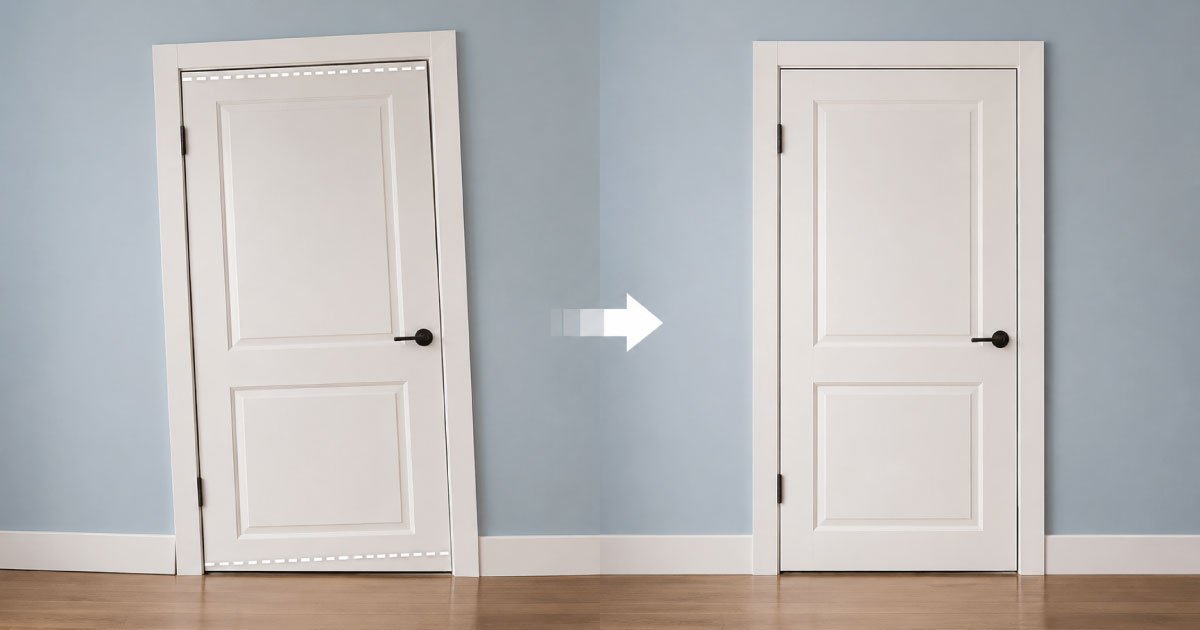
A misaligned door is one of the most common household problems. You may notice it sticking, rubbing against the frame, not closing properly, or even swinging open by itself. While this can be frustrating, the good news is that most door alignment issues can be fixed without calling a professional. With a few basic tools and some patience, you can restore your door to smooth, quiet operation.
This guide explains everything you need to know about diagnosing and fixing door alignment problems in wooden and interior doors.
Understanding Door Misalignment
Door misalignment occurs when a door no longer fits or moves within its frame as intended. Understanding this concept helps you diagnose issues correctly and apply the right fix instead of guessing, which can save time and prevent further damage.
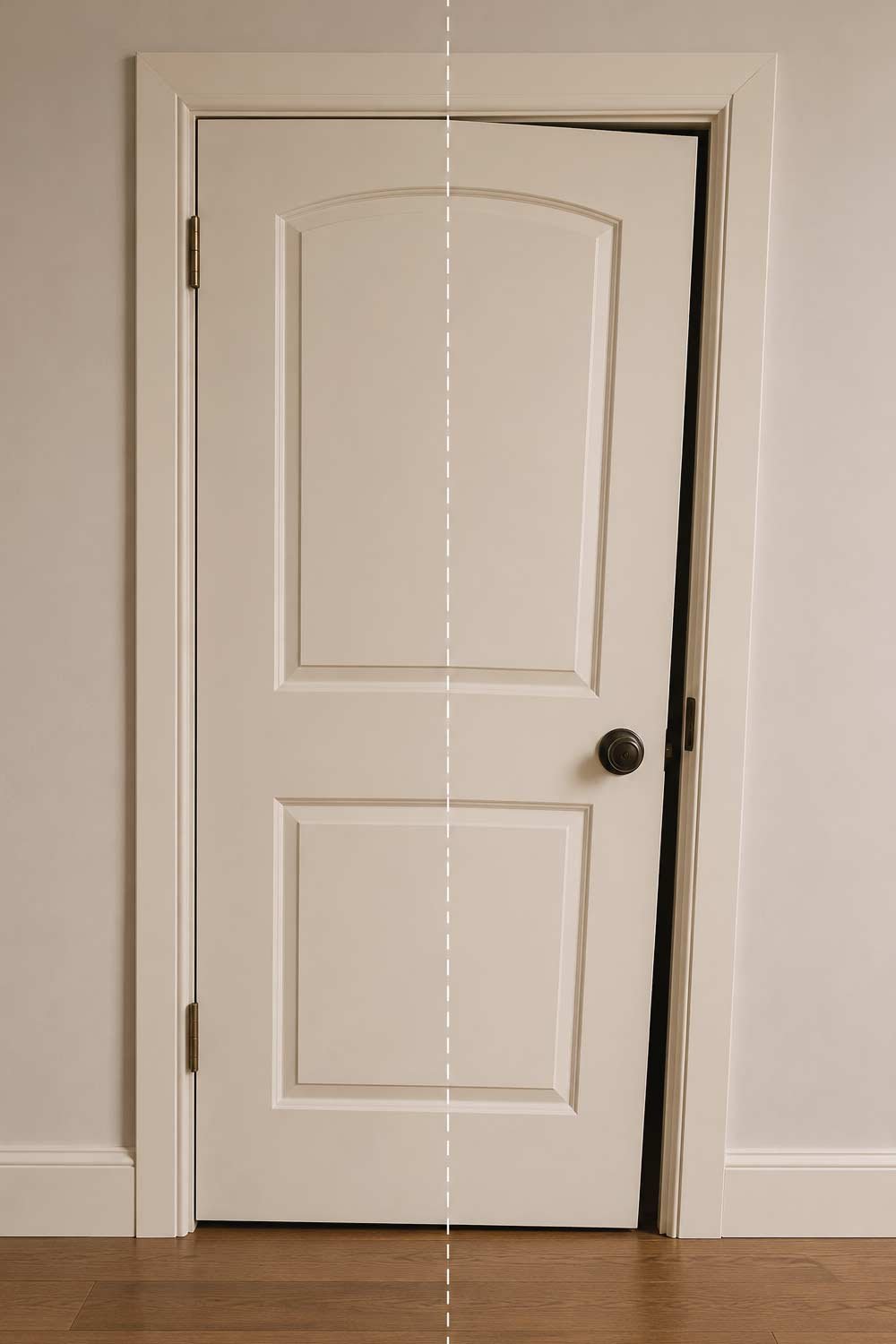
A door is properly aligned when:
- It hangs evenly in the frame
- It opens and closes smoothly without resistance
- The latch fits cleanly into the strike plate
- The gaps around the door are uniform
When any of these conditions are off, the door is misaligned.
Common Signs of a Misaligned Door
Recognizing the early warning signs of misalignment allows you to address problems before they worsen. These symptoms can appear gradually and may affect both function and ease of use.
- Door scrapes the floor or frame
- Gaps are uneven on top, bottom, or sides
- Door doesn’t latch properly
- Door swings open or closed on its own
- You hear squeaking or grinding sounds
What Causes Door Alignment Problems?
Door alignment issues usually develop over time due to a combination of mechanical wear, environmental factors, and structural movement. Understanding these causes helps you prevent future problems and choose the correct repair method.
1. Loose Hinges
Frequent use can gradually loosen hinge screws, reducing their ability to hold the door firmly in place. This often leads to sagging and uneven movement.
Screws can loosen due to repeated use, causing the door to sag.
2. Humidity and Weather Changes
Wood naturally reacts to environmental conditions, expanding and contracting based on moisture levels. This can affect how the door fits within the frame.
Wood expands in humidity and contracts in dry conditions, affecting fit.
3. Foundation or Frame Shifts
Buildings settle over time, which can slightly shift door frames out of alignment. Even small structural changes can impact door operation.
Homes naturally settle over time, slightly shifting door frames.
4. Worn Hinges or Screws
Old or damaged hardware may lose its strength and fail to support the door properly. This leads to instability and misalignment.
Old hardware may no longer hold the door properly.
5. Improper Installation
If a door is not installed correctly from the beginning, alignment issues are likely to appear sooner or later during regular use.
If the door was not installed correctly initially, misalignment is inevitable.
Tools You Will Need
Having the right tools ready before starting ensures a smoother and more efficient repair process. Most door alignment fixes require only basic, commonly available tools.
- Screwdriver (Phillips and flathead)
- Drill (optional)
- Wood screws
- Wood filler or toothpicks
- Sandpaper
- Level
- Chisel (for strike plate adjustments)
- Hammer
Having these ready before you start makes the process smoother.
Step 1: Identify the Exact Problem
Before attempting any fix, carefully observe how the door behaves. This step is crucial because different alignment issues require different solutions, and guessing can lead to ineffective repairs.

How to Check
A slow and detailed inspection helps pinpoint the exact issue. Paying attention to movement and contact points reveals where adjustments are needed.
- Close the door slowly and check:
- Where does it rub? Top, bottom, or side?
- Does it stick or bounce back?
- Does the latch align properly with the strike plate?
You can also use a level to check if the door is hanging straight vertically.
This step is important because different problems require different fixes.
Step 2: Tighten All Hinges
Loose hinges are one of the most common reasons for door misalignment. Tightening them is a simple and effective first step that often resolves the issue immediately.
How to Do It
Following a proper tightening process ensures that all hinge points are secure. Even one loose screw can affect the entire door alignment.
- Open the door fully
- Tighten all hinge screws on both door and frame side
- Check if any screws spin freely
If screws don’t tighten properly, the wood may be stripped.
Step 3: Fix Stripped Screw Holes
Stripped screw holes reduce the grip needed to hold hinges firmly, leading to sagging doors. Fixing them restores stability and improves alignment quickly.
Toothpick Method (Simple Fix)
This method is quick, inexpensive, and effective for minor damage. It reinforces the hole so the screw can hold tightly again.
- Remove the loose screw
- Insert wooden toothpicks dipped in wood glue into the hole
- Break off excess material
- Reinsert screw tightly
Alternative Method
For more severe damage, stronger solutions may be required. These methods provide better long-term durability.
- Use larger screws to grip fresh wood
- Or fill hole with wood filler, let dry, then re-drill
This restores hinge strength and improves alignment immediately.
Also Read:
Step 4: Adjust the Hinges
If tightening alone doesn’t fix the issue, adjusting hinge positioning can correct the door’s alignment. Small changes can make a noticeable difference in how the door operates.
Adjustment Techniques
Carefully modifying hinge positions allows you to control how the door sits within the frame. Precision is important for achieving proper balance.
- If the door sags downward:
- Tighten the top hinge first
- Slightly loosen the bottom hinge if needed
- If the door rubs at the top:
- Adjust bottom hinge to lift the door slightly
- If the door rubs on the latch side:
- Move hinges slightly inward by loosening screws and repositioning
Even a 1–2 mm adjustment can make a big difference.
Step 5: Use a Cardboard or Washer Trick (Quick Fix)
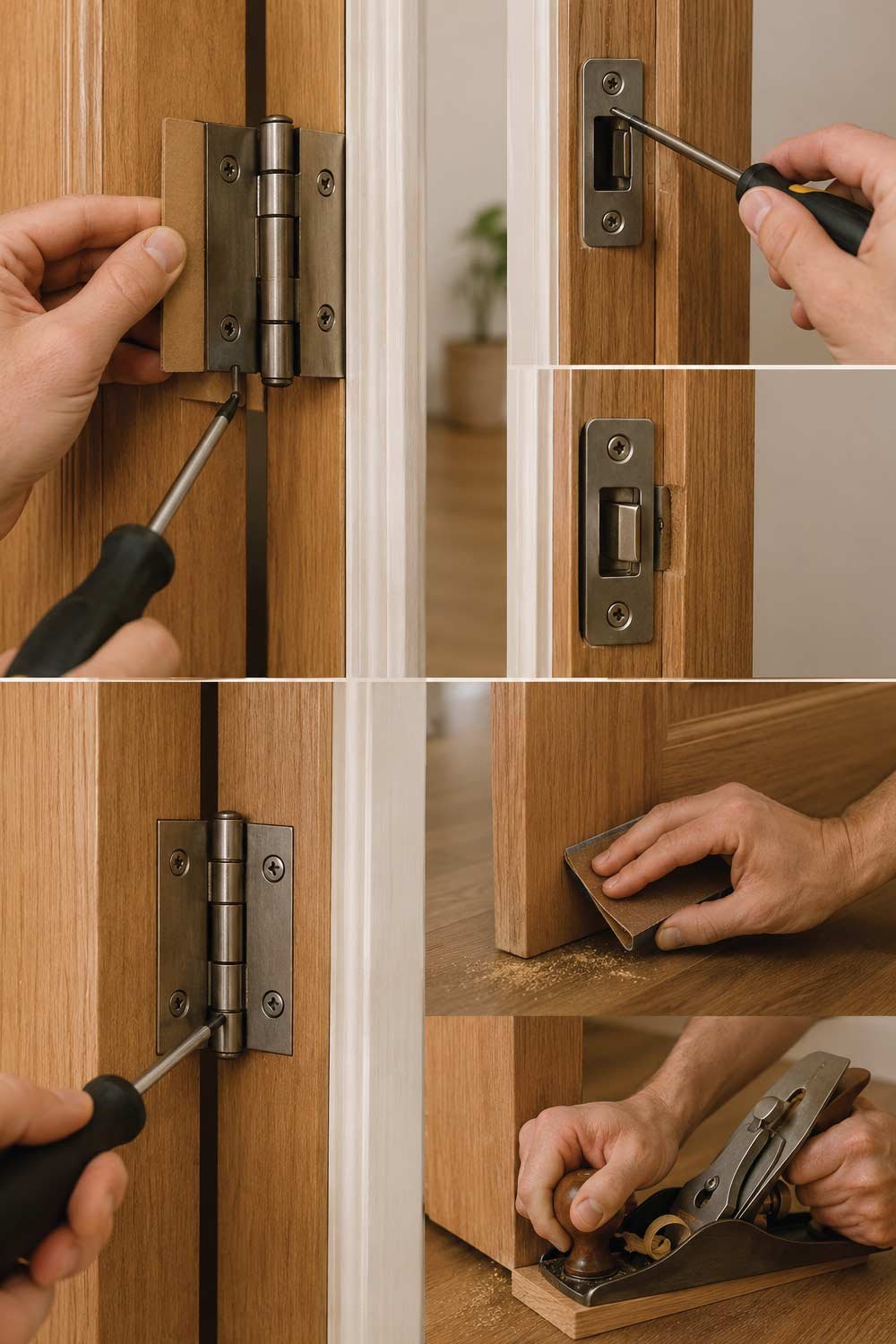
For minor alignment issues, adding a small spacer behind the hinge can shift the door position just enough to fix the problem. This is a quick and practical solution that requires minimal effort.
Method
This technique works by slightly changing the hinge angle, which adjusts how the door sits in the frame. It is especially useful for fine-tuning alignment.
- Place a thin cardboard or metal washer behind the hinge
- This pushes the door slightly forward or backward
- Tighten screws again
This is especially useful for minor misalignments.
Final Thoughts
Fixing door alignment is not as complicated as it looks. Most problems come from loose hinges, small shifts, or minor wear and tear. With basic tools and a systematic approach, you can usually restore smooth operation in under an hour.
Start with the simplest fixes—tightening screws and adjusting hinges—before moving to sanding or strike plate adjustments. In most cases, patience and small adjustments are all it takes to bring your door back into perfect alignment.
A well-aligned door not only improves convenience but also enhances privacy, security, and the overall feel of your home.