
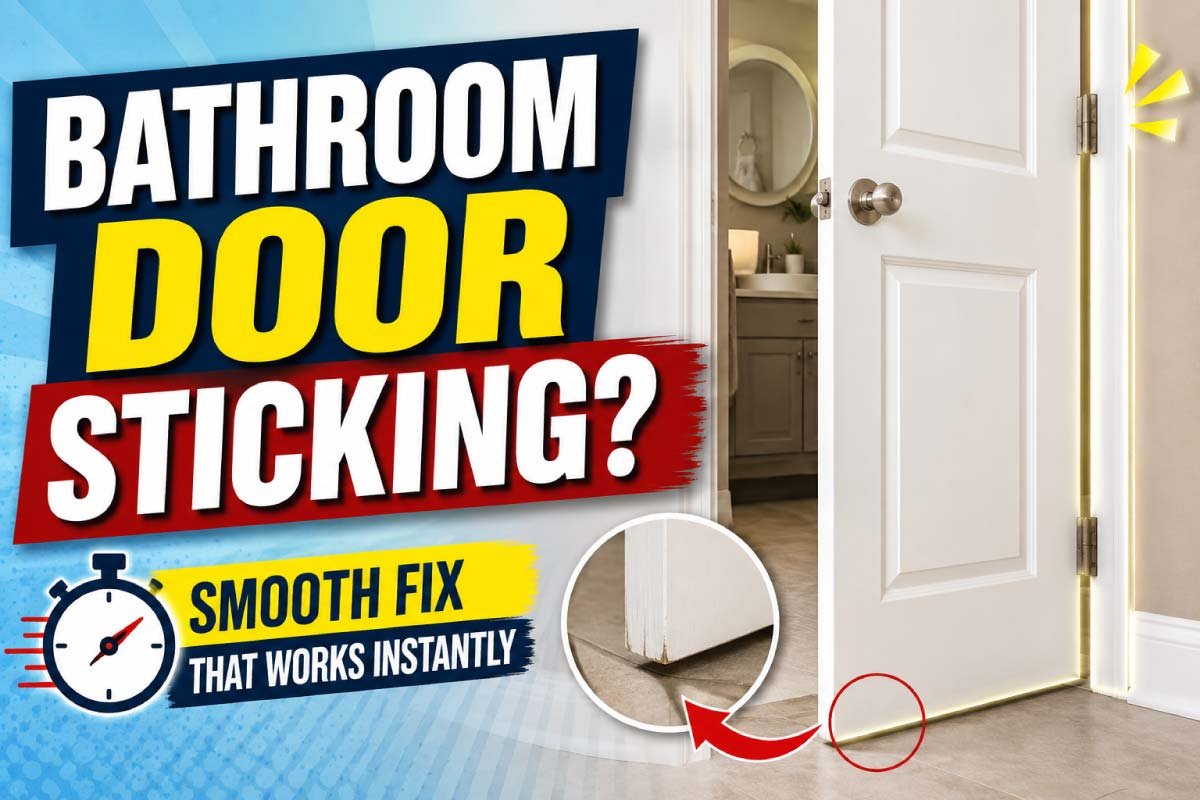
A bathroom door that sticks is one of those small household problems that quickly becomes irritating. You push it, it scrapes the frame, it refuses to close properly, or it jams halfway and makes that awful dragging sound. It may seem minor at first, but over time it can damage the door, loosen hinges, and even ruin the door frame.
The good news is that most sticking bathroom doors don’t need expensive repairs or professional help. In fact, many fixes take only a few minutes and can be done with simple household tools—or sometimes even without tools at all.
In this detailed guide, we’ll explore why bathroom doors stick, how to fix them instantly, and how to prevent the problem from coming back.
 Start Sticking
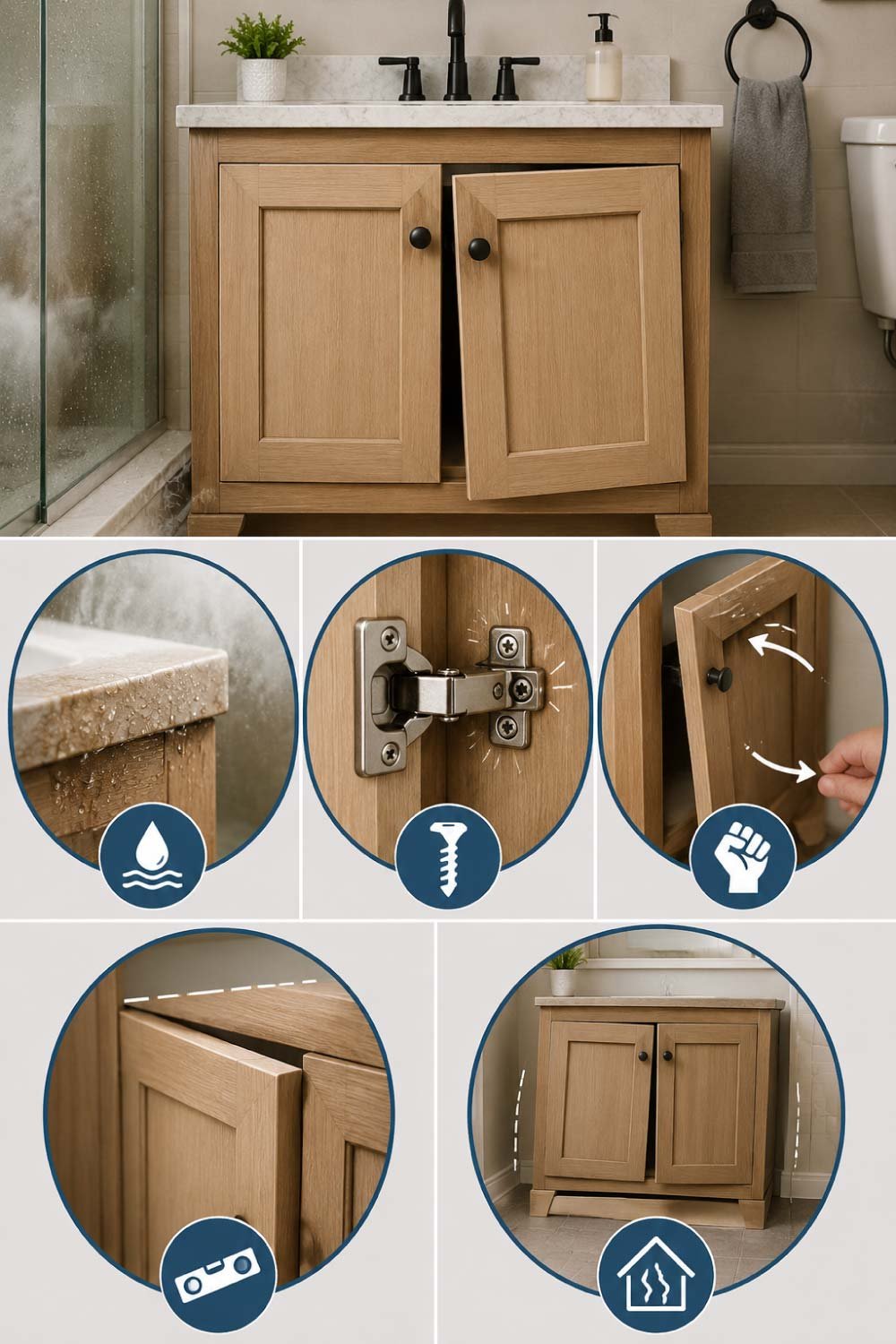
Bathroom doors are more likely to develop sticking issues compared to other doors in the home because they are constantly exposed to moisture, temperature changes, and daily heavy use. Over time, these conditions slowly affect the door’s shape, alignment, and movement, making it harder to open or close smoothly.
- Bathrooms create a humid environment due to frequent hot showers
- Wooden doors absorb moisture and gradually expand in size
- Constant use puts pressure on hinges and frame alignment
- Small structural changes build up into noticeable sticking problems
- Early signs are often ignored until the door becomes difficult to move
1. Humidity and Moisture Swelling
One of the most common reasons bathroom doors start sticking is moisture absorption. Bathrooms naturally produce steam and humidity, especially after showers. Wooden doors absorb this moisture over time, causing them to expand slightly and rub against the frame or floor.
- Steam from showers increases moisture levels in the room
- Wood fibers absorb water and swell gradually
- Expansion leads to tight fitting inside the door frame
- Friction increases when opening or closing the door
- Repeated swelling worsens the sticking over time
2. Loose Hinges
Loose hinges are another major reason behind a sticking bathroom door. With daily opening and closing, hinge screws slowly loosen, causing the door to drop slightly from its original position. Even a small shift can create uneven gaps and scraping.
- Constant use gradually loosens hinge screws
- Door weight causes slight downward sagging
- Misalignment creates friction with frame or floor
- Uneven movement becomes noticeable during operation
- Ignoring loose hinges leads to long-term damage
3. Seasonal Changes
Seasonal weather changes can also affect bathroom doors, especially wooden ones. In humid seasons, wood expands, while in dry seasons it shrinks. This continuous expansion and contraction weakens the perfect fit of the door within its frame.
- Humid seasons cause wood to expand naturally
- Dry weather leads to shrinking and minor gaps
- Repeated movement disturbs door alignment over time
- Edges may begin rubbing unevenly against the frame
- Seasonal shifts gradually increase sticking issues
4. Paint Buildup
Paint buildup is often overlooked but can significantly contribute to a sticking door. Over the years, multiple layers of paint can accumulate on the door edges or frame, making the door slightly thicker and harder to close smoothly.
- Repeated repainting adds extra layers over time
- Thick paint reduces clearance between door and frame
- Edges become uneven and start rubbing
- Friction increases during opening and closing
- Old paint buildup may need sanding or removal
5. Floor or Frame Shifting
In older homes, structural movement can cause doors to stick. Floors or door frames may shift slightly due to age, humidity, or settling of the building. Even a small shift can change the alignment and create pressure points.
- House settling causes minor structural movement
- Door frames may tilt slightly over time
- Floors can rise or sink in certain areas
- Misalignment creates new friction points
- Sticking worsens if structural issues are ignored
Quick Fix #1: Tighten the Hinges
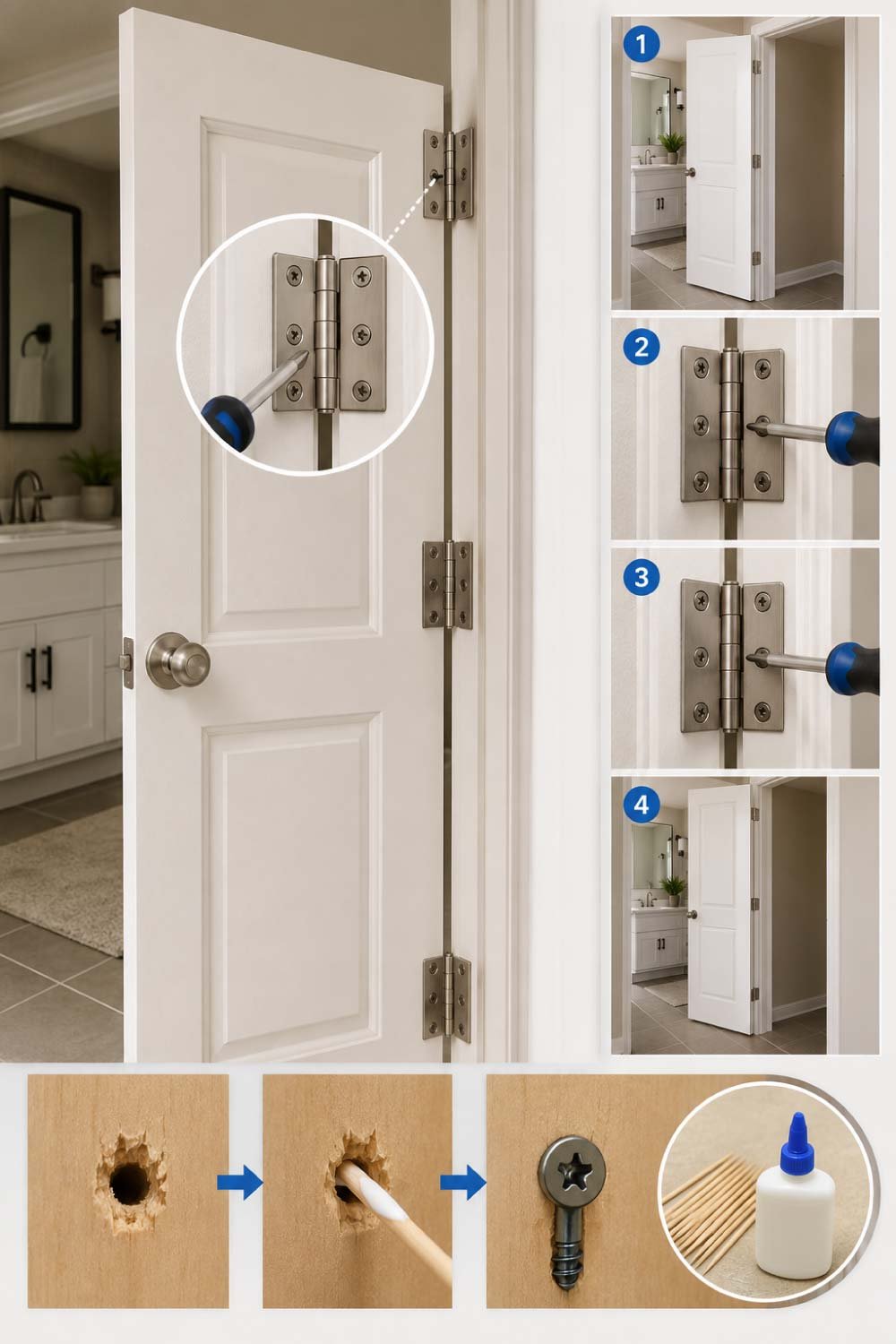
This is the easiest and fastest solution for most bathroom door sticking problems. Loose hinges are often the main cause of misalignment, and tightening them can instantly restore proper door movement without requiring any special tools or effort.
What You Need:
Screwdriver
Steps:
- Open the bathroom door fully
- Inspect all hinge screws on frame and door
- Tighten any loose screws carefully
- Test door movement after adjustment
If screws keep spinning, the wood may be stripped and require reinforcement.
Pro Tip:
If a screw hole is stripped, insert a wooden toothpick with glue into the hole, break off the excess, and reinsert the screw. This creates a stronger grip instantly.
Quick Fix #2: Check Door Alignment
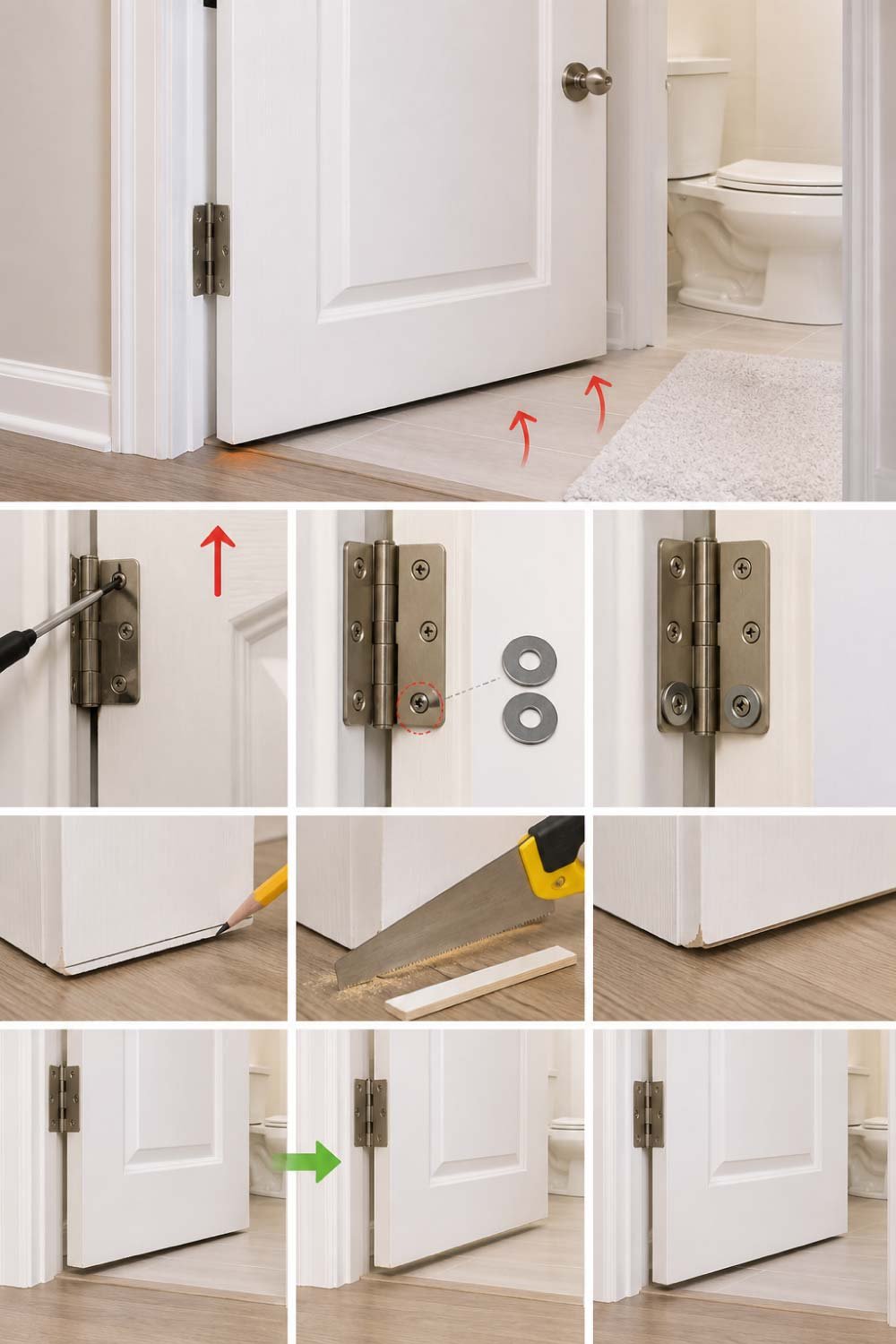
Sometimes the problem is not swelling but poor alignment caused by sagging hinges. When a door drops even slightly, it begins to scrape against the frame or floor. Checking alignment helps identify uneven gaps and restore proper positioning quickly.
How to Check:
- Inspect gaps between door and frame
- Look for uneven spacing on top or bottom
- Observe rubbing points while opening door
Fix:
- Tighten top hinge first for support
- Adjust bottom hinge if needed
- Retighten all screws securely
Even small adjustments can stop sticking immediately.
Also Read:
Quick Fix #3: Sand the Edges (Fast Solution for Swelling)
When a bathroom door sticks due to swelling or friction at specific points, sanding is one of the most effective solutions. It helps remove excess material gradually and restores smooth movement without replacing the door.
What You Need:
Sandpaper (medium or coarse grit)
Pencil
Masking tape (optional)
Steps:
- Mark sticking area using a pencil
- Open door and focus only on that section
- Sand lightly and evenly along edges
- Test door frequently during process
Important Tip:
Do not remove too much material at once. Work slowly to avoid creating gaps.
Bonus:
Apply paint or varnish afterward to protect exposed wood from moisture damage.
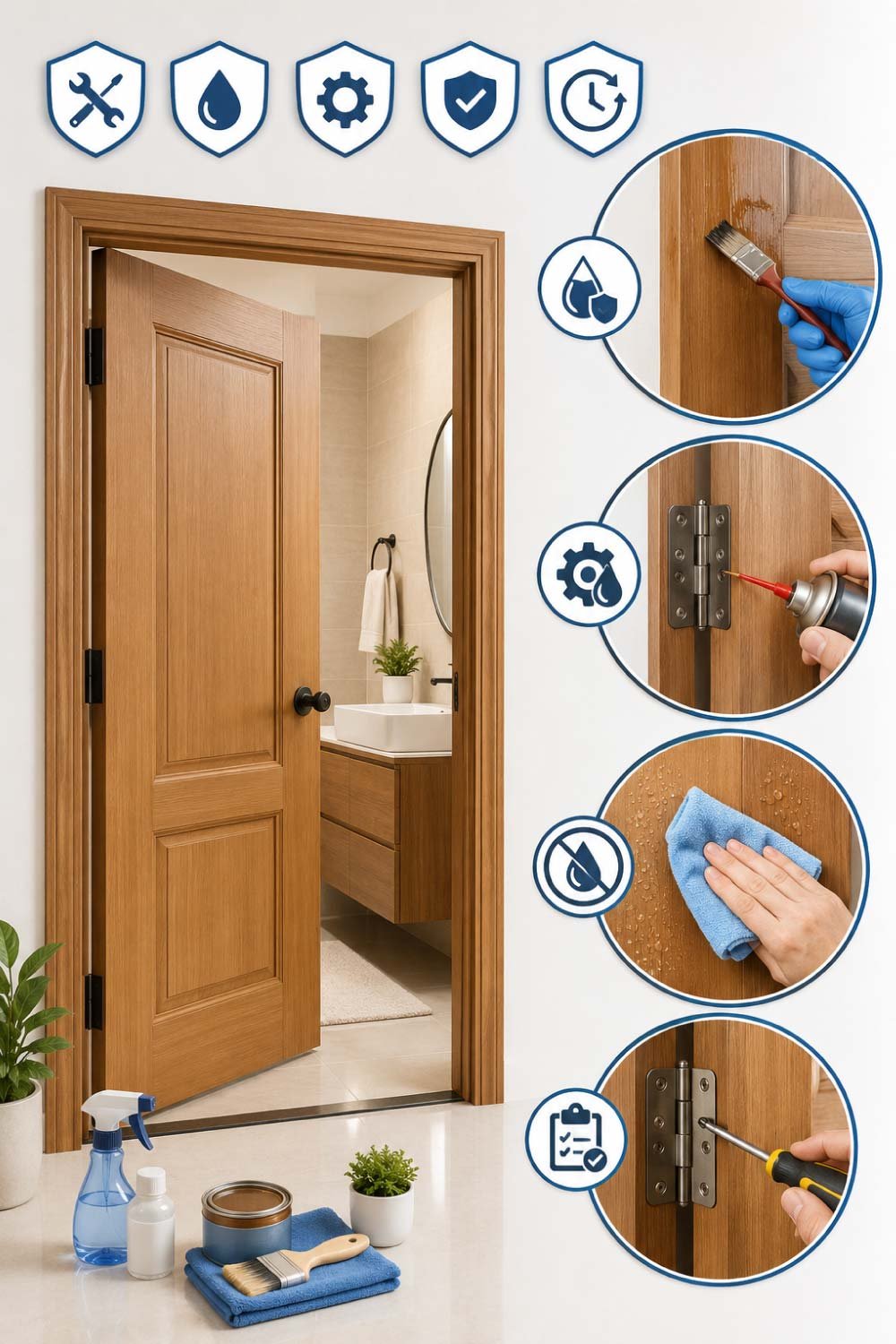
Quick Fix #4: Lubricate the Hinges
Sometimes a sticking door is not caused by the frame but by dry or rusty hinges. When hinges lack lubrication, they create resistance, making the door feel heavier or stuck even if alignment is correct. Lubrication instantly improves movement.
Best Lubricants:
Petroleum jelly
Silicone spray
Light household oil
Steps:
- Apply lubricant directly to hinge joints
- Open and close door several times
- Spread lubricant evenly inside hinges
- Wipe excess oil to avoid dripping
This simple step reduces friction instantly and restores smooth door movement.
Also Read:
Final Thoughts
A sticking bathroom door may seem like a small annoyance, but it often signals minor issues like humidity, loose hinges, or misalignment. The key is identifying the cause early and applying the correct fix.
In most cases, a simple hinge tightening, light sanding, or lubrication can solve the problem in minutes. And with a bit of regular maintenance, you can keep your bathroom door opening and closing smoothly for years.
No expensive repairs, no complicated tools—just quick, practical solutions that actually work.