
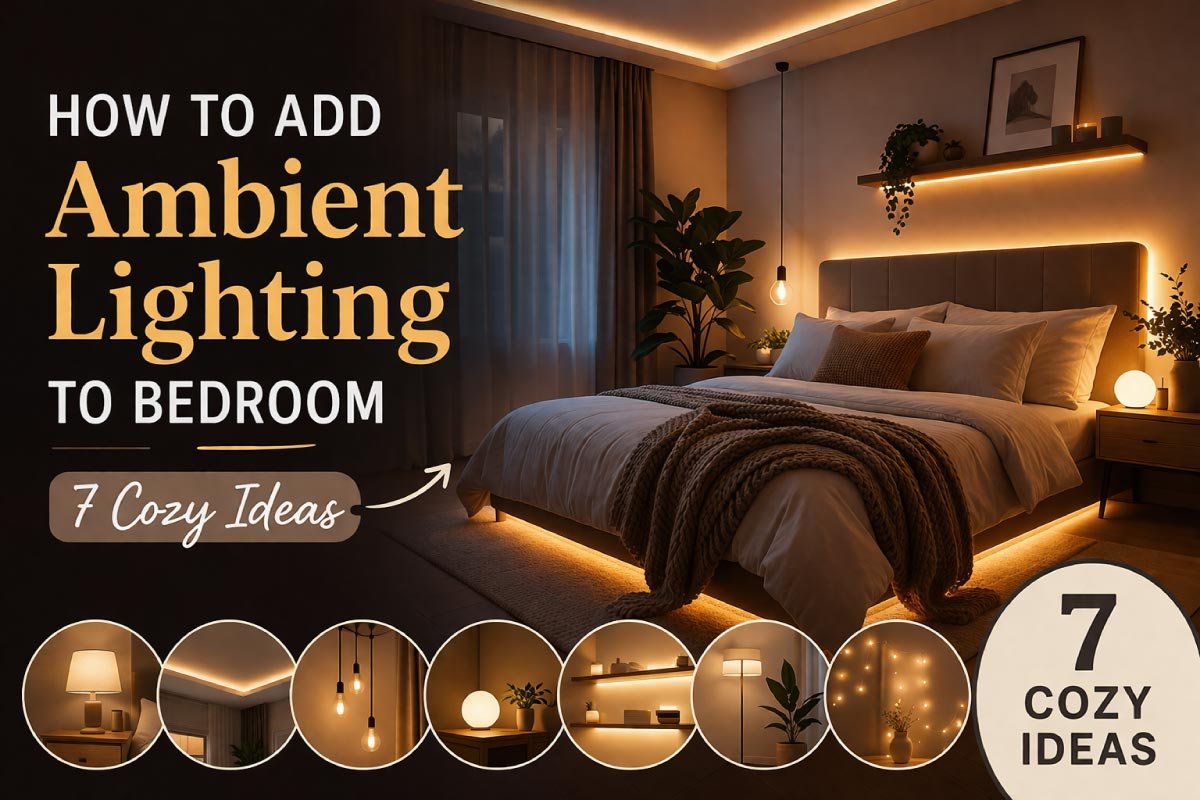
Creating a cozy, inviting bedroom is not just about furniture, bedding, or color schemes. Lighting plays a critical role in shaping the mood and atmosphere of your personal sanctuary.
While overhead lights are essential for visibility, ambient lighting—soft, indirect illumination—can transform your bedroom into a relaxing retreat.
Ambient lighting is not just functional; it sets the tone for relaxation, winding down after a long day, and even boosting your overall well-being.
In this blog, we will explore 7 cozy ways to add ambient lighting to your bedroom and I will share some personal experiences that helped me turn my bedroom into a warm, inviting space.
1. Use Soft LED Strip Lights for Gentle Glow
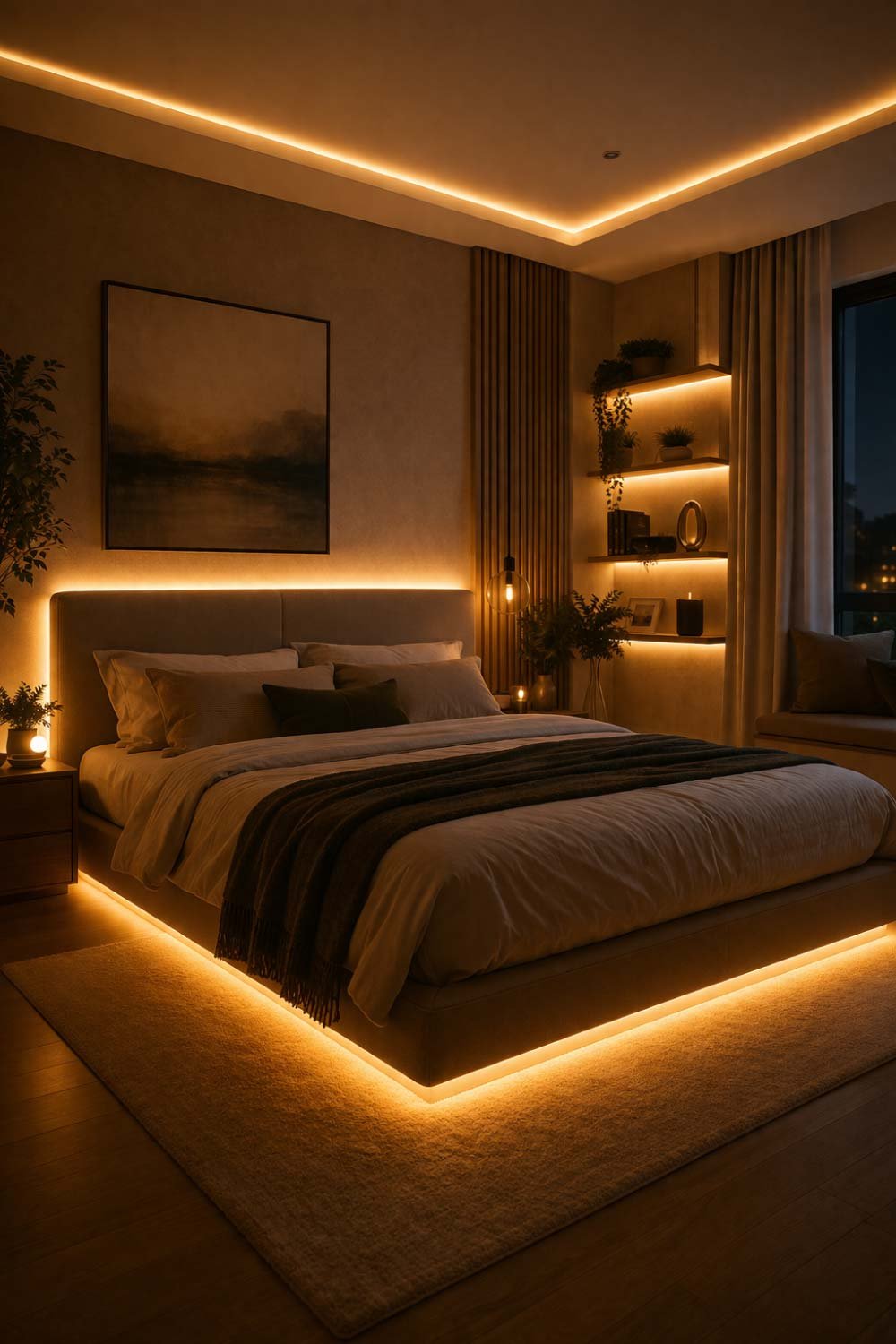
LED strip lights have revolutionized ambient bedroom lighting. Their versatility, affordability, and adaptability make them a go-to solution for creating soft, diffused illumination that transforms a room from ordinary to cozy in minutes.
Unlike harsh overhead lights, which can feel glaring and clinical, LED strips provide indirect lighting that is gentle on the eyes, enhances the room’s atmosphere, and can even influence your mood positively.
Placement and Design Ideas:
The beauty of LED strips is that you can install them almost anywhere. Popular locations include behind headboards, under the bed frame, along shelves, or even around the perimeter of the ceiling to create a floating effect.
When installed behind a headboard, the light creates a subtle halo that emphasizes your bed as the centerpiece.
Under-bed lighting is perfect for night-time navigation without disturbing your partner or waking yourself fully. LED strips on shelves can highlight your decor items, giving the room depth and dimension.
Choosing the Right Light Temperature:
Warm white or amber tones are generally preferable in bedrooms because they mimic natural sunset hues, which naturally signal your body to relax and prepare for sleep. Cool white or daylight strips, while bright, can feel sterile and may interfere with melatonin production in the evening.
Dimming and Control Options:
Opt for dimmable LED strips or those that can be controlled via smartphone apps or remote controls. This flexibility allows you to adjust brightness levels based on activities such as reading, watching TV, or winding down before bed.
Some modern LED strips even allow you to change colors gradually throughout the evening, which can simulate a natural sunset and help regulate your sleep cycle.
Tips for Seamless Installation:
Conceal the strips behind furniture edges, moldings, or baseboards to hide the light source. This prevents visible bulbs, giving a clean, high-end finish.
Measure your space before purchasing strips to avoid gaps or excess lengths.
Invest in high-quality adhesive-backed strips to prevent peeling over time.
Personal Experience:
I installed LED strips under my bed frame, and it was like giving my bedroom a gentle heartbeat of light. The soft glow gently illuminates the floor, creating the illusion that my bed is floating.
When reading at night, the light provides just enough warmth without being intrusive. The versatility of dimming controls also means I can brighten the strips when I need to clean or dim them for relaxing meditation sessions.
Over time, the subtle ambiance has made my bedroom feel more like a sanctuary than just a place to sleep.
2. Incorporate Bedside Lamps with Warm Bulbs
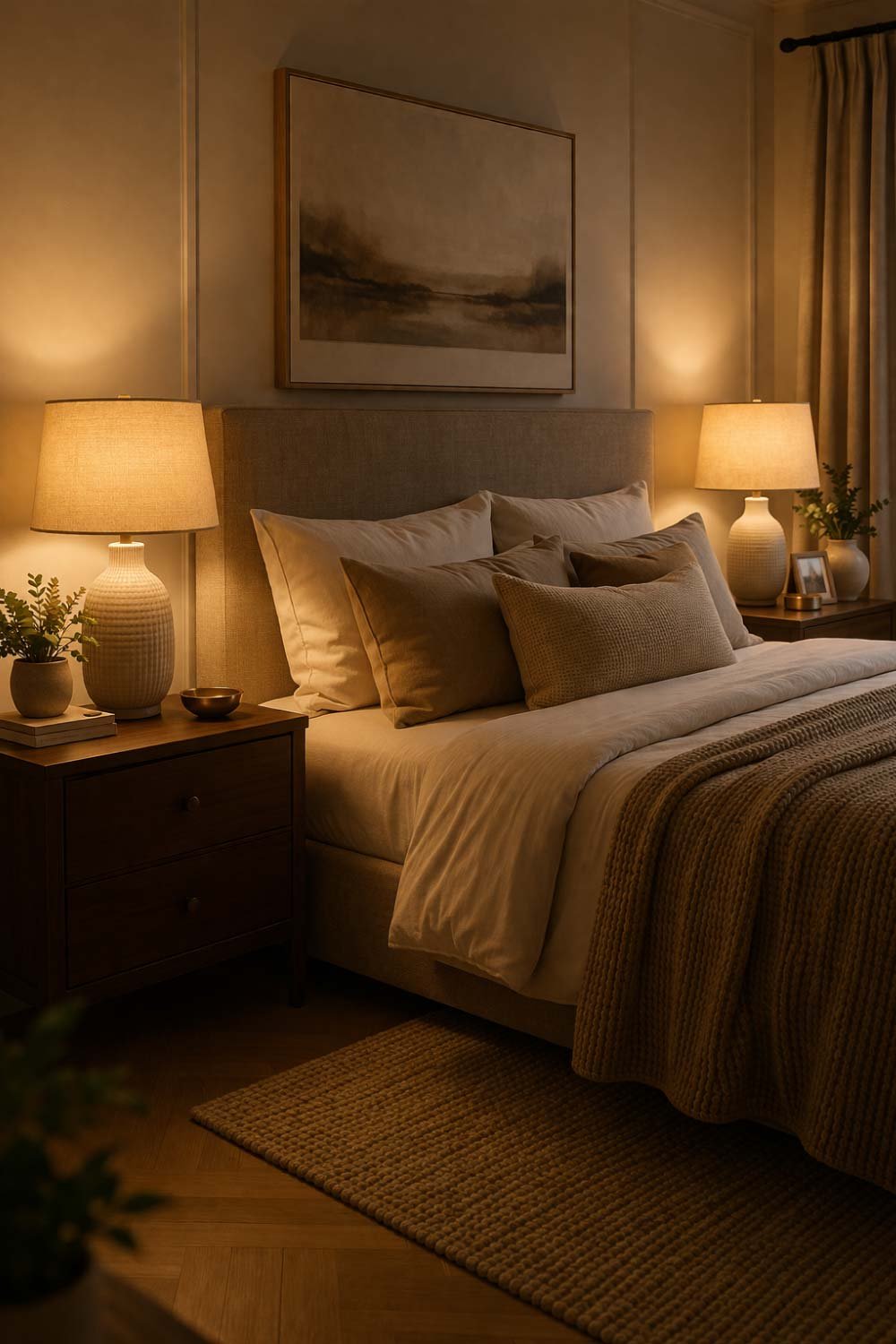
Bedside lamps are a timeless and essential component of bedroom lighting. They not only serve practical purposes, such as reading or working on a laptop, but also significantly contribute to the overall ambiance. The right bedside lamp, paired with warm bulbs, can instantly make a bedroom feel inviting, cozy, and relaxing.
1- Selecting the Perfect Lamp:
When choosing a bedside lamp, consider both functionality and aesthetics. A lamp with a linen or fabric shade will diffuse light gently, minimizing harsh shadows that can make a room feel stark. Glass or metallic shades, while stylish, may produce more direct light, which can be less relaxing.
2- Lamp Height and Placement:
The ideal bedside lamp should have the bottom of its shade roughly at eye level when sitting in bed. This ensures comfortable reading without straining your eyes and avoids glare that can affect your sleep cycle. For symmetry and balanced lighting, place matching lamps on either side of the bed, especially in master bedrooms with two sleepers.
3- Smart and Adjustable Options:
Modern bedside lamps often come with adjustable brightness or smart bulbs. These features allow you to set the perfect intensity for reading, relaxing, or winding down before sleep. Some smart lamps can even be programmed to mimic sunrise and sunset patterns, gradually brightening or dimming to align with your natural circadian rhythm.
4- Design Considerations:
Consider lamps that complement your bedroom style—sleek, minimal designs for modern spaces or ornate bases for traditional interiors.
Lamps with built-in USB ports or wireless charging pads add extra convenience without cluttering nightstands.
Pairing lamp finishes with other room elements, like drawer handles or picture frames, creates visual cohesion.
Personal Experience:
I replaced my standard bedside lamps with ones featuring linen shades and warm LED bulbs. The difference was immediate: the light felt softer, and the room instantly felt like a retreat rather than just a functional space.
I now look forward to nighttime reading because the gentle illumination is perfect for setting a calming mood.
It also allows me to use only the bedside lamps instead of overhead lighting, which makes the bedroom feel intimate and personal.
3. Add a Statement Floor Lamp
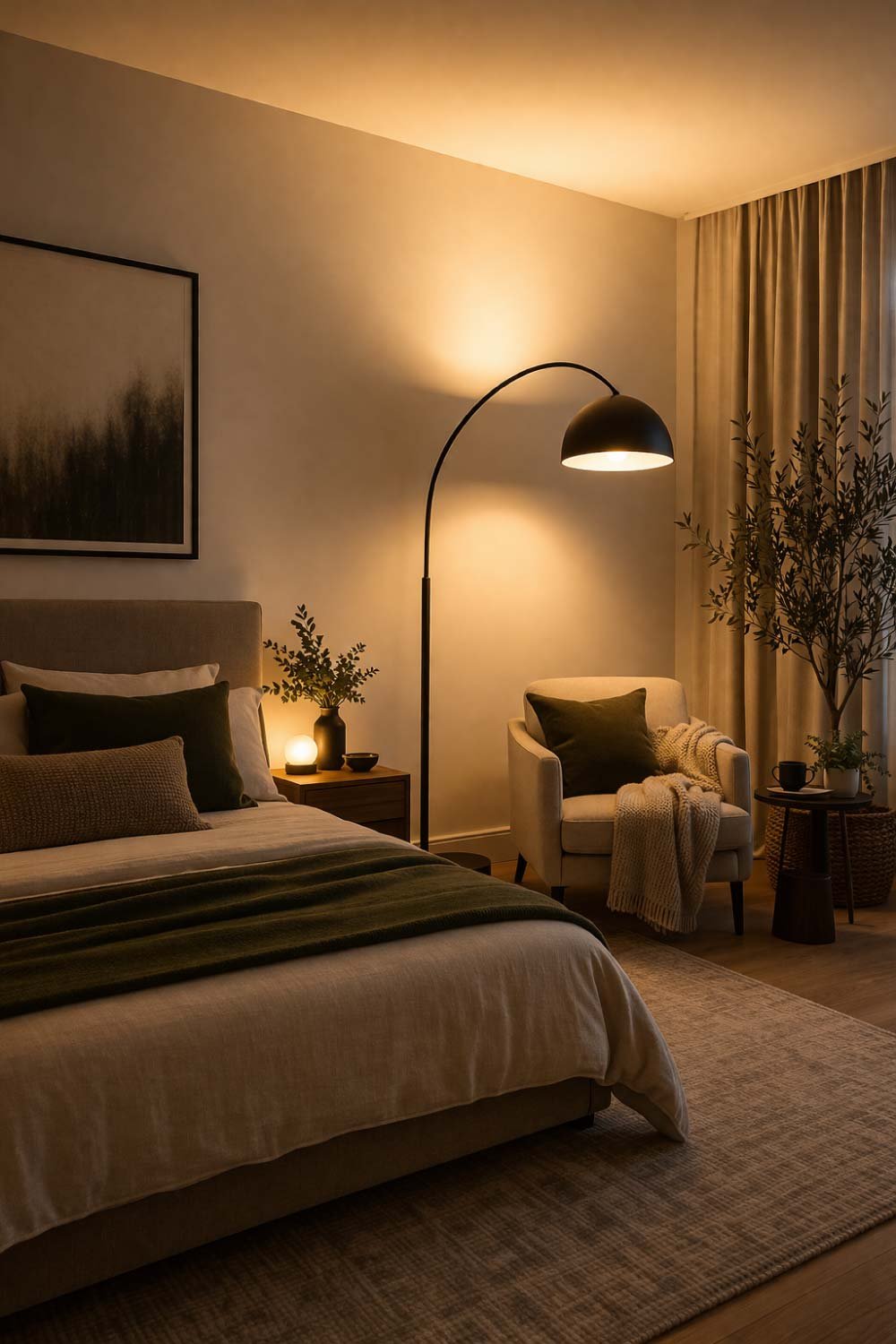
Floor lamps are an underrated but highly effective way to enhance bedroom lighting. They provide both style and function, adding layers to your lighting scheme that create depth, dimension, and warmth.
A well-chosen floor lamp can serve as a focal point in the room, while its indirect light fills the space evenly, avoiding the harshness of ceiling lights.
1- Choosing the Right Floor Lamp:
The key to a successful floor lamp is its height, design, and light direction. Tall lamps with upward-facing shades bounce light off the ceiling and walls, producing a diffuse glow that softens the room.
Tripod or arc-style lamps add modern elegance and can double as statement pieces. Consider lamps with multiple brightness levels for versatility, so you can shift the ambiance from bright enough for reading to dim enough for a romantic or relaxing mood.
2- Placement Tips:
Position the floor lamp in a corner or beside a chair to create a cozy nook. This not only enhances the lighting balance in the room but also adds functional light for reading or relaxing. For rooms with minimal floor space, consider slim-profile designs that provide maximum light without taking up too much room.
3- Integration with Bedroom Decor:
Floor lamps can blend seamlessly with your existing decor. For example, a metallic arc lamp complements modern minimalistic interiors, while a wooden tripod lamp enhances rustic or bohemian aesthetics. Choosing a lamp that aligns with your overall theme ensures that it enhances both ambiance and style.
Personal Experience:
I installed a sleek arc floor lamp next to my reading chair, and it instantly became my favorite corner. The upward-facing light reflects off the ceiling and walls, creating an ambient glow that feels natural and relaxing.
Even when the lamp is the only light source, the bedroom maintains a soft, welcoming warmth. It has made evening reading more comfortable and added a sense of luxury without any complicated setup.
4. Utilize Wall Sconces for Subtle Glow
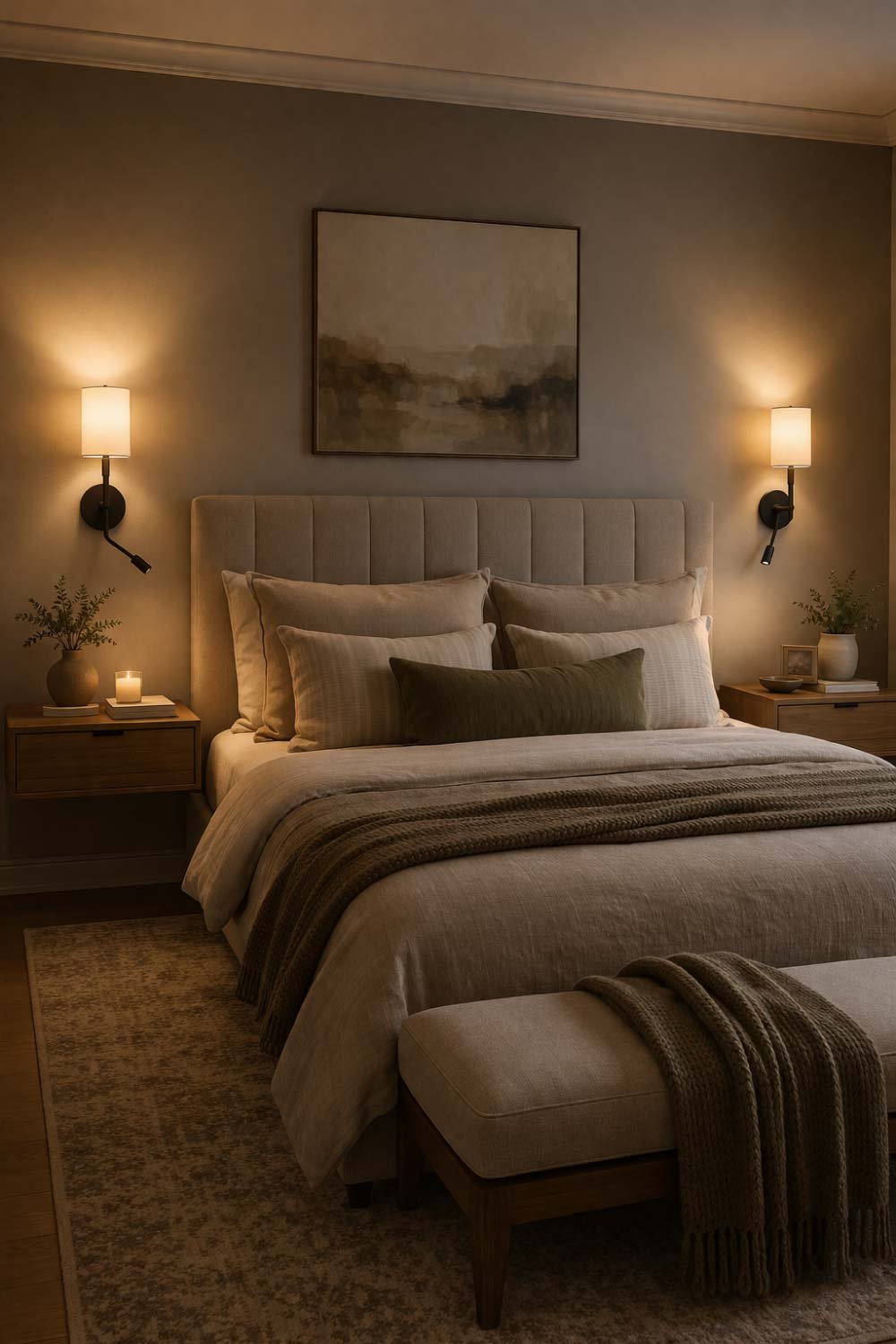
Wall sconces are perfect for bedrooms with limited table or floor space. They provide indirect illumination and contribute to the layered lighting approach that professional designers recommend. Beyond functionality, sconces can act as design elements, enhancing your room’s aesthetic with a touch of elegance or modernity.
1- Placement and Installation:
For optimal lighting, install wall sconces at approximately eye level. This ensures the light is comfortable and avoids direct glare.
If used as reading lights, place them slightly above the headboard, angled toward the bed for convenience.
Symmetry is key: placing matching sconces on either side of the bed balances the space visually and creates a sense of harmony.
2- Lighting Features:
Dimmable wall sconces allow for mood adjustments, making them ideal for both relaxing evenings and practical tasks like reading or organizing bedside items.
Choose sconces with shades or frosted glass to diffuse light evenly, avoiding harsh spots or shadows.
Modern designs often incorporate adjustable arms, allowing you to direct the light where needed without compromising the ambient glow.
2- Design Considerations:
Sconces come in a wide range of styles, from minimalist industrial to ornate vintage designs. They can complement your bedroom theme while saving precious tabletop space. For example, pairing black metal sconces with a neutral-colored bedroom adds a sophisticated, contemporary edge.
Personal Experience:
I installed two wall sconces on either side of my bed, replacing the need for traditional bedside lamps. This freed up my nightstands for books, candles, and decor while giving the room a boutique-hotel vibe.
The warm, subtle illumination makes winding down a pleasure, and the diffused light is perfect for creating a cozy atmosphere without being overpowering.
It has transformed my bedroom into a serene retreat where every corner feels thoughtfully lit.
Also Read:
5. Integrate Fairy Lights or String Lights
Fairy lights, also called string lights, are an enchanting and versatile option for creating a cozy bedroom atmosphere.
Though often associated with holidays, their soft, twinkling illumination makes them perfect for year-round ambiance.
Unlike overhead lighting, which can be harsh, string lights provide a delicate glow that instantly softens the room, giving it a whimsical, intimate charm.
Placement Ideas:
Headboard Accents: Draping lights along the headboard creates a warm halo around your bed, making it the room’s centerpiece.
Window Frames: Hanging lights around window frames highlights natural light during the day and adds a magical glow at night.
Shelves and Bookcases: Wrapping lights around shelves, books, or decorative pieces creates depth and draws attention to curated spaces.
Canopies and Curtains: Draping string lights over a bed canopy or behind sheer curtains softens the glow even more, producing a dreamy, ethereal effect.
Choosing the Right Type of Lights:
Warm-toned LED fairy lights are ideal for bedrooms because they emit a gentle, relaxing hue. Cool-toned lights can feel too bright and may disrupt the calming atmosphere. Battery-operated or USB-powered string lights reduce clutter and allow flexible placement without worrying about available sockets.
Creative Design Tips:
Combine lights with sheer fabrics, like tulle or organza, to diffuse the glow further. This creates a soft, romantic shimmer.
Cluster multiple strings together for a denser, “starry sky” effect.
Pair with other light sources like lamps or LED strips to create layers, enhancing depth and warmth in the room.
Personal Experience:
I hung delicate string lights around my bed canopy, weaving them gently along the fabric. The result was enchanting—every evening, the soft sparkle creates a cozy nook for reading or journaling.
Unlike harsh ceiling lights, these lights feel almost magical, inviting me to unwind and relax. On weekends, I even dim the lamps and let only the fairy lights illuminate the room,
It’s such a small change, yet it completely transformed the mood and feel of my bedroom into a personal sanctuary.
6. Consider Candles and Flameless LED Candles
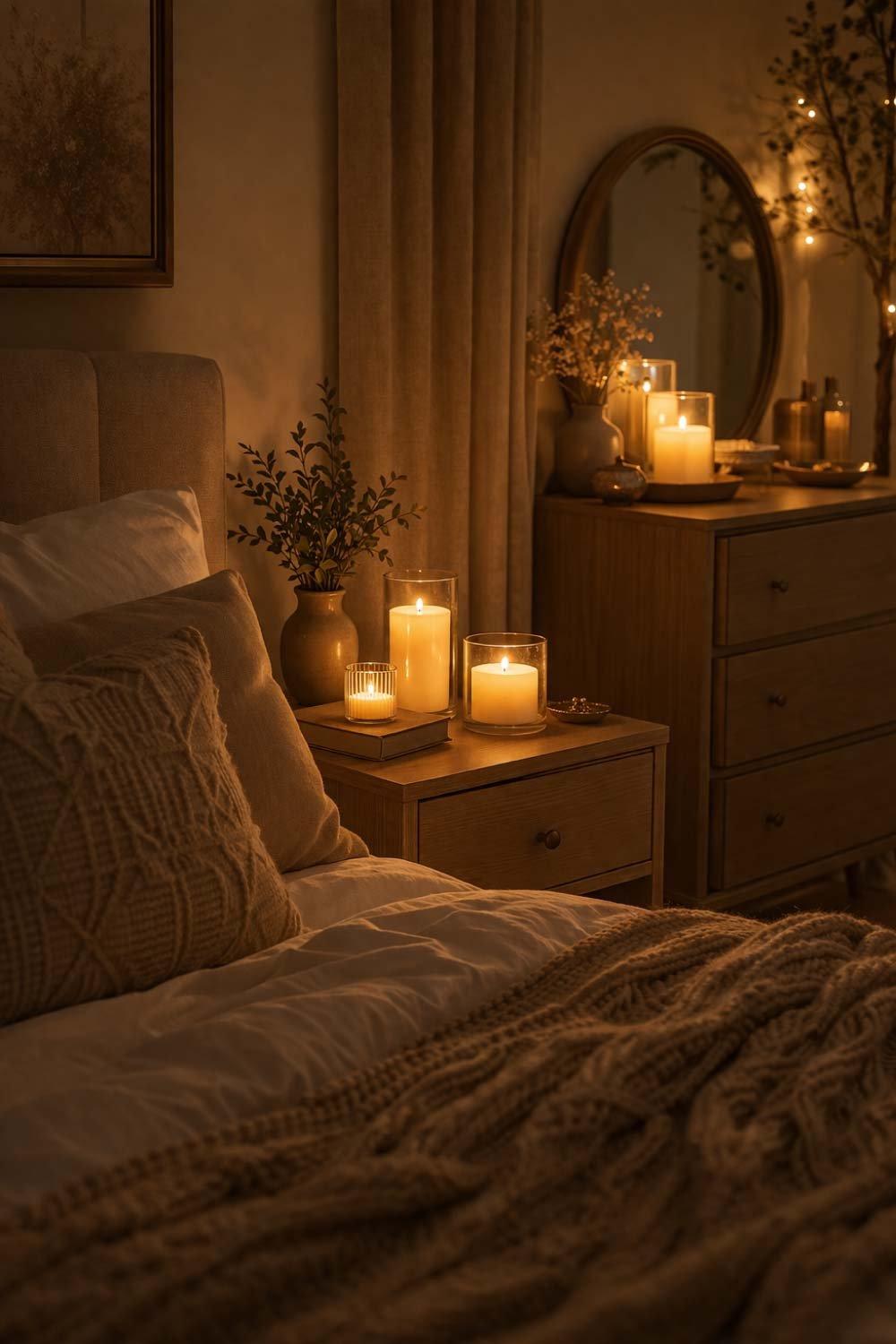
Candles remain one of the most classic methods to add warmth and intimacy to a bedroom. The flickering glow creates an organic, calming ambiance that electric lights rarely replicate.
While traditional wax candles add charm, flameless LED candles have become a popular, safe alternative, especially for those with children, pets, or forgetful tendencies.
Benefits of Candle Lighting:
Warmth and Softness: Candlelight is naturally diffused and creates a gentle glow, perfect for winding down before bed.
Layered Ambiance: When placed strategically in clusters, candles add depth, highlighting corners, nightstands, or decorative pieces.
Scented Relaxation: Many candles come with soothing scents like lavender, vanilla, or sandalwood, which can further enhance relaxation and help with sleep.
Placement Ideas:
Bedside Tables: A few small candles on your nightstand add a subtle glow for reading or relaxing.
Shelves and Trays: Grouping candles of different heights creates a dynamic visual effect and adds layers to your room’s lighting.
Dresser and Vanity: Candles on dressers provide gentle illumination for nighttime tasks like makeup removal or journaling.
Safety and Practical Tips:
- If you leave lights unattended, prefer flameless LED candles with flicker effects. Many modern LED options replicate real flames convincingly.
- Avoid placing candles near curtains, papers, or other flammable objects.
- Use candle trays or holders to protect surfaces and add decorative flair.
Personal Experience:
On weekends, I light a few soy candles near my bedside and place a small tea-light holder on my dresser. The flickering light, combined with the subtle vanilla scent, transforms my bedroom into a serene spa-like retreat.
Even on stressful days, spending an hour in this warm, intimate environment helps me decompress. I particularly enjoy lighting candles before a relaxing bath or while journaling at night—the soft flicker feels therapeutic and grounding. Using LED alternatives when I’m busy or away ensures I still get the ambiance safely.
Also Read:
7. Layer Ambient Lighting with Smart Controls
Smart lighting brings convenience, versatility, and customization to bedroom ambiance like nothing else. By integrating multiple sources of ambient light—LED strips, bedside lamps, wall sconces—into a smart system, you can control them simultaneously with a phone, remote, or voice assistant. This layering creates dynamic, adjustable lighting perfect for every activity or mood.
How Smart Lighting Enhances Ambiance:
Preset Scenes: Smart lights allow pre-set modes, like “Relax,” “Reading,” or “Movie Night,” adjusting brightness and color temperature instantly.
Gradual Transitions: Schedule lights to dim gradually in the evening to mimic sunset, helping regulate circadian rhythms and improve sleep quality.
Color Temperature Control: Warmer tones in the evening encourage relaxation, while cooler tones in the morning help energize you for the day.
Integration Ideas:
- Install smart bulbs in bedside lamps, ceiling lights, and LED strips for unified control.
- Program different rooms or zones separately—your bedroom can have a cozy “Relax” scene, while your bathroom has a brighter “Morning” scene.
- Voice assistants like Alexa or Google Assistant make it effortless to switch scenes without touching switches.
Practical Tips for Smart Lighting:
- Start with a few key light sources, like bedside lamps and LED strips, and expand gradually.
- Use dimming capabilities to layer ambient light with functional light—for reading or tasks.
- Experiment with color temperature and brightness for different times of day; you’ll find settings that best support relaxation and productivity.
Personal Experience:
I installed smart bulbs in my bedside lamps and LED strips, then set a “Relax” scene for evenings. With a single tap or voice command, my lights dim to a soft amber glow, creating a cozy, inviting atmosphere instantly.
It’s remarkable how a small adjustment in lighting can completely change the room’s feel. Now, I can enjoy a gentle wake-up routine in the morning with cooler tones and unwind in the evening with warmer hues.
The convenience is unmatched, and it has made my bedroom a fully adaptable sanctuary tailored to my mood at any moment.
Bonus Tip: Layer Multiple Light Sources
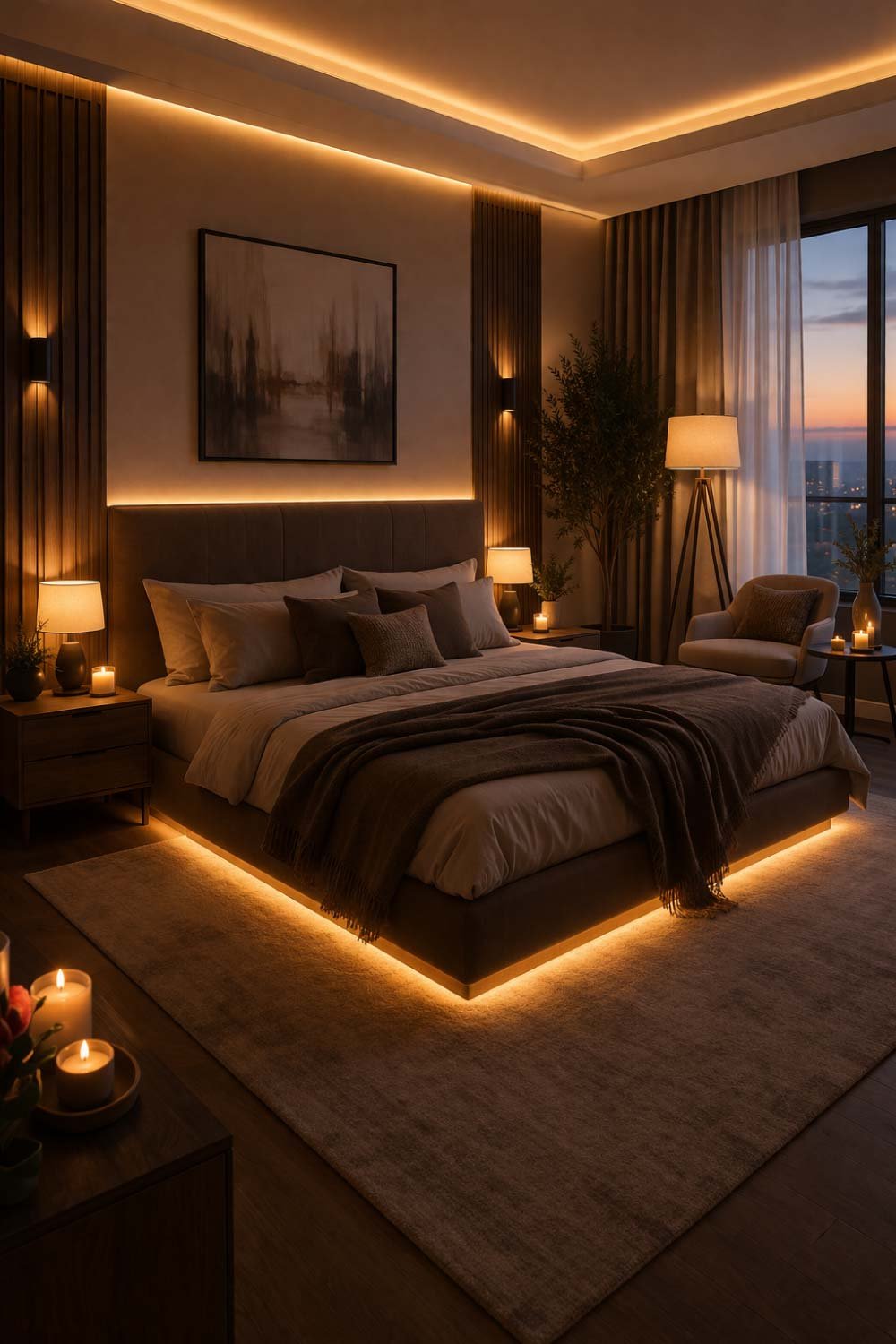
The key to successful ambient lighting is layering. Don’t rely on a single light source. Combining LED strips, bedside lamps, floor lamps, sconces, or candles creates depth, warmth, and flexibility.
Layered lighting allows you to adjust the room’s brightness and mood based on your activity—reading, working, or winding down.
Personal Experience:
I experimented with layering all the lights mentioned above. The result is a bedroom that’s never too harshly lit and always inviting. On busy workdays, I turn on brighter layers; on lazy evenings, I stick to just LED strips and candles. The versatility is unmatched.
Conclusion
Adding ambient lighting to your bedroom is all about creating a warm, inviting atmosphere that makes you want to relax, unwind, and spend time in your space. From LED strips and bedside lamps to fairy lights, candles, and smart lighting systems, there are countless ways to enhance your bedroom’s ambiance.
The key is to choose warm tones, layer different sources, and control brightness according to your mood. Personal touches, like arranging candles or selecting soft lampshades, can transform a simple room into a cozy retreat.
In my experience, even small adjustments—like adding LED strips under the bed or swapping cool white bulbs for warm ones—can dramatically change the bedroom’s feel. Ambient lighting isn’t just decoration; it’s a lifestyle choice that prioritizes comfort, relaxation, and wellbeing.
Start small, experiment, and most importantly, create a space that feels like your personal sanctuary. With these 7 cozy ideas, you can turn your bedroom into a haven of warmth, comfort, and relaxation.
Also Read: