
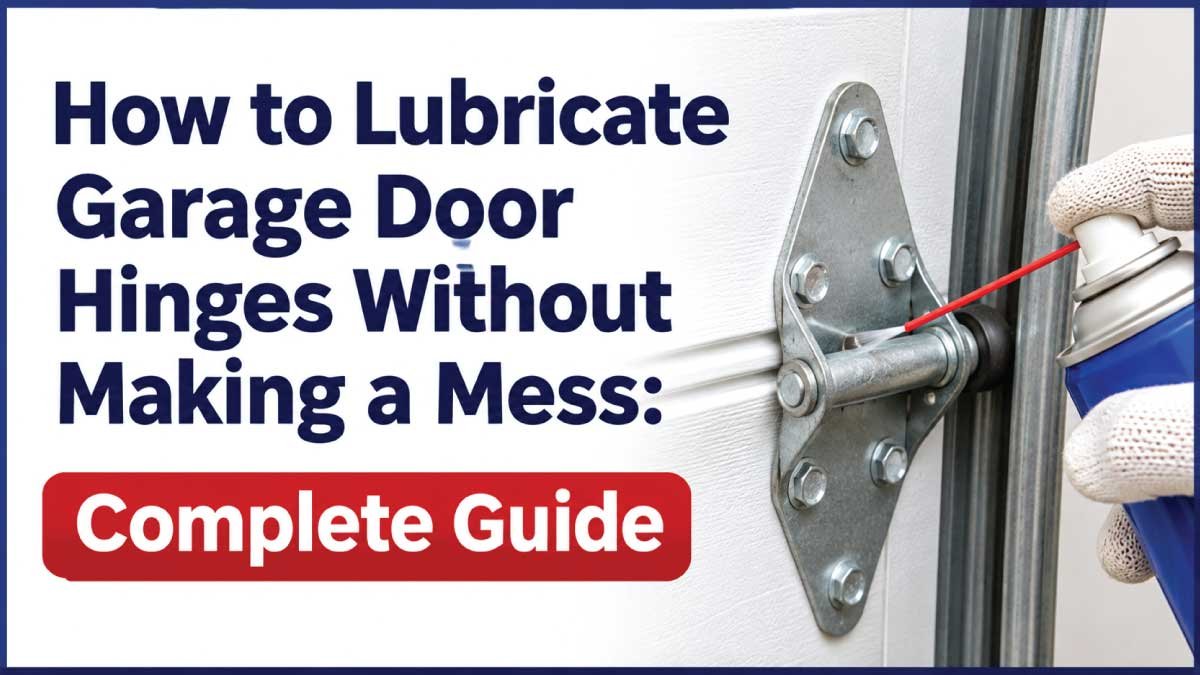
Garage door hinges play an important role in keeping a sectional garage door moving smoothly. They connect the individual door panels and allow them to bend as the door travels through the curved sections of the tracks. Because these hinges move every time the garage door opens and closes, their pivot points can gradually become dry, producing squeaking, creaking, or other friction-related noises.
Lubricating garage door hinges can help reduce friction and support quieter operation. However, spraying too much lubricant or using the wrong application method can leave oily marks on the door panels, collect dust, and create messy drips on the garage floor.
The key is to use the correct lubricant, apply it directly to the hinge pivot points, and protect nearby surfaces before starting. You do not need to coat the entire hinge or spray every part of the garage door.
This guide explains how to lubricate garage door hinges without making a mess, which products to use, how much lubricant to apply, and what mistakes to avoid.
Why Garage Door Hinges Need Lubrication
Garage door hinges connect the separate sections of a sectional garage door. As the door opens, these hinges rotate to allow the panels to follow the curved track.
Repeated movement can create friction around the hinge pivot points. Dust, moisture, and normal wear may also affect how smoothly the hinges operate.
Proper lubrication offers several benefits.
Reduces Squeaking and Creaking
Dry hinge pivot points can produce squeaking sounds whenever the garage door moves. Applying a suitable lubricant to the moving joints may help reduce this noise.
Reduces Friction
Lubricant creates a thin protective layer between compatible moving metal surfaces. This helps the hinge sections rotate with less friction.
Helps Prevent Premature Wear
Repeated metal-to-metal contact can contribute to wear over time. Suitable lubrication helps protect approved moving surfaces from unnecessary friction.
Supports Smoother Door Movement
Well-maintained hinges help the door panels bend smoothly as the garage door travels through the tracks.
However, lubrication cannot correct bent hinges, damaged panels, loose structural hardware, or track alignment problems.
What Is the Best Lubricant for Garage Door Hinges?
Choosing the correct lubricant is important because some products leave heavy residue or attract dust.
For most garage door hinge maintenance, a garage-door-specific spray lubricant or a suitable silicone-based lubricant is a practical option. The exact product should be compatible with the hinge material and approved by the garage door manufacturer.
Silicone-Based Garage Door Lubricant
Silicone-based lubricants provide a relatively light lubricating film on compatible surfaces.
They are often useful for approved garage door moving components because they can reduce friction without leaving the heavy coating associated with some greases.
Choose a product specifically labeled for garage door use and check its instructions before applying it to hinges.
Garage Door-Specific Spray Lubricant
Dedicated garage door lubricants are designed for common maintenance points such as hinges, suitable roller bearings, and spring coils.
Many come with a narrow extension straw that helps direct the spray toward small pivot points.
This type of product is particularly useful when you want to avoid spraying the surrounding door panels.
White Lithium Grease
White lithium grease is suitable for certain metal-to-metal applications where a thicker lubricating layer is needed.
However, it can leave more noticeable residue than a light spray. Use it only when the hinge or garage door manufacturer recommends it.
For a clean maintenance job, avoid applying thick grease unnecessarily.
What About Standard WD-40?
Standard WD-40 Multi-Use Product is primarily a water-displacing and cleaning product rather than a dedicated long-lasting garage door lubricant.
For routine hinge maintenance, a garage-door-specific lubricant is generally a better choice.
Always check the exact product label because different products within the same brand can have different formulations.
Tools and Materials Needed
Preparing a few simple supplies before starting makes hinge lubrication easier and helps prevent unwanted drips.
| Tool or material | Purpose |
|---|---|
| Garage door lubricant | Reduces friction at approved hinge pivot points |
| Microfiber cloth | Removes dirt and excess lubricant |
| Soft cleaning brush | Removes dust from hinge areas |
| Cardboard or protective sheet | Protects nearby surfaces from overspray |
| Paper towels | Absorbs accidental drips |
| Spray extension straw | Directs lubricant toward small joints |
| Safety glasses | Protects eyes during application |
| Protective gloves | Keeps lubricant off your hands |
Avoid using a large spray nozzle without controlling the application. A narrow extension straw is usually easier to manage around small hinge joints.
How to Lubricate Garage Door Hinges Without Making a Mess
The best way to prevent mess is to apply lubricant directly to the moving hinge joints rather than spraying the entire hinge assembly.
Follow these steps for a controlled maintenance process.
Step 1: Close the Garage Door Completely
Start by closing the garage door using its normal controls.
A fully closed door provides access to many hinge pivot points while keeping the door in its normal resting position.
If you need to work near powered opener components, disconnect the opener from its power source according to the manufacturer’s instructions.
Keep children and pets away from the work area.
Step 2: Inspect the Hinges
Look at the accessible hinges between the garage door panels.
Check for:
- Visible rust or corrosion.
- Cracked or bent hinge plates.
- Worn pivot points.
- Unusual gaps between hinge sections.
- Loose or damaged hardware.
Do not loosen hinge screws or mounting hardware to make lubrication easier. Some brackets and components are connected to parts under substantial spring tension.
If a hinge is bent, cracked, or separating from the door, contact a qualified garage door technician.
Step 3: Clean the Hinge Areas
Use a dry microfiber cloth or soft brush to remove loose dust and dirt.
Pay particular attention to the hinge pivot points where the moving sections rotate.
Cleaning before lubrication prevents dirt from mixing with the lubricant and creating sticky buildup.
Avoid using excessive water or cleaning chemicals around the hinge assemblies.
Step 4: Protect the Door Panels
Place a small piece of cardboard or a protective sheet behind the hinge if there is a risk of overspray reaching the panel surface.
You can also hold a folded paper towel beneath the hinge to catch accidental drips.
This simple step is especially helpful when using aerosol lubricants.
Avoid attaching protective materials to moving parts or placing anything where it could become trapped when the door operates.
Step 5: Attach the Extension Straw
If your lubricant comes with a narrow extension straw, attach it to the spray nozzle.
The straw helps direct the lubricant toward the small pivot area without spraying the surrounding hinge plate.
Before applying the product, read the label and shake the container if instructed.
Step 6: Apply a Small Amount to the Pivot Point
Position the nozzle close to the hinge joint and apply a brief, controlled spray.
Focus on the point where the two hinge sections rotate against each other.
You do not need to coat the entire hinge plate, screws, or surrounding door panel.
A light application is usually sufficient when the product is suitable for the hinge.
Step 7: Wipe Away Excess Lubricant Immediately
Use a clean microfiber cloth to remove any visible drips or overspray.
Wipe the surrounding hinge plate and door panel carefully without disturbing the moving hardware.
If lubricant reaches the floor, clean it promptly to prevent slippery spots.
Avoid spreading excess product across the door surface.
Step 8: Repeat on Other Approved Hinges
Move to the next accessible hinge and repeat the same process.
Apply lubricant only to manufacturer-approved pivot points.
There is no need to spray every hinge repeatedly or use a large amount of product.
If a hinge is difficult to reach safely, do not climb onto the door or opener rail. Arrange professional maintenance instead.
Step 9: Allow the Lubricant to Settle
Follow the product instructions for any recommended waiting period.
Check the hinge areas for remaining drips or residue before operating the garage door.
Remove all protective materials and cleaning supplies from the door’s path.
Step 10: Test the Garage Door
Restore power if necessary and operate the door using its normal controls.
Watch the door from a safe position as it opens and closes.
Listen for squeaking or other unusual noises. If the hinges continue making noise, the problem may involve worn bearings, damaged hardware, or another mechanical issue.
Stop operating the door if it moves unevenly or shows signs of mechanical damage.
Also Read:
How Much Lubricant Should You Use on Garage Door Hinges?
Using too much lubricant is one of the main reasons hinge maintenance becomes messy.
In most cases, a small amount applied directly to the pivot point is sufficient. The goal is to create a light lubricating film on the moving surfaces, not to cover the entire hinge with oil or grease.
| Application | Recommended approach |
|---|---|
| Hinge pivot point | Apply a small, controlled amount |
| Hinge plate | Avoid coating the entire surface |
| Hinge screws | Do not spray unnecessarily |
| Door panels | Keep lubricant off the surface |
| Nearby tracks | Keep clean and dry |
| Floor beneath the hinge | Remove accidental drips immediately |
The amount needed depends on the lubricant formula and hinge design. Follow the product instructions instead of repeatedly spraying until the hinge looks wet.
Also Read:
How to Install Garage Door Side Weather Stripping: Complete Guide
Which Parts of a Garage Door Hinge Should Be Lubricated?
Understanding the hinge construction helps you apply lubricant where it provides the most benefit.
Hinge Pivot Points
The pivot point is where the moving sections of the hinge rotate.
This is usually the main lubrication area when the manufacturer recommends lubrication.
Apply a small amount to the joint rather than coating the surrounding metal plate.
Moving Metal Contact Areas
Some hinge designs contain additional moving contact surfaces.
If the manufacturer identifies these areas as lubrication points, apply a light coating of suitable lubricant.
Do not assume every visible metal surface requires oil or grease.
Hinge Plates and Mounting Screws
The flat hinge plates and mounting screws generally do not require routine lubrication.
These parts secure the door panels and are not intended to rotate during normal operation.
Avoid spraying them unnecessarily.
Also Read:
Best Garage Door Side Seals for Uneven Door Frames: Complete Guide
Common Mistakes That Make Garage Door Lubrication Messy
A clean lubrication job depends more on controlled application than on the amount of lubricant used.
Avoid these common mistakes.
Spraying the Entire Hinge
Coating the entire hinge assembly creates unnecessary residue and increases the chance of lubricant reaching the door panels.
Focus on the pivot point instead.
Using Too Much Lubricant
Excessive spray can drip down the door and onto the garage floor.
Apply a brief, controlled amount and wipe away excess product immediately.
Using a Spray Without an Extension Straw
A wide spray pattern makes it harder to reach small hinge joints accurately.
Use an extension straw when available to improve application control.
Ignoring Nearby Door Panels
Lubricant can leave visible marks on painted, finished, or decorative door surfaces.
Protect the surrounding area and wipe away accidental overspray promptly using a suitable cleaning method.
Lubricating the Tracks
Garage door tracks should generally remain clean and dry.
Spraying lubricant inside them can attract dust and debris, potentially affecting roller movement.
Clean the tracks rather than coating them.
Also Read:
How to Stop Cold Air Coming Through Garage Door Sides: Complete Guide
Using Heavy Grease Without Checking the Instructions
Thick grease may create a messy coating and collect dirt when applied unnecessarily.
Use it only when the manufacturer recommends it for the specific hinge design.
Trying to Repair Damaged Hinges With Lubricant
Lubricant cannot fix bent, cracked, loose, or structurally damaged hinges.
If the hinge is damaged, arrange professional inspection rather than applying more spray.
How Often Should You Lubricate Garage Door Hinges?
Many residential garage doors benefit from an inspection approximately every six months. Lubrication should be performed when needed and according to the manufacturer’s instructions.
Garage doors used several times each day may require more frequent inspections than doors that are opened occasionally.
| Maintenance task | General frequency |
|---|---|
| Inspect hinge condition | Every 6 months |
| Check for squeaking | During normal operation |
| Clean hinge areas | Every 6 months or as needed |
| Lubricate approved pivot points | As recommended by manufacturer |
| Inspect for corrosion | Every 6 months |
| Check for loose or damaged hinges | Every 6 months |
If your garage door is exposed to humidity, dust, or coastal conditions, inspect the hinges more frequently.
Do not automatically lubricate every hinge every few weeks. Excessive lubrication can create residue without providing additional benefits.
How to Remove Excess Garage Door Lubricant
If you accidentally apply too much lubricant, cleaning it promptly can prevent permanent-looking marks and dirt buildup.
Remove Fresh Lubricant From Metal Hinges
Use a clean microfiber cloth or paper towel to absorb the excess product.
Wipe gently around the hinge without loosening or moving the hardware.
For stubborn residue, use a cleaning product suitable for the metal finish and follow its instructions.
Clean Lubricant From Garage Door Panels
Use a clean cloth and a mild cleaning solution approved for your garage door’s material and finish.
Test the cleaning product on an inconspicuous area first.
Avoid abrasive pads, harsh solvents, or aggressive scrubbing that could damage the paint or protective coating.
Clean Lubricant From the Garage Floor
Wipe up liquid lubricant immediately.
For a slippery residue, use an appropriate household degreasing cleaner suitable for the floor material, following the product instructions.
Make sure the floor is completely dry before walking or driving over the area.
When Should You Call a Garage Door Professional?
Routine hinge lubrication is generally a simple maintenance task, but not every hinge problem can be solved with spray lubricant.
Contact a qualified technician if you notice:
- Bent or cracked hinges.
- Hinge plates separating from door panels.
- Unusual movement between door sections.
- Loose or damaged structural mounting hardware.
- Rollers repeatedly coming out of their tracks.
- A crooked or uneven garage door.
- Persistent grinding or mechanical noises.
- A door that becomes unusually heavy or difficult to operate.
Never loosen loaded brackets, adjust torsion or extension springs, or handle lifting cables to reach a hinge.
These components can store substantial mechanical energy and should be serviced by trained professionals.
Garage Door Hinge Lubrication Checklist
Use this checklist whenever you perform routine hinge maintenance.
-
Close the garage door completely.
-
Inspect accessible hinges for damage and corrosion.
-
Clean dust from hinge pivot points.
-
Protect nearby door panels from overspray.
-
Use a garage-door-approved lubricant.
-
Attach an extension straw for controlled application.
-
Apply a small amount to approved pivot points.
-
Wipe away excess lubricant immediately.
-
Keep tracks and surrounding surfaces clean.
-
Remove protective materials and cleaning supplies.
-
Test the garage door from a safe position.
Following these steps helps keep the maintenance process clean and reduces the chance of unnecessary lubricant buildup.
Frequently Asked Questions
1. What is the best lubricant for garage door hinges?
A garage-door-specific spray lubricant or suitable silicone-based lubricant is a practical option for many garage door hinges. Choose a product compatible with the hinge material and recommended by the manufacturer. Some systems specify other lubricants, so check the maintenance instructions before applying anything.
2. Where exactly should I spray lubricant on garage door hinges?
Apply lubricant to the hinge pivot point where the moving metal sections rotate against each other, provided the manufacturer recommends lubrication there. Avoid coating the entire hinge plate, mounting screws, and surrounding door panels. A small amount applied directly to the joint is generally sufficient.
3. How do I lubricate garage door hinges without getting oil on the door?
Use a narrow extension straw to direct the spray toward the hinge pivot point. Place a small piece of cardboard behind the hinge to protect the panel and hold a paper towel underneath to catch drips. Apply a brief spray and wipe away excess lubricant immediately.
4. How often should garage door hinges be lubricated?
Inspect garage door hinges approximately every six months and lubricate approved pivot points as needed. The exact frequency depends on usage, environmental conditions, and manufacturer instructions. Doors exposed to dust or humidity may require more frequent inspections, but excessive lubrication should be avoided.
5. Can I use silicone spray on garage door hinges?
Yes, a silicone-based spray may be suitable for compatible garage door hinge pivot points when permitted by the manufacturer. It provides a light lubricating film that can help reduce friction. Check the product label and apply only a small amount to the moving joint.
6. Should I lubricate garage door hinge screws?
Garage door hinge screws generally do not need routine lubrication because they secure the hinge plates rather than function as moving joints. Spraying them unnecessarily can create residue on the door panels. Focus on approved hinge pivot points instead.
7. Why does my garage door still squeak after lubricating the hinges?
The noise may come from roller bearings, worn hinges, spring coils, or another moving component rather than the hinge pivot points. Damaged or misaligned hardware can also cause squeaking. If the noise continues after correct lubrication, have the door inspected instead of applying more product.
8. Can too much lubricant damage garage door hinges?
Excessive lubricant can attract dust and debris, leave sticky residue, and drip onto door panels or the garage floor. It does not necessarily improve hinge performance. Apply only a small amount to the approved moving joint and remove any excess with a clean microfiber cloth.
9. Should I lubricate all garage door hinges?
Lubricate only the hinge pivot points that the manufacturer identifies as maintenance locations. Many sectional garage doors have several hinges, but their design and lubrication requirements can differ. Inspect each accessible hinge and avoid spraying areas that do not require lubrication.
10. Can I lubricate garage door hinges while the door is open?
For routine maintenance, closing the garage door completely is generally the safer approach because it avoids working around a moving door and provides access to many hinge points. Never place your hands near moving components or attempt to work beneath an unsupported door. Follow the manufacturer’s safety instructions.
Final Thoughts
Lubricating garage door hinges without making a mess is mainly about using the correct product and applying it precisely. Focus on the approved hinge pivot points, use a narrow spray nozzle, protect nearby door panels, and wipe away excess lubricant immediately.
Avoid spraying the entire hinge assembly, coating the tracks, or applying thick grease without checking the manufacturer’s recommendations. A small, controlled application is usually enough for routine maintenance.
Inspect your hinges regularly and address damaged or loose components professionally. Proper maintenance helps reduce unnecessary friction, minimize squeaking, and keep your garage door operating smoothly without leaving oily residue behind.