
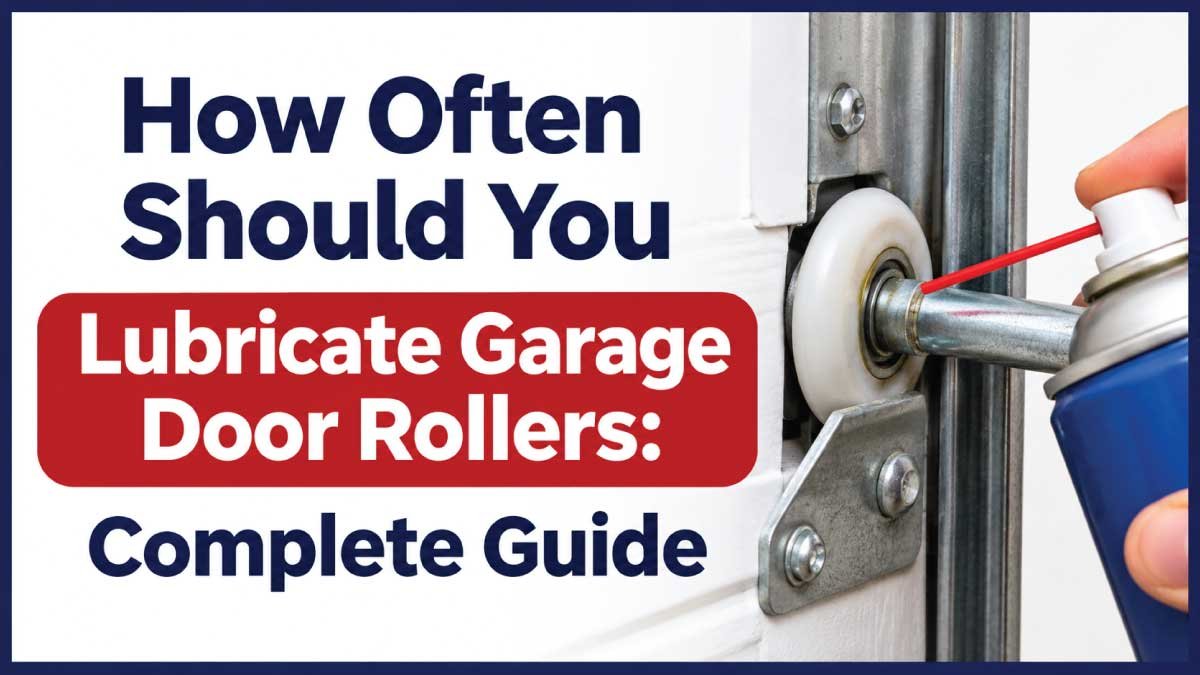
Garage door rollers play an important role in keeping a garage door moving smoothly along its tracks. Every time the door opens or closes, the rollers rotate and guide the door through its vertical and horizontal travel. Over time, friction, dust, moisture, and normal wear can affect their performance.
Lubricating garage door rollers at the correct intervals can help reduce noise, protect suitable bearing components, and support smoother operation. However, not all rollers require lubrication. Some have sealed bearings that are designed to operate without additional lubricant, while others have exposed bearings that may need occasional maintenance.
For many residential garage doors, checking the rollers every six months is a practical starting point. Lubrication should be performed only when the roller design and manufacturer’s instructions allow it. Applying the wrong product or too much lubricant can attract dirt and create additional maintenance problems.
This guide explains how often to lubricate garage door rollers, which types need lubrication, what products to use, and how to recognize when rollers need cleaning, lubrication, or replacement.
How Often Should You Lubricate Garage Door Rollers?
Most residential garage door rollers should be inspected approximately every six months. However, the correct lubrication frequency depends on the roller design, operating conditions, and manufacturer’s recommendations.
Rollers with exposed, serviceable bearings may need occasional lubrication to reduce friction and prevent unnecessary wear. Sealed-bearing rollers generally do not require routine lubrication because their bearings are protected from dust and moisture.
A garage door used several times every day may need more frequent inspections than one that is opened only occasionally. Similarly, dusty, humid, or coastal environments can increase the need for cleaning and maintenance.
| Roller type | General maintenance recommendation |
|---|---|
| Nylon rollers with sealed bearings | Inspect every 6 months; usually no lubrication needed |
| Steel rollers with exposed bearings | Inspect every 6 months; lubricate if manufacturer recommends |
| Steel rollers with sealed bearings | Inspect every 6 months; generally no additional lubrication |
| Nylon rollers with exposed bearings | Lubricate only if approved by the manufacturer |
| Worn or damaged rollers | Replace rather than relying on lubrication |
These intervals are general guidelines, not universal service requirements. Always follow the instructions supplied with your garage door and roller assemblies.
Why Garage Door Rollers Need Regular Maintenance
Garage door rollers support the door as it moves along the tracks. They help distribute the door’s movement and reduce friction between the roller assembly and the track.
When rollers become dirty, worn, or damaged, the door may become noisier and operate less smoothly.
Regular roller maintenance provides several benefits.
Reduces Friction
Roller bearings contain moving surfaces that rotate during garage door operation. When serviceable bearings become dry, friction can increase.
Suitable lubrication creates a protective layer between the bearing surfaces, helping them rotate more freely.
Reduces Squeaking and Grinding Noises
Dry or worn roller bearings can produce squeaking, clicking, or grinding sounds.
If the noise is caused by a lack of lubrication in a serviceable bearing, applying the correct product may improve operation. However, damaged bearings may need replacement instead.
Helps Extend Roller Life
Excessive friction can contribute to premature wear in roller bearings and other moving components.
Proper maintenance helps reduce unnecessary friction and allows rollers to operate as intended.
Supports Smooth Garage Door Movement
Clean and properly maintained rollers help the garage door travel through its tracks without unnecessary resistance.
However, lubrication cannot correct bent tracks, damaged rollers, poor alignment, or an unbalanced door.
Which Garage Door Rollers Need Lubrication?
The type of roller installed on your garage door determines whether lubrication is necessary.
Before applying any product, identify the roller construction and check the manufacturer’s maintenance instructions.
1. Steel Rollers With Exposed Bearings
Steel rollers are commonly found on older garage doors and some standard residential systems. Certain designs have exposed bearing areas that may require occasional lubrication.
If the bearings are serviceable and the manufacturer permits lubrication, apply a small amount of suitable garage door lubricant to the bearing area.
Avoid spraying the entire roller or coating the surrounding track.
2. Nylon Rollers With Sealed Bearings
Nylon rollers are popular because they generally operate more quietly than many traditional steel rollers.
Many modern nylon rollers contain sealed bearings. These bearings are enclosed to protect their internal components from dust and moisture.
Sealed-bearing rollers generally do not need additional lubricant. Applying spray around the outside of the roller is unlikely to improve the internal bearing operation.
Inspect them regularly for cracks, worn surfaces, and other signs of damage.
3. Steel Rollers With Sealed Bearings
Some steel rollers also use sealed bearing assemblies.
Although the outside of the roller is made from metal, the internal bearings may not require maintenance. Do not assume that every steel roller needs oil or grease.
Check the product specifications before applying lubricant.
4. Rollers With Worn or Damaged Bearings
A roller with a failing bearing may continue making noise even after lubrication.
Signs of damage include excessive wobbling, rough rotation, visible corrosion, or unusual grinding sounds.
In these situations, replacement is usually more appropriate than repeatedly applying lubricant.
Best Lubricant for Garage Door Rollers
Choosing the correct lubricant helps protect roller bearings without creating unnecessary dirt buildup.
The best product depends on whether the roller has exposed bearings, sealed bearings, or another manufacturer-specific design.
Silicone-Based Garage Door Lubricant
Silicone-based garage door lubricants are commonly used for suitable moving components.
They provide a light lubricating film and are often available in spray containers with narrow nozzles for controlled application.
Use a product specifically labeled for garage door mechanisms and confirm that it is suitable for the roller material and bearing design.
Garage Door-Specific Spray Lubricant
A dedicated garage door lubricant is often a practical choice for routine maintenance.
These products are formulated for common garage door lubrication points, including certain roller bearings and hinges.
Follow the instructions on the container and avoid spraying the tracks.
White Lithium Grease
White lithium grease provides longer-lasting lubrication for certain metal components.
However, it is not automatically suitable for every roller assembly. Use it only when the roller manufacturer specifically recommends it.
Applying thick grease unnecessarily can attract dirt and create residue around the mechanism.
Can You Use WD-40 on Garage Door Rollers?
Standard WD-40 Multi-Use Product is primarily a water-displacing and cleaning product rather than a dedicated long-lasting lubricant.
For routine roller maintenance, a garage-door-specific lubricant is generally a better choice when the bearing manufacturer permits lubrication.
Also, do not confuse standard WD-40 with other products in the WD-40 Specialist range, which may have different formulations and intended applications.
How to Lubricate Garage Door Rollers Safely
If your garage door rollers have serviceable bearings and the manufacturer recommends lubrication, follow a careful maintenance process.
You do not need to remove the rollers or adjust the garage door mechanism to perform basic lubrication.
Step 1: Identify the Roller Type
Examine the accessible rollers and determine whether they have exposed or sealed bearings.
Check the garage door manual or roller manufacturer’s product information if you are unsure.
Do not lubricate sealed-bearing rollers simply because they are made from steel or nylon.
Step 2: Close the Garage Door
Close the garage door completely before beginning maintenance.
If you are working near powered opener components, disconnect the opener from its power source according to the manufacturer’s instructions.
Keep children and pets away from the work area.
Step 3: Inspect the Rollers
Look for visible cracks, rust, worn surfaces, loose assemblies, and damaged bearing areas.
Check whether any roller appears unusually crooked or wobbly.
Do not touch the spring system, lifting cables, bottom brackets, or other components under tension.
Step 4: Clean Accessible Roller Areas
Use a dry microfiber cloth to remove loose dust and dirt from accessible roller surfaces.
A soft brush can help remove debris around exposed areas.
Avoid forcing cleaning materials into sealed bearings or using excessive water around the mechanical components.
Step 5: Apply a Small Amount of Lubricant
If the bearings are serviceable, apply a small amount of manufacturer-approved lubricant to the exposed bearing area.
Use the spray nozzle carefully to avoid coating the roller surface, track, and nearby door panels.
A light application is generally sufficient.
Step 6: Wipe Away Excess Product
Use a clean cloth to remove drips and excess lubricant.
Too much product can collect dust and create sticky residue around the garage door mechanism.
Make sure the tracks remain clean and free from grease.
Also Read:
Step 7: Test the Garage Door
Restore power if necessary and operate the garage door using its normal controls.
Observe the door from a safe position as it opens and closes.
Listen for unusual squeaking, grinding, or clicking noises. If the door still operates roughly or makes abnormal sounds, stop using it and arrange a professional inspection.
Signs Your Garage Door Rollers Need Attention
Garage door rollers often provide warning signs when they become worn, dirty, or damaged.
Recognizing these symptoms early can help prevent additional wear and unexpected operating problems.
Squeaking During Operation
A high-pitched squeaking sound may indicate dry bearings or friction within a roller assembly.
If the roller has serviceable bearings, suitable lubrication may help. However, worn bearings can produce similar noises.
Grinding or Clicking Sounds
Grinding noises may indicate damaged bearings, rust, or a roller that is no longer rotating properly.
Repeated clicking can also occur when a damaged roller moves along the track.
Do not assume these sounds can be fixed by applying more lubricant.
Also Read:
How to Install Garage Door Side Weather Stripping: Complete Guide
Visible Roller Cracks
Nylon rollers can develop cracks or damaged surfaces over time.
A cracked roller should be replaced because lubrication cannot restore its structural strength.
Excessive Wobbling
A roller that moves unevenly or appears loose may have a damaged bearing or another mechanical problem.
Do not attempt to tighten loaded roller brackets or adjust the track yourself. Have a qualified technician inspect the assembly.
Rough or Uneven Door Movement
If the door shakes, jerks, or moves unevenly, the cause may involve worn rollers, track alignment, damaged hardware, or an unbalanced door.
Professional inspection is recommended when the movement is abnormal.
What Happens If You Never Lubricate Garage Door Rollers?
The effects of skipping lubrication depend on the roller design.
Sealed-bearing rollers are designed to operate without routine lubrication, so adding lubricant is not necessary for their normal maintenance.
However, exposed serviceable bearings that require lubrication may experience increased friction if they are neglected.
Possible consequences include:
- Increased squeaking and operating noise.
- Faster wear of serviceable bearing components.
- Rougher roller rotation.
- Greater likelihood of corrosion in exposed areas.
- Reduced operating smoothness.
It is important to remember that lubrication is only one part of roller maintenance. Cleaning, visual inspections, and timely replacement of worn components are equally important.
Also Read:
Best Garage Door Side Seals for Uneven Door Frames: Complete Guide
Common Garage Door Roller Lubrication Mistakes
Incorrect maintenance can create additional problems. Avoid these common mistakes when servicing garage door rollers.
Lubricating Sealed Bearings
Sealed bearings are designed to protect their internal components without regular external lubrication.
Spraying lubricant around the outside of a sealed roller does not necessarily reach the internal bearing surfaces.
Follow the manufacturer’s instructions instead.
Spraying the Garage Door Tracks
Tracks should generally remain clean and dry.
Lubricant can collect dirt and dust, creating a sticky buildup that may interfere with roller movement.
Clean the tracks rather than applying oil or grease.
Using Too Much Lubricant
Applying large amounts of lubricant does not improve performance.
Excess product can drip onto the floor, attract debris, and spread onto surfaces that should remain clean.
Use only a small amount at approved lubrication points.
Using the Wrong Product
Household oils, heavy grease, and general-purpose sprays may not be suitable for all roller materials and bearing designs.
Choose a product specifically recommended for the component.
Ignoring Damaged Rollers
Lubricant cannot repair cracked nylon, worn metal, loose assemblies, or failing bearings.
Replace damaged rollers instead of repeatedly attempting to quiet them with spray.
Attempting to Adjust Roller Brackets
Garage door roller brackets may be connected to components under substantial spring tension, especially near the bottom of the door.
Never loosen or remove loaded brackets, lifting cables, or spring hardware. These repairs should be handled by a qualified garage door technician.
Also Read:
How to Stop Cold Air Coming Through Garage Door Sides: Complete Guide
When Should You Replace Garage Door Rollers Instead of Lubricating Them?
Lubrication can help maintain suitable bearings, but it cannot restore a roller that has reached the end of its useful life.
Consider professional roller replacement if you notice:
- Cracked or broken nylon roller surfaces.
- Bearings that grind or remain noisy after appropriate maintenance.
- Rollers that wobble excessively.
- Visible corrosion that affects the roller’s operation.
- Flat spots or unusual wear on the roller surface.
- Repeated problems with the door moving unevenly.
Roller replacement may also be worth considering when older rollers are consistently noisy or have deteriorated.
A professional can identify the correct roller size, stem length, bearing type, and load rating for your garage door.
Garage Door Roller Maintenance Schedule
A simple maintenance schedule helps prevent neglect while avoiding unnecessary lubrication.
| Maintenance task | Suggested frequency |
|---|---|
| Inspect roller surfaces | Every 6 months |
| Check for cracks and wear | Every 6 months |
| Check exposed bearings | Every 6 months |
| Lubricate serviceable bearings | As recommended by manufacturer |
| Clean accessible roller surfaces | Every 6 months or as needed |
| Inspect tracks for dirt and damage | Every 6 months |
| Test normal door operation | Regularly |
| Replace worn rollers | When damaged or no longer operating correctly |
If your garage door operates frequently or is exposed to heavy dust and moisture, consider more frequent visual inspections.
Frequently Asked Questions
1. How often should garage door rollers be lubricated?
Garage door rollers should generally be inspected every six months, but lubrication depends on their bearing design. Exposed, serviceable bearings may need occasional lubrication when recommended by the manufacturer. Sealed-bearing rollers usually do not require additional lubricant. Check the roller specifications before applying any product.
2. Do nylon garage door rollers need lubrication?
Many nylon garage door rollers contain sealed bearings and do not require routine lubrication. Their design protects the internal bearing components from dirt and moisture. However, some roller models have different maintenance requirements. Check the manufacturer’s instructions rather than assuming all nylon rollers should be lubricated.
3. Should steel garage door rollers be lubricated?
Some steel rollers have exposed bearings that benefit from occasional lubrication, while others use sealed bearing assemblies that require no additional lubricant. The material of the roller does not determine its lubrication needs by itself. Inspect the bearing design and follow the manufacturer’s maintenance recommendations.
4. What is the best lubricant for garage door rollers?
A garage-door-specific silicone-based spray lubricant is suitable for many approved roller-bearing applications. Some manufacturers recommend other products for particular bearing assemblies. Use a lubricant compatible with the roller material and bearing design. Avoid applying heavy grease or general-purpose products unless the manufacturer specifically recommends them.
5. Can I spray WD-40 on garage door rollers?
Standard WD-40 Multi-Use Product is primarily a water-displacing product rather than a dedicated long-lasting lubricant. For regular roller maintenance, a garage door lubricant recommended by the manufacturer is generally a better choice. Also, avoid spraying sealed bearings, tracks, or other parts that do not require lubrication.
6. Why do my garage door rollers squeak?
Garage door rollers may squeak because of dry serviceable bearings, dirt buildup, corrosion, or normal wear. Damaged rollers and alignment problems can also produce similar noises. If the rollers have exposed bearings, appropriate lubrication may help. Persistent squeaking should be investigated rather than treated with repeated lubricant applications.
7. Can I lubricate garage door rollers without removing them?
Yes, suitable exposed roller bearings can often be lubricated while the rollers remain installed. Close the door, identify the approved lubrication point, and apply a small amount of product as directed by the manufacturer. Never remove roller brackets or loosen hardware that may be under spring tension.
8. Should I lubricate garage door tracks along with the rollers?
No, garage door tracks should generally remain clean and dry. Applying lubricant inside the tracks can attract dirt and interfere with roller movement. Clean the tracks with a dry cloth or soft brush instead. Lubricate only approved moving components, such as serviceable roller bearings.
9. How do I know if garage door rollers need replacement?
Rollers may need replacement if they have cracked surfaces, excessive wobbling, damaged bearings, flat spots, or persistent grinding noises. A roller that no longer rotates smoothly may also be worn beyond the point where lubrication can help. Have a qualified technician inspect damaged or unstable roller assemblies.
10. Can poor roller maintenance damage a garage door opener?
Worn or damaged rollers can increase resistance as the garage door moves. This may cause the opener to work harder than normal, potentially contributing to additional wear over time. However, opener problems can have other causes as well. Regular roller inspections and timely replacement help maintain smooth door movement.
Final Thoughts
Most garage door rollers should be inspected every six months, but not all rollers need regular lubrication. Exposed, serviceable bearings may require occasional maintenance, while sealed-bearing nylon and steel rollers are generally designed to operate without additional lubricant.
The key is to identify your roller type, use the correct product, and apply lubricant only where the manufacturer recommends it. Keep the tracks clean, avoid excessive spraying, and replace damaged rollers rather than trying to repair them with lubricant.
Regular inspections and proper maintenance help keep garage doors quieter and smoother while reducing unnecessary wear on the entire operating system. If rollers are cracked, unstable, or causing uneven door movement, contact a qualified garage door professional.