
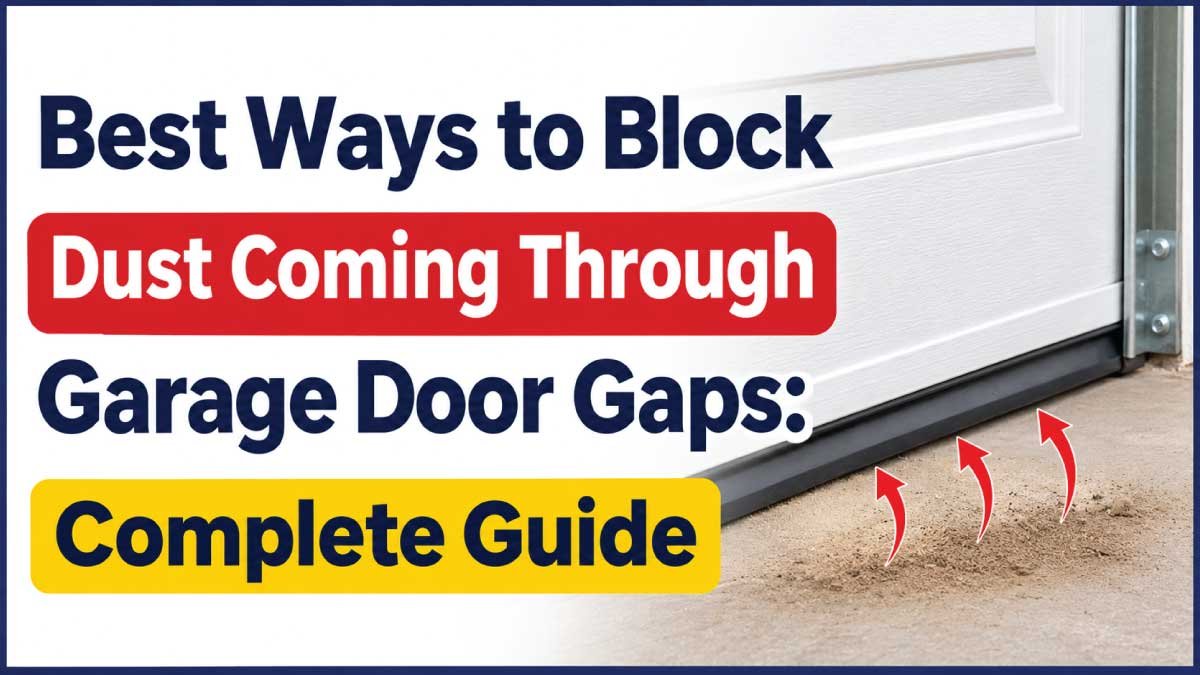
Dust coming through garage door gaps can make a garage dirty, affect stored belongings, and spread fine particles into nearby living spaces. Even when a garage door appears fully closed, small openings around its sides, top, bottom, and corners can allow outdoor dust to enter. The problem is often worse during dry weather, strong winds, nearby construction, or when vehicles drive over dusty roads and driveways.
The most effective way to reduce dust is to identify where it enters and close those openings with suitable garage door weather stripping. Side seals, top seals, bottom rubber seals, and threshold barriers can help create a tighter perimeter around the closed door. However, the right solution depends on the size of the gaps, the condition of the garage door, and whether the door closes evenly.
This guide explains the best ways to block dust coming through garage door gaps, including practical sealing methods, materials, installation steps, and maintenance tips. It also covers common mistakes, estimated repair costs, and when professional garage door service may be necessary.
Why Dust Comes Through Garage Door Gaps
Garage doors are designed to close against weather seals, but they are not always completely airtight. Small openings can develop as the seals deteriorate or the door shifts over time.
Worn Side Weather Stripping
Side weather stripping runs along the left and right edges of the garage door frame. Its flexible edge contacts the closed door to reduce the entry of dust, wind, and moisture.
Over time, vinyl and rubber seals can become cracked, flattened, brittle, or detached. When this happens, fine dust can pass through the openings, particularly during windy conditions.
Damaged Bottom Garage Door Seal
The bottom seal closes the space between the lower edge of the garage door and the floor. If the rubber becomes torn, permanently flattened, or uneven, dust can enter underneath the door.
This problem is especially noticeable when the concrete floor has small dips or irregularities.
Gaps Along the Top of the Door
The upper edge of the garage door may have a gap if the top weather stripping is missing, worn, or incorrectly positioned.
Dust carried by wind can enter through this opening and collect on shelves, stored equipment, and the garage floor.
Poor Garage Door Alignment
A garage door that closes unevenly may leave a larger opening on one side. This can happen because of worn rollers, damaged hinges, track problems, or other mechanical issues.
Replacing the weather stripping will not necessarily solve the problem if the door itself is misaligned.
Uneven Garage Floor
Concrete floors can develop cracks, low spots, and uneven areas over time. When the bottom seal cannot follow the floor surface, dust can enter through the remaining openings.
A standard bottom seal may work well on a smooth floor but leave gaps where the concrete is uneven.
Damaged Garage Door Frame
Cracked wood, deteriorated trim, and gaps between the frame and surrounding wall can create additional entry points for dust.
Sometimes the dust appears to come through the garage door edges when it is actually entering behind the stationary frame.
Signs Dust Is Entering Through Garage Door Gaps
Before purchasing sealing materials, inspect the garage and identify where dust is collecting.
Dust Accumulating Near the Door Edges
If dust repeatedly collects along one side or near the bottom corners, that area may have an opening in the weather stripping.
Dust Lines on the Garage Floor
Fine dust may form a visible line just inside the garage door. This often indicates that outdoor air is carrying particles through the bottom or lower side gaps.
Dust on Shelves and Stored Items
If boxes, tools, and shelves near the garage entrance become dusty soon after cleaning, inspect the upper and side edges of the door.
Visible Daylight Around the Door
Close the garage door and look for daylight around its perimeter. Visible openings indicate that the door is not making complete contact with the surrounding seals.
Dust Entering During Windy Weather
If the garage stays relatively clean on calm days but becomes dusty during strong winds, the weather seals may not be closing the gaps effectively.
Best Ways to Block Dust Coming Through Garage Door Gaps
Several sealing methods can reduce dust entry. The best results usually come from combining compatible side, top, and bottom seals rather than relying on a single product.
1. Replace Worn Side Weather Stripping
Replacing damaged side weather stripping is one of the most effective ways to block dust entering through the vertical edges.
Inspect both sides with the garage door closed. Look for cracked rubber, flattened vinyl, loose sections, and areas where daylight is visible.
To replace the seal:
- Identify how the existing weather stripping is attached.
- Remove only the fasteners or components intended for the seal.
- Detach the old material carefully.
- Clean the mounting surface.
- Measure the required length.
- Install a compatible replacement seal.
- Check that its flexible edge contacts the closed door evenly.
Choose weather stripping designed for garage door use. It should be flexible enough to close the gap without creating excessive pressure against the door.
2. Install a New Bottom Garage Door Seal
The bottom seal is especially important because dust can easily enter through openings between the door and concrete floor.
Common bottom seal designs include T-style, bulb-style, and U-shaped profiles. The correct replacement depends on the retainer attached to the lower edge of the garage door.
To replace a worn bottom seal:
- Inspect the existing seal and retainer.
- Identify the seal profile and mounting arrangement.
- Measure the width of the garage door.
- Purchase a compatible replacement.
- Remove the old material according to the manufacturer’s instructions.
- Clean the retainer channel.
- Install the new seal without twisting it.
- Close the door and check floor contact.
Do not remove bottom brackets, cables, or other hardware supporting the door. These components can be under high tension and should only be handled by a trained technician.
3. Add a Garage Door Threshold Seal
A threshold seal is installed directly on the garage floor beneath the closed door. It creates an additional barrier along the bottom edge and can reduce dust entry where the existing floor seal does not make consistent contact.
Threshold seals are available in rubber and other durable materials. Some designs include a raised profile that helps block dust, water, and debris.
A threshold can be particularly useful when the concrete floor has minor variations. However, choose a product that is compatible with the bottom seal and does not prevent the garage door from closing properly.
4. Install Top Weather Stripping
Dust can also enter through the gap between the upper edge of the garage door and the frame.
Inspect the top weather stripping for cracks, missing sections, and loose fasteners. If it no longer makes contact with the closed door, replace it with a compatible seal.
The flexible edge should close the upper gap without pushing the door out of its normal position.
Top weather stripping is especially useful when dust collects on shelves or stored items near the upper part of the garage entrance.
5. Seal Gaps at the Garage Door Corners
The corners are common entry points because side, top, and bottom seals must connect properly.
Inspect all four corners, paying particular attention to the lower sections where the vertical side seals meet the bottom edge.
Replace missing or damaged weather stripping and use compatible corner components if the garage door system supports them.
For cracks in the stationary frame, an exterior-grade sealant may be suitable. Do not use rigid sealant to fill gaps between moving door components.
6. Repair Cracks Around the Garage Door Frame
Dust may enter through cracks between the stationary frame and the surrounding wall.
Inspect the trim, joints, and mounting areas for visible openings. Small stationary cracks can often be sealed with an appropriate exterior-grade caulk.
Before applying sealant:
- Remove loose dirt and old material.
- Make sure the surface is dry.
- Select a product suitable for the frame material.
- Apply it only to stationary joints.
- Follow the manufacturer’s curing instructions.
If the frame is rotten, loose, or badly damaged, repair or replace the affected material rather than covering it with caulk.
7. Correct Uneven Garage Door Alignment
If one side of the garage door has a larger gap than the other, the problem may involve alignment rather than weather stripping.
Check whether the door closes evenly and whether the gap changes along its height. Damaged rollers, hinges, tracks, or panels may prevent the door from contacting the seals correctly.
Have a qualified technician inspect the door if it is crooked or moves unevenly. Do not bend tracks, loosen supporting brackets, or adjust springs and cables yourself.
8. Improve Garage Ventilation and Dust Control
Sealing the door gaps can reduce incoming dust, but dust already inside the garage may continue circulating.
Keep the garage reasonably clean and use suitable ventilation when working with dust-producing materials. A properly sized air purifier with an appropriate particulate filter may also help reduce airborne dust in an enclosed garage.
Avoid creating excessive negative pressure with an exhaust fan unless the replacement air is drawn from a clean source. Otherwise, the fan may pull more dusty outdoor air through remaining gaps.
Best Materials for Blocking Dust Around Garage Doors
Choosing suitable materials helps create a more reliable barrier and reduces the need for repeated repairs.
| Material | Best Application | Main Benefit |
|---|---|---|
| Vinyl weather stripping | Side and top edges | Flexible contact with the door |
| Rubber bottom seal | Lower door edge | Closes floor-level openings |
| Threshold seal | Garage floor | Adds a barrier beneath the door |
| Corner seal components | Compatible corner connections | Closes gaps where seals meet |
| Exterior-grade caulk | Stationary frame cracks | Seals fixed openings |
| Weather-resistant retainer | Side or top seal mounting | Holds weather stripping securely |
| Door brush seal | Suitable specialized openings | Reduces dust and light debris |
Rubber Weather Stripping
Rubber seals are commonly used around garage doors because they can remain flexible and make contact with uneven surfaces.
Choose a product designed for the location and mounting arrangement. A bottom seal and a side seal may have very different profiles.
Vinyl Weather Stripping
Vinyl weather stripping is often used along the sides and top of residential garage doors. It is available in several shapes and can provide an effective barrier when installed correctly.
Brush Seals
Brush seals use flexible bristles to reduce the movement of dust through certain openings. They may be useful for specialized garage door gaps, but they are not necessarily a substitute for rubber weather stripping where water resistance is important.
Exterior-Grade Caulk
Caulk is useful for stationary cracks around the frame. It should not be applied to moving door sections or used as a replacement for flexible weather seals.
Tools and Materials Needed
Most basic dust-blocking repairs require common tools and a few replacement materials.
| Tool or Material | Purpose |
|---|---|
| Replacement weather stripping | Closes gaps around the door |
| Bottom garage door seal | Blocks dust beneath the door |
| Threshold seal | Adds floor-level protection |
| Measuring tape | Measures gaps and seal lengths |
| Utility knife | Cuts compatible seal material |
| Screwdriver or drill | Removes and installs suitable fasteners |
| Cleaning cloth | Removes dirt and debris |
| Mild detergent | Cleans mounting surfaces |
| Exterior-grade caulk | Seals stationary frame cracks |
| Caulking gun | Applies caulk |
| Safety glasses and gloves | Protects hands and eyes |
Check the mounting system before buying replacement materials. A seal that looks similar may not fit the existing retainer.
Also Read:
How to Replace Old Garage Door Perimeter Seals: Complete Guide
Safety Precautions Before Sealing Garage Door Gaps
Garage doors are heavy mechanical systems. Even basic weather-stripping work requires care.
Follow these precautions:
- Keep children and pets away from the work area.
- Keep fingers away from the space between the door and frame.
- Do not loosen torsion springs, extension springs, cables, or bottom brackets.
- Do not remove structural track brackets or hardware supporting the door.
- Never work beneath an unsupported garage door.
- Use a stable ladder when reaching the upper frame.
- Wear gloves when removing old seals or handling sharp fasteners.
- Follow the manufacturer’s instructions before disconnecting or operating the opener.
If the door is crooked, unstable, or off its tracks, stop and contact a qualified garage door technician.
How to Seal Garage Door Gaps to Stop Dust
Follow these steps to create a more effective barrier around the garage door.
Step 1: Find the Dust Entry Points
Close the garage door and inspect the entire perimeter.
Look for visible gaps, cracked seals, missing sections, and areas where the weather stripping no longer touches the door.
If you are unsure where dust enters, clean the floor near the garage entrance and inspect it again after a windy day. Fresh dust patterns can help identify the problem area.
You can also ask someone to observe the inside of the garage while you gently spray water along the outside of the seals. Although this test identifies water entry rather than dust directly, it can reveal openings in the perimeter sealing system.
Also Read:
How to Stop Water Coming Through Garage Door Side Gaps: Complete Guide
Step 2: Measure the Gaps
Measure the affected side, top, or bottom sections before purchasing replacement material.
Check the width of the opening and the profile of the existing seal. For bottom seals, measure the door width and inspect the retainer channel.
Do not choose a thicker seal simply because the gap looks large. An oversized product may prevent the garage door from closing correctly.
Step 3: Remove Damaged Weather Stripping
Remove old material according to the mounting system.
For screw-mounted weather stripping, remove the fasteners intended for the seal assembly and carefully detach the material.
For slide-in seals, follow the manufacturer’s instructions for releasing the material from its retainer.
Avoid removing structural brackets, bottom brackets, cables, springs, or track hardware.
Step 4: Clean the Mounting Surfaces
Use a damp cloth and mild detergent to remove dust, dirt, and residue from the frame and retainer.
Allow the surface to dry before installing replacement material.
Inspect the mounting area for cracks, loose wood, rust, or other damage. Repair deteriorated stationary surfaces before fitting new weather stripping.
Step 5: Install New Side and Top Seals
Measure and cut the replacement material according to the manufacturer’s instructions.
Position the flexible edge so it contacts the closed garage door. Secure the material using the correct fasteners or retainer system.
Keep the seal straight and avoid stretching it tightly during installation.
Repeat the process for the affected side and upper sections.
Also Read:
How to Fix a Garage Door That Does not Sit Flush: Complete Guide
Step 6: Replace the Bottom Seal
If dust is entering beneath the garage door, inspect the bottom seal and retainer.
Choose a replacement with the correct profile, remove the old material safely, clean the channel, and install the new seal according to the manufacturer’s instructions.
Check that the seal makes reasonably consistent contact with the floor when the door is closed.
If the retainer is badly bent or the installation requires removing loaded hardware, have a technician complete the work.
Step 7: Seal Stationary Frame Cracks
If dust is entering around the fixed frame, apply suitable exterior-grade caulk to appropriate stationary cracks.
Clean and dry the surface first, then apply the product according to its instructions.
Do not seal moving joints, roller paths, hinges, or drainage openings.
Step 8: Add a Threshold if Necessary
If the bottom seal still leaves small openings because of minor floor variations, consider a compatible threshold seal.
Clean the floor, position the threshold according to the manufacturer’s instructions, and secure it using the recommended adhesive or fasteners.
Check that the garage door can close properly against it and that the raised edge does not create an unnecessary trip hazard.
Also Read:
Why Is There a Gap Between Garage Door and Floor: Complete Guide
Step 9: Test the Completed Seals
Close the garage door and inspect the full perimeter.
Check that the side and top seals make consistent contact and that the bottom seal rests against the floor.
Operate the door to make sure it opens and closes smoothly. If it reverses unexpectedly or struggles to close, stop using it and investigate the installation.
Other Ways to Reduce Dust Inside the Garage
Weather stripping is the main solution for dust entering through garage door gaps, but a few additional practices can help keep the space cleaner.
Use Storage Containers With Lids
Store tools, seasonal items, clothing, and household supplies in covered containers. This reduces the amount of dust that settles directly on belongings.
Clean the Garage Floor Regularly
Sweep or vacuum accumulated dust rather than allowing it to build up near the entrance. A suitable vacuum with a fine-particle filter can help collect dust without spreading as much of it into the air.
Keep the Driveway Clean
Loose soil, sand, and leaves around the garage entrance can become airborne when vehicles pass or wind blows. Regularly clean the driveway and the area immediately outside the door.
Use Suitable Air Filtration
If dust remains a problem after sealing the door, consider an air purifier with an appropriate particulate filter. Position it where air can circulate freely and maintain the filter according to the manufacturer’s recommendations.
Keep the Garage Door Closed When Not in Use
Leaving the garage door open allows dust and debris to enter directly. Keep it closed when access is not needed, especially during windy conditions.
Common Mistakes to Avoid When Blocking Dust
Using the wrong materials or ignoring the cause of the gap can make a repair ineffective.
Using Household Foam Instead of Garage Door Seals
Ordinary foam strips may compress permanently or detach under repeated door movement. Choose weather stripping designed for garage doors and the specific mounting location.
Applying Caulk Between Moving Sections
Caulk is intended for suitable stationary joints. Applying it between moving door components can interfere with operation and damage the sealing arrangement.
Installing an Oversized Bottom Seal
A thick bottom seal may prevent the door from closing properly or cause unnecessary pressure against the floor. Select a profile compatible with the retainer and floor conditions.
Ignoring the Garage Door Alignment
If the door closes unevenly, replacing the weather stripping alone may not solve the dust problem. Have mechanical issues inspected by a technician.
Blocking Ventilation Openings
Do not seal intentional ventilation openings or drainage paths without understanding their purpose. Blocking them may create moisture or air-quality problems.
Forgetting the Frame Around the Door
Dust can enter through cracks between the garage door frame and the surrounding wall. Inspect the fixed trim and frame as well as the flexible seals.
When to Call a Professional Garage Door Technician
Some dust-entry problems are caused by damaged mechanical components or structural issues.
Contact a qualified technician if:
- The garage door is crooked or does not close evenly.
- The door has come off its tracks.
- Rollers, hinges, or tracks appear damaged.
- Large gaps remain after replacing compatible seals.
- The bottom retainer is bent or severely corroded.
- The door becomes difficult to operate after sealing.
- The door panels are warped or damaged.
- Repairing the gap would require adjusting springs or cables.
A technician can inspect the door alignment, track system, and weather-stripping arrangement. If the surrounding frame or concrete floor is damaged, a separate contractor may be needed.
Estimated Cost to Block Dust Coming Through Garage Door Gaps
Costs depend on the garage door size, replacement materials, and whether professional installation is required.
| Repair or Material | General Estimated Cost (USD) |
|---|---|
| Basic side weather stripping | $15–$40 |
| Top weather stripping | $10–$30 |
| Replacement bottom seal | $15–$45 |
| Garage door threshold seal | $25–$80 |
| Corner seal components | $10–$35 |
| Exterior-grade caulk | $5–$20 |
| Professional weather-stripping replacement | $75–$200 |
| Professional alignment or hardware repair | $100–$250 or more |
These are broad illustrative estimates rather than fixed quotations. Actual costs vary by region, garage door dimensions, material quality, and labor rates. Extensive frame or mechanical repairs may cost more.
How to Maintain Garage Door Seals and Prevent Dust
Regular maintenance helps weather stripping remain effective and reduces the chance of new gaps developing.
Inspect the Seals Every Few Months
Check the side, top, and bottom seals for cracks, loose sections, flattened areas, and missing material. Pay particular attention to the corners.
Clean the Weather Stripping
Remove accumulated dust and dirt with a soft cloth and mild cleaning solution. Avoid harsh chemicals that could damage vinyl or rubber.
Check for Visible Daylight
Close the door and inspect the perimeter from inside the garage. If daylight appears where the seals should make contact, investigate the opening.
Keep Retainers Secure
Check for loose screws, bent channels, and detached weather stripping. Repair minor mounting issues before they create larger openings.
Inspect After Windy Weather
If dust repeatedly enters during storms or strong winds, identify the affected section and replace deteriorated material promptly.
Maintain Exterior Surfaces
Keep the driveway and nearby drainage areas clean. Removing loose dust, sand, and debris outside the garage reduces the amount of material available to enter.
Frequently Asked Questions
1. What Is the Best Way to Stop Dust Coming Through a Garage Door?
The most effective approach is to seal the gaps around the entire garage door perimeter. Replace worn side and top weather stripping, install a suitable bottom seal, and consider a threshold where the floor is uneven. Also check the frame and door alignment. Closing all major openings reduces the amount of dust carried inside by wind.
2. Why Does Dust Come Under My Garage Door?
Dust usually enters underneath because the bottom rubber seal is damaged, flattened, or unable to follow the floor surface. Small dips and cracks in concrete can leave openings even when the door is fully closed. Inspect the bottom seal and consider a compatible replacement or threshold if the floor has minor variations.
3. Does a Garage Door Threshold Stop Dust?
Yes. A properly installed threshold can reduce dust entering through the gap beneath the garage door. It creates an additional barrier between the door and the floor. However, it should be compatible with the bottom seal and must not interfere with normal door operation. It also does not replace damaged side or top weather stripping.
4. Can I Use Silicone to Block Dust Around a Garage Door?
Exterior-grade silicone or another suitable exterior sealant may close small stationary cracks in the garage door frame. It should not be applied between moving door sections or used to replace flexible weather stripping. For gaps around the door itself, use compatible side, top, or bottom seals designed for garage door applications.
5. What Type of Weather Stripping Is Best for Blocking Garage Door Dust?
Flexible vinyl and rubber weather stripping are common choices for garage door sides and top edges. Rubber bottom seals are designed to contact the garage floor and reduce dust entry underneath. The best product depends on the gap size, door design, and mounting system. Always check compatibility before purchasing replacement material.
6. How Do I Stop Dust Coming Through Garage Door Side Gaps?
Inspect the vertical weather stripping on both sides of the closed door. Replace cracked, flattened, or detached material with a compatible side seal. Make sure the flexible edge contacts the door evenly from top to bottom. If one side still has a large opening, have the door alignment checked.
7. Will Replacing the Bottom Garage Door Seal Stop All Dust?
Replacing the bottom seal can significantly reduce dust entering underneath the door, but it will not stop dust coming through side gaps, upper corners, or cracks around the frame. Inspect the entire perimeter and repair each affected section. Good results usually require a combination of compatible side, top, and bottom seals.
8. Can an Air Purifier Help With Garage Dust?
An air purifier with a suitable particulate filter can reduce airborne dust already inside the garage. However, it does not prevent new dust from entering through door gaps. Seal the garage door first, then use air filtration as an additional measure if dust remains a problem.
9. How Often Should Garage Door Weather Stripping Be Replaced?
There is no universal replacement schedule because weather exposure, material quality, and frequency of use affect seal life. Inspect the weather stripping every few months and replace it when it becomes brittle, cracked, permanently flattened, or detached. Prompt replacement helps prevent dust and drafts from entering through newly developed gaps.
10. Why Does My Garage Still Get Dusty After Replacing the Seals?
Dust may still enter through an incorrectly fitted seal, uneven floor, damaged frame, or poorly aligned garage door. It may also come from ventilation openings or other gaps in the surrounding structure. Inspect the full garage perimeter and check whether dust is entering from another source before replacing the weather stripping again.
Final Thoughts
Blocking dust coming through garage door gaps starts with identifying the openings that allow outdoor air and particles to enter. Worn side weather stripping, damaged bottom seals, gaps around the top edge, and poorly connected corners are common causes. Replacing deteriorated materials and making sure the garage door closes evenly can significantly reduce dust entry.
For better results, inspect the entire perimeter rather than repairing only the most visible gap. Use compatible rubber or vinyl seals, consider a threshold for floor-level openings, and seal suitable cracks in the stationary frame. Keep the driveway clean and avoid blocking ventilation or drainage openings.
If the door is crooked, damaged, or difficult to operate, have a qualified technician inspect it before making mechanical adjustments. With suitable sealing materials and regular maintenance, you can keep the garage cleaner, protect stored belongings, and reduce the amount of dust entering your home through the garage.