
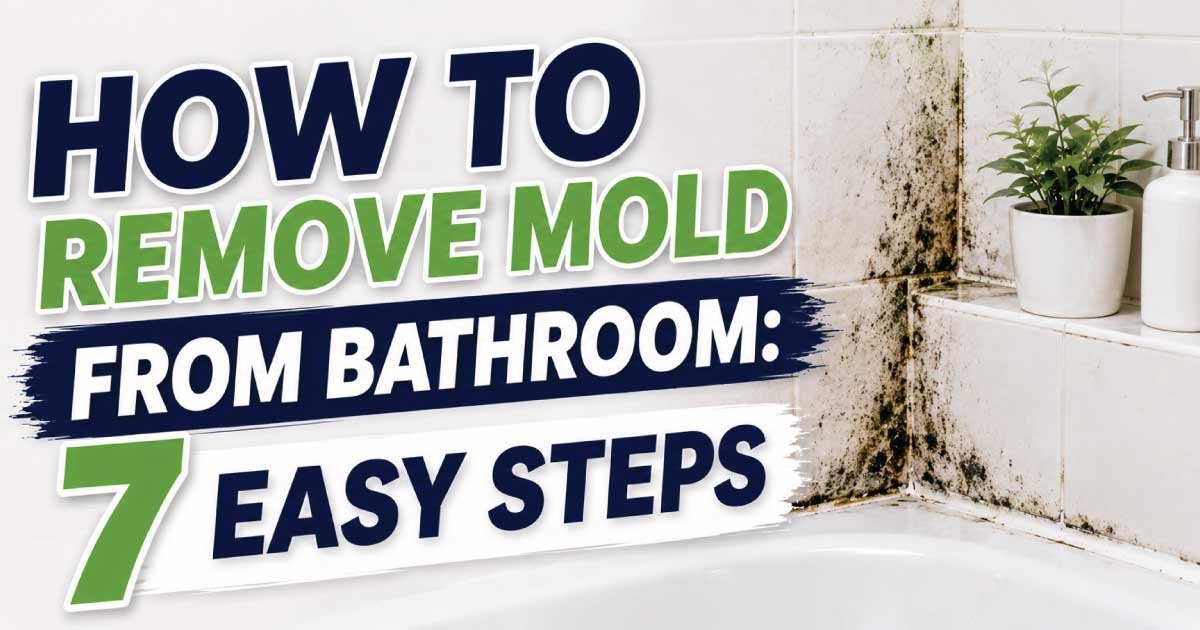
Bathroom mold is a common household problem caused by excess moisture, poor ventilation, and warm temperatures. While a small amount of mold may seem harmless at first, it can quickly spread across walls, ceilings, grout, shower curtains, and caulking if left untreated. Besides making your bathroom look dirty, mold can produce unpleasant odors and contribute to poor indoor air quality.
The good news is that you can remove most bathroom mold using simple cleaning methods and common household products. By following the right steps and adopting a few preventive habits, you can keep your bathroom clean, fresh, and mold-free.
In this guide, you’ll learn 7 easy steps to remove bathroom mold, along with the best cleaning supplies, common mistakes to avoid, and practical tips to prevent mold from returning.
Table of Contents
ToggleWhy Mold Grows in Bathrooms
Bathrooms provide the perfect environment for mold because they are often warm, humid, and frequently exposed to water. Mold spores naturally exist in the air, but they begin to grow when they land on damp surfaces.
Common causes of bathroom mold include:
- Poor ventilation
- High humidity
- Water leaks
- Standing water
- Damp towels and bath mats
- Dirty grout and caulking
- Infrequent cleaning
Removing moisture is just as important as removing the mold itself.
Signs You Have Bathroom Mold
Recognizing mold early makes it easier to remove before it spreads.
Look for these signs:
- Black, green, or gray spots on walls or ceilings.
- Dark stains on grout or caulk.
- Musty or damp odors.
- Mold around shower doors or tubs.
- Discoloration near windows or vents.
- Peeling paint caused by excess moisture.
If mold covers a large area or keeps returning despite cleaning, it may indicate a hidden moisture problem that needs professional attention.
Supplies You’ll Need
Before you begin cleaning, gather the necessary supplies.
| Cleaning Supply | Purpose |
|---|---|
| Rubber gloves | Protect hands |
| Face mask | Reduce exposure to mold spores |
| Safety goggles | Protect eyes |
| White vinegar | Kills many types of mold |
| Baking soda | Removes stains and odors |
| Mild dish soap | General surface cleaning |
| Spray bottle | Apply cleaning solution |
| Soft-bristle brush | Scrub mold safely |
| Old toothbrush | Clean grout and corners |
| Microfiber cloth | Wipe and dry surfaces |
These supplies are suitable for most bathroom surfaces and help make mold removal safer and more effective.
Step 1: Improve Ventilation Before Cleaning
Before disturbing mold, improve airflow in the bathroom.
Open windows if available and turn on the exhaust fan to reduce airborne moisture and improve ventilation while cleaning.
If possible:
- Keep the bathroom door open.
- Use a portable fan outside the bathroom.
- Wear protective gloves and a face mask.
Proper ventilation also helps surfaces dry faster after cleaning.
Step 2: Spray White Vinegar on Moldy Areas
White vinegar is a natural cleaner that can eliminate many common types of household mold.
Instructions:
- Pour undiluted white vinegar into a spray bottle.
- Spray directly onto moldy surfaces.
- Allow it to sit for at least 30–60 minutes.
- Do not rinse immediately.
The vinegar needs time to penetrate and loosen the mold.
Step 3: Scrub the Surface Gently
After allowing the vinegar to work, scrub the affected area using a soft-bristle brush or an old toothbrush.
Focus on:
- Tile grout
- Shower corners
- Around faucets
- Window frames
- Caulk lines
Avoid using metal brushes that may scratch tiles or fixtures.
Step 4: Use Baking Soda for Stubborn Mold
If stains remain, baking soda provides additional cleaning power.
How to use it:
- Mix baking soda with a small amount of water to create a paste.
- Apply it directly to stained areas.
- Let it sit for 10–15 minutes.
- Scrub gently with a brush.
- Rinse with warm water.
Baking soda also helps neutralize musty odors.
Step 5: Clean Shower Curtains and Bath Mats
Mold often spreads to fabrics exposed to moisture.
Clean or replace:
- Shower curtains
- Plastic liners
- Bath mats
- Washcloths
- Towels
Wash washable items according to their care instructions and allow them to dry completely before reuse.
Step 6: Dry Every Surface Thoroughly
Moisture left behind allows mold to return quickly.
After cleaning:
- Wipe walls with a microfiber cloth.
- Dry tiles completely.
- Leave the shower door open.
- Run the exhaust fan for at least 20 minutes.
- Open windows whenever possible.
A dry bathroom is much less likely to develop mold again.
Step 7: Prevent Future Mold Growth
Removing mold is only half the solution. Preventing it from returning is equally important.
Adopt these daily habits:
- Wipe shower walls after every use.
- Hang towels so they dry completely.
- Fix plumbing leaks promptly.
- Use a squeegee on shower glass.
- Wash bath mats regularly.
- Keep humidity levels low with proper ventilation.
Consistent maintenance is the best defense against recurring mold.
Bathroom Mold Prevention Schedule
Following a simple routine can significantly reduce the chances of mold returning.
| Task | Recommended Frequency |
|---|---|
| Wipe shower walls | Daily |
| Dry bathroom surfaces | Daily |
| Run exhaust fan | After every shower |
| Wash bath mats | Weekly |
| Clean shower curtain | Monthly |
| Inspect grout and caulk | Monthly |
| Check for plumbing leaks | Every few months |
Preventive care is much easier than removing established mold.
Best Natural Cleaners for Bathroom Mold
Several household ingredients work well for light mold removal.
| Cleaner | Best For | Benefits |
|---|---|---|
| White vinegar | Tiles, grout, glass | Dissolves mold and mildew |
| Baking soda | Stains and odors | Gentle, non-abrasive cleaner |
| Mild dish soap | Everyday dirt | Removes surface grime |
| Warm water | General rinsing | Safe for most surfaces |
Always test any cleaner on a small, inconspicuous area before using it on large surfaces, especially if your bathroom contains delicate materials.
Common Mistakes to Avoid
Many homeowners accidentally make mold problems worse.
Avoid these common mistakes:
- Ignoring small mold spots, allowing them to spread.
- Failing to dry surfaces after cleaning, encouraging mold to return.
- Blocking bathroom ventilation, increasing humidity.
- Using overly abrasive scrubbers that damage grout or tiles.
- Leaving damp towels on the floor, creating additional moisture.
- Overlooking hidden areas behind toilets, under sinks, and around window frames.
Addressing moisture sources is just as important as cleaning visible mold.
Tips for Keeping Your Bathroom Mold-Free
A few simple habits can dramatically reduce mold growth.
Consider these practical tips:
- Use the exhaust fan every time you shower.
- Open a window whenever weather permits.
- Wipe condensation from mirrors and walls.
- Repair leaking faucets or pipes promptly.
- Replace damaged caulk before water seeps behind surfaces.
- Store cleaning supplies nearby for quick touch-ups.
- Clean grout regularly to prevent mold from taking hold.
These habits help create a cleaner and healthier bathroom environment.
When Should You Call a Professional?
While small patches of mold can often be cleaned safely at home, some situations require professional help.
Consider contacting a mold remediation specialist if:
- Mold covers a large area of the bathroom.
- Mold keeps returning despite regular cleaning.
- There is visible water damage behind walls or ceilings.
- You suspect hidden mold inside drywall or under flooring.
- The mold problem is linked to a significant plumbing leak or flooding.
Professionals have specialized equipment to identify and remove hidden mold safely.
Conclusion
Removing bathroom mold doesn’t have to be difficult when you act quickly and follow the right cleaning methods. By using simple household products like white vinegar and baking soda, improving ventilation, and thoroughly drying surfaces, you can eliminate mold and help prevent it from returning. These 7 easy steps provide an effective way to restore cleanliness and improve the overall hygiene of your bathroom.
The secret to long-term mold prevention is consistency. Daily habits such as wiping down shower walls, running the exhaust fan, fixing leaks promptly, and maintaining a regular cleaning schedule can dramatically reduce moisture and stop mold from becoming a recurring problem. With a little routine maintenance, you can enjoy a fresher, healthier, and mold-free bathroom throughout the year.