
The digital advertising industry is booming, and businesses increasingly rely on Google Ads to reach their target audience effectively.
This creates a high-demand market for professionals skilled in managing Google Ads campaigns.
Starting a Google Ads management business can be a lucrative opportunity, but it requires planning, skills, and strategic execution.
This guide will take you step-by-step through the process of building a successful Google Ads management business.
1. Understand Google Ads and the Digital Marketing Landscape
Before starting your business, it’s essential to understand what Google Ads is and how it works.
Google Ads is an online advertising platform that allows businesses to create ads that appear on Google search results, YouTube, and other websites within the Google Display Network.
Campaigns are typically pay-per-click (PPC), meaning advertisers only pay when users interact with their ads.
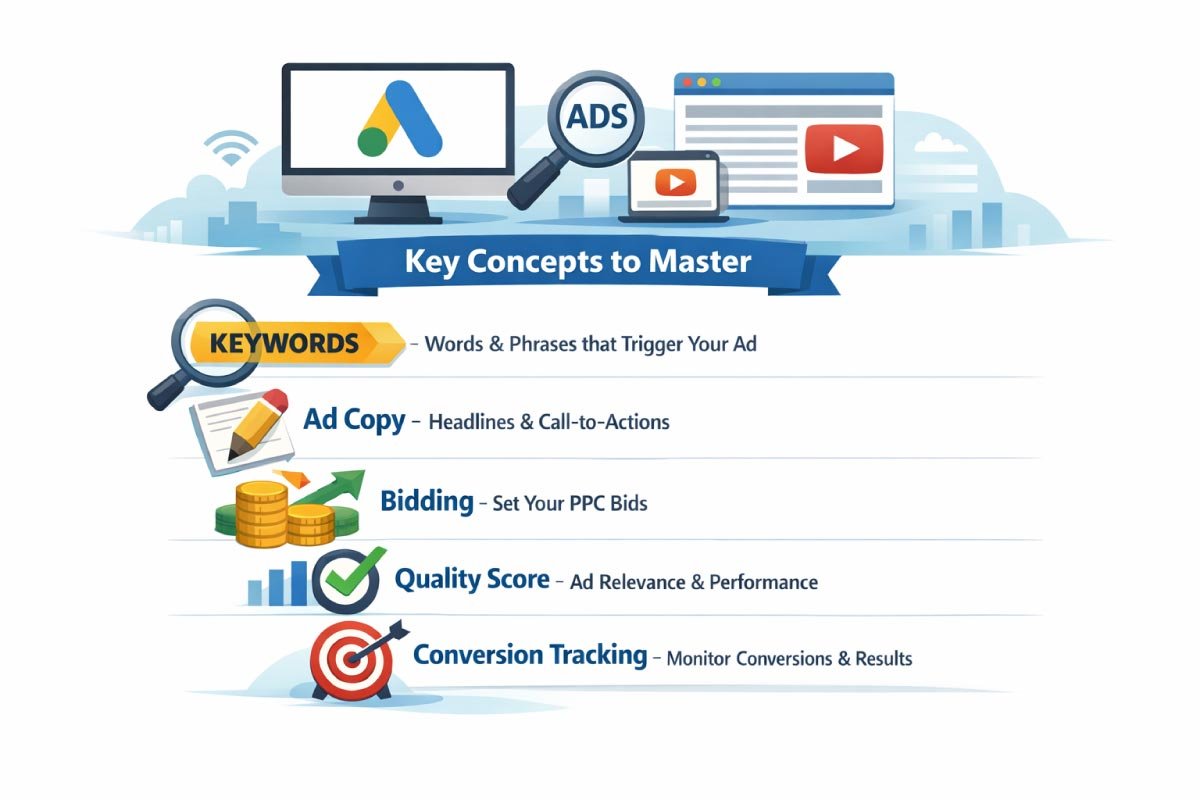
Key Concepts to Master:
| Concept | Description |
|---|---|
| Keywords | Words or phrases that trigger your ad to show when users search for them. |
| Ad Copy | The text or creative elements of your ad, including headlines, descriptions, and call-to-actions. |
| Bidding | The process of setting how much you are willing to pay per click or conversion. |
| Quality Score | A metric that measures the relevance and performance of your ads and landing pages. |
| Conversion Tracking | A system to monitor how effectively your ads drive desired actions (sales, sign-ups, leads). |
Understanding these concepts is critical because clients will rely on your expertise to optimize their campaigns and maximize ROI.
2. Develop Your Skills and Credentials
-
Google Ads Search Certification
-
Google Ads Display Certification
-
Google Ads Video Certification
-
Google Ads Shopping Certification
-
Google Ads Measurement Certification
Obtaining these certifications will give you credibility and show potential clients that you are capable of managing their campaigns effectively. Additionally, hands-on experience with real campaigns is invaluable. You can start by offering free or discounted services to small businesses or personal projects to build a portfolio.
3. Define Your Services and Pricing Model
Defining your services and pricing model is essential for attracting the right clients to your Google Ads management business.
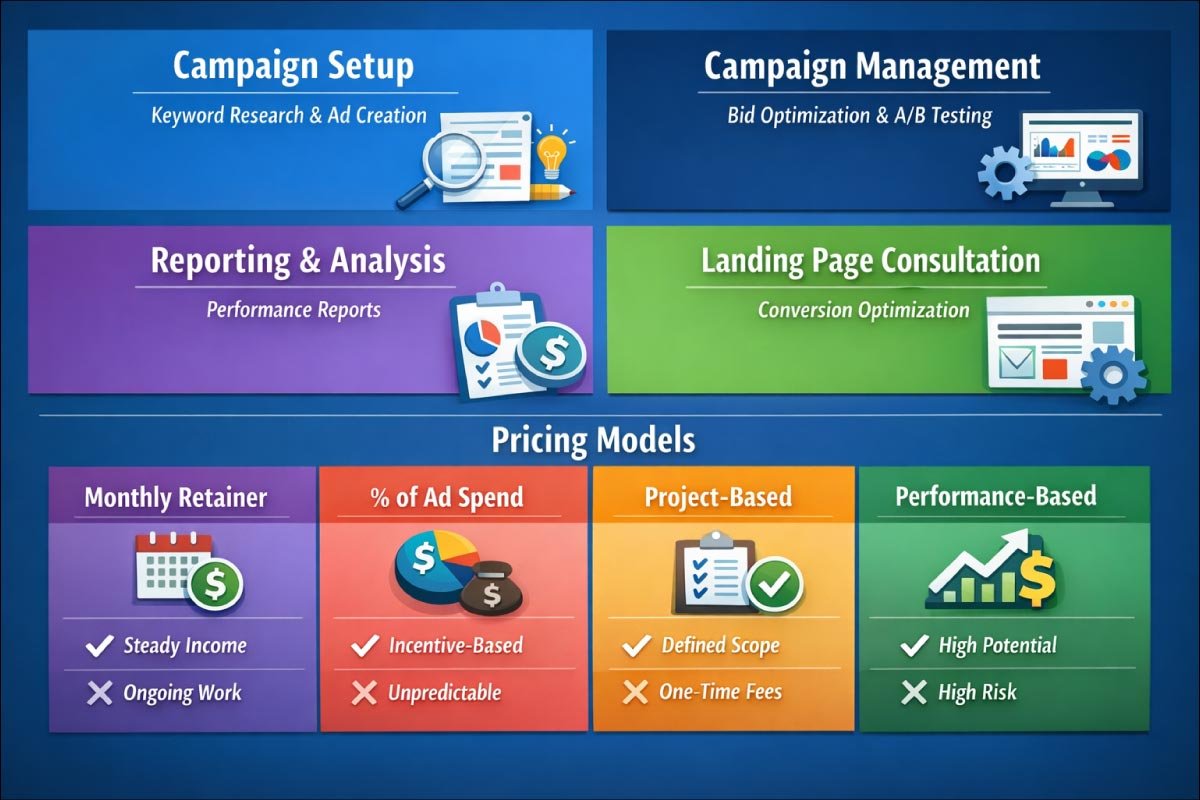
Clearly outline the campaign types, strategies, and support you provide, and set pricing based on value, complexity, and market rates.
Transparent services and competitive pricing build trust and encourage long-term client relationships.
| Service | Description |
|---|---|
| Campaign Setup | Researching keywords, writing ad copy, designing creatives, and structuring campaigns. |
| Campaign Management | Ongoing optimization of campaigns, including bid adjustments, A/B testing, and negative keyword management. |
| Reporting & Analysis | Providing clients with regular performance reports and insights to inform business decisions. |
| Landing Page Consultation | Optimizing landing pages to improve conversion rates and ad performance. |
Pricing Models:
| Pricing Model | Pros | Cons |
|---|---|---|
| Monthly Retainer | Predictable income and long-term client relationships | May require extensive ongoing work |
| Percentage of Ad Spend | Aligns incentives with client growth | Can be unpredictable and may discourage clients with large budgets |
| Project-Based | Clear scope and deliverables | Limited ongoing income and harder to scale |
| Performance-Based | High earning potential for successful campaigns | Risky if campaigns underperform |
Choosing the right pricing model depends on your target clients, experience level, and business goals.
4. Identify Your Niche
Identifying your niche is crucial for standing out in the competitive Google Ads management industry.
Focus on a specific industry, business type, or target audience where you can deliver specialized value.
A well-defined niche allows you to tailor campaigns, attract ideal clients, and position your agency as an expert in that market segment.
-
E-commerce businesses
-
Local service providers (plumbers, lawyers, realtors)
-
Health and wellness companies
-
Online education platforms
-
SaaS products
By specializing, you can tailor campaigns, messaging, and strategy to a specific industry, which often results in better performance and client satisfaction.
Read More:
5. Set Up Your Business Infrastructure
Setting up your business infrastructure is essential for running a successful Google Ads management agency.
Establish systems for client onboarding, project management, reporting, communication, and billing.
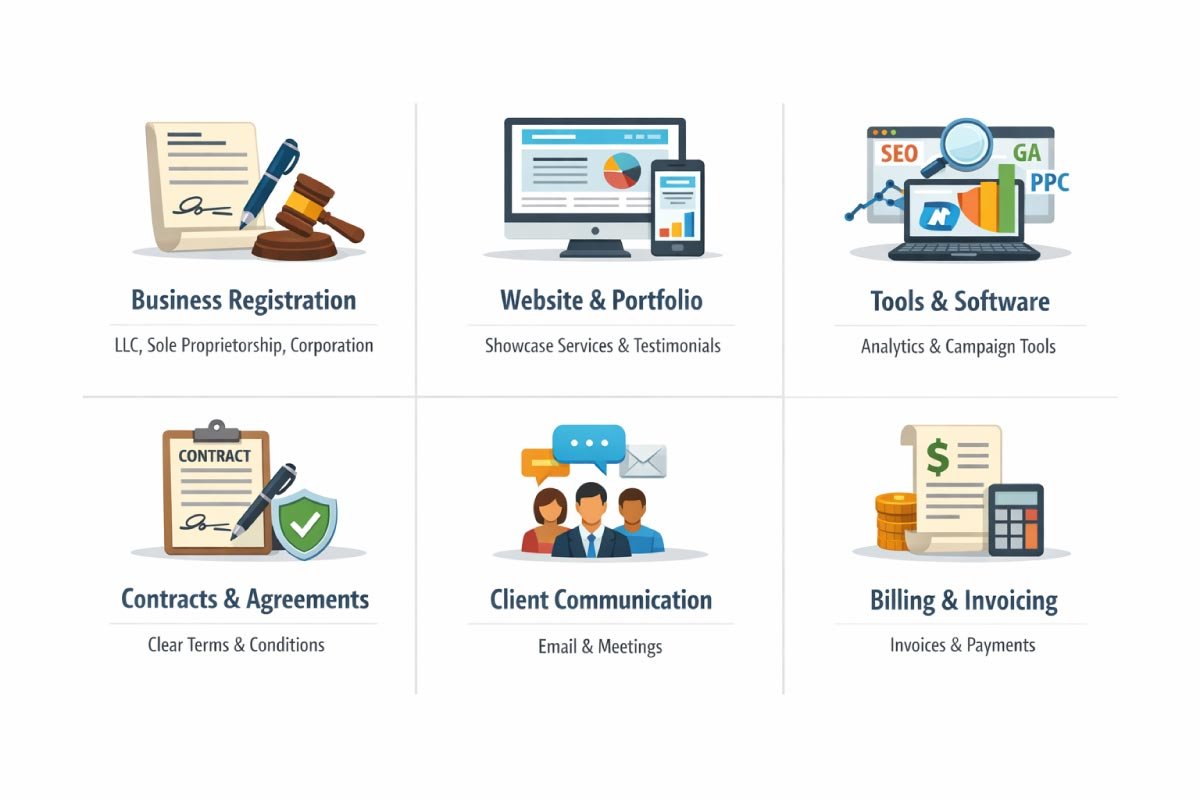
A strong infrastructure streamlines operations, ensures consistent service delivery, and provides a scalable foundation to support growth and handle multiple clients effectively.
-
Business Registration: Choose a legal structure such as sole proprietorship, LLC, or corporation depending on liability and tax considerations.
-
Website and Portfolio: Showcase your services, case studies, and client testimonials.
-
Tools and Software: Use tools for keyword research, analytics, reporting, and campaign management. Common tools include Google Analytics, SEMrush, Ahrefs, and Google Data Studio.
-
Contracts and Agreements: Draft contracts that outline scope, deliverables, pricing, and terms to protect both you and your clients.
| Infrastructure Component | Purpose |
|---|---|
| Legal Structure | Protects personal assets and defines tax responsibilities |
| Website | Builds credibility and serves as a lead generation tool |
| Tools & Software | Supports campaign management, optimization, and reporting |
| Contracts | Ensures clear expectations and legal protection |
6. Acquire Your First Clients
Acquiring your first clients is a critical step in launching your Google Ads management business. Focus on networking, referrals, and targeted outreach to demonstrate your expertise.
Providing value, showcasing past results, and building trust helps secure initial projects and lays the foundation for long-term client relationships and business growth.
| Strategy | Tips |
|---|---|
| Freelancing Platforms | Platforms like Upwork and Fiverr allow you to connect with clients seeking Google Ads management services. |
| Networking | Attend local business events, industry meetups, and online groups. Personal connections can lead to initial clients. |
| Social Media Marketing | Promote your services on LinkedIn, Facebook, and Instagram, targeting businesses that need PPC services. |
| Referrals | Offer existing contacts or clients discounts for referring new clients. |
When approaching potential clients, focus on showing how your expertise can improve their ROI. Case studies, free audits, or sample campaign strategies can help demonstrate your value.
7. Create a Workflow for Campaign Management
Creating a workflow for campaign management is crucial for running an efficient Google Ads business.
Define clear steps for campaign setup, targeting, ad creation, monitoring, and reporting.
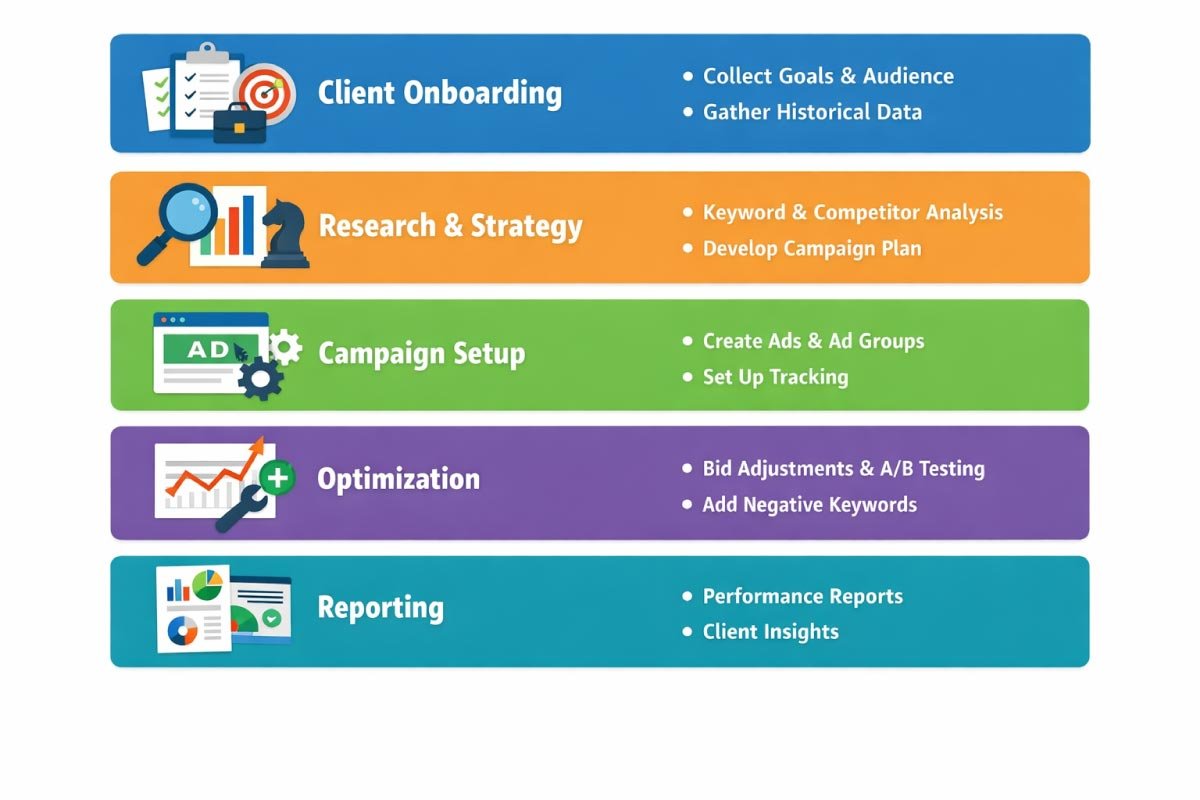
A structured workflow ensures consistency, reduces errors, improves team collaboration, and helps deliver optimized campaigns that achieve measurable results for clients.
Typical Workflow:
-
Client Onboarding: Collect business goals, target audience, and historical campaign data.
-
Research & Strategy: Conduct keyword research, competitor analysis, and develop campaign structures.
-
Campaign Setup: Create campaigns, ad groups, ads, and set up tracking.
-
Optimization: Regularly review performance, adjust bids, test ad creatives, and add negative keywords.
-
Reporting: Provide clients with performance updates and insights for future improvements.
| Workflow Step | Tools & Tips |
|---|---|
| Onboarding | Use Google Forms or Typeform to collect client information efficiently |
| Research | SEMrush, Ahrefs, and Google Keyword Planner for keyword research |
| Campaign Setup | Google Ads Editor for bulk changes and faster setup |
| Optimization | Google Analytics and Google Ads reports to monitor KPIs |
| Reporting | Use Google Data Studio to create visually appealing dashboards |
Read More:
8. Marketing Your Google Ads Management Business
Marketing your Google Ads management business is key to attracting clients and growing your agency.
Utilize strategies like content marketing, social media promotion, SEO, networking, and case studies to showcase expertise.
Effective marketing builds credibility, increases visibility, and drives client acquisition, helping your business expand in a competitive digital landscape.
-
Content Marketing: Publish blog posts, guides, and case studies to show your expertise.
-
Email Marketing: Build a list of prospects and nurture them with valuable insights and offers.
-
Paid Advertising: Ironically, running your own Google Ads campaigns can help generate leads for your business.
-
Partnerships: Collaborate with web design agencies, marketing consultants, or SEO specialists who may need Google Ads services for their clients.
A consistent and professional marketing approach helps establish your reputation as a trusted PPC expert.
9. Measure Success and Optimize
Measuring success and optimizing campaigns are essential for a thriving Google Ads management business.
Track key performance metrics like click-through rates, conversions, and ROI to evaluate effectiveness.
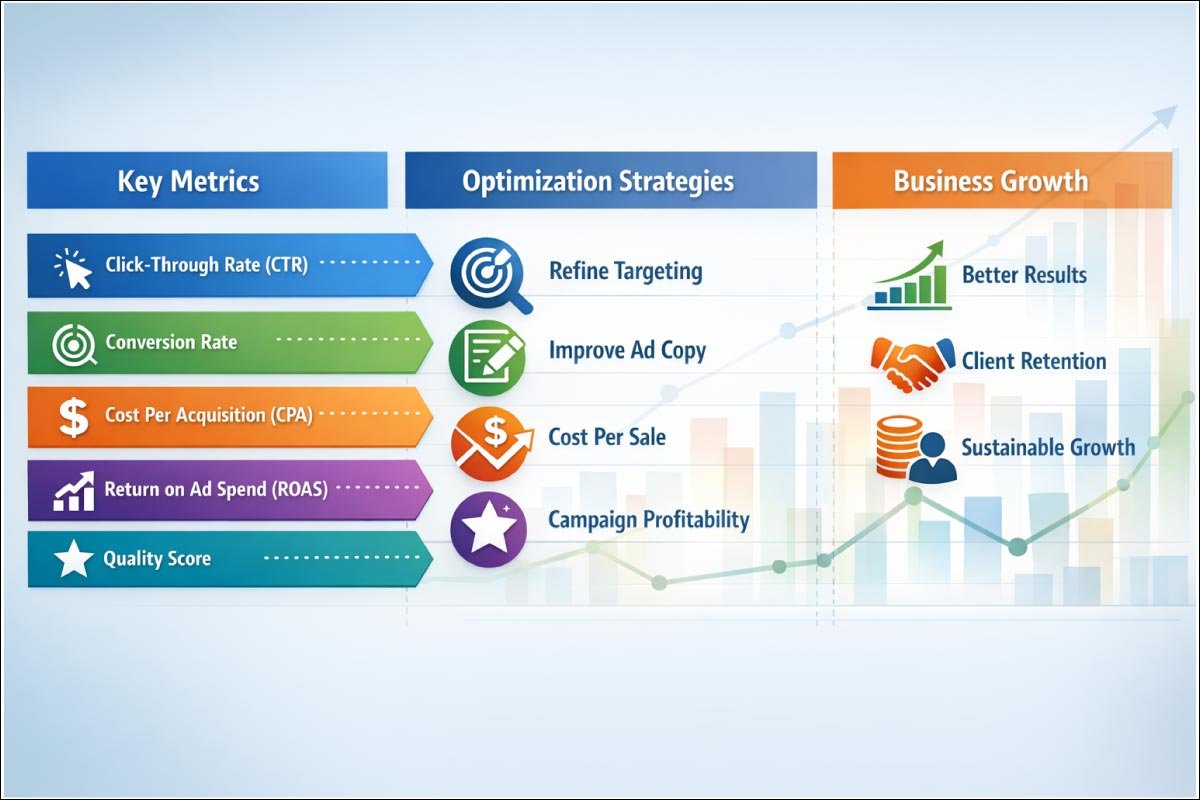
Use these insights to refine targeting, ad copy, and bidding strategies, ensuring continuous improvement, better results for clients, and sustainable business growth.
| Metric | Importance |
|---|---|
| Click-Through Rate (CTR) | Indicates ad relevance and effectiveness |
| Conversion Rate | Measures how many clicks lead to desired actions |
| Cost Per Acquisition (CPA) | Shows the cost of acquiring a client or sale |
| Return on Ad Spend (ROAS) | Evaluates the profitability of campaigns |
| Quality Score | Impacts ad rank and CPC in Google Ads |
Regularly analyzing these metrics allows you to refine campaigns and demonstrate tangible results to clients, which improves client retention and referral opportunities.
10. Scaling Your Google Ads Management Business
Scaling your Google Ads management business involves expanding your client base, optimizing campaign strategies, and streamlining operations for efficiency.
By leveraging advanced targeting, automation tools, and performance analytics, you can deliver better results.
Strategic growth, team development, and strong client relationships ensure your agency thrives in a competitive digital marketing landscape.
-
Hire a Team: Start with freelancers for research, copywriting, or reporting, and eventually build a small in-house team.
-
Automate Tasks: Use tools for automated reporting, bid adjustments, and scheduling ads.
-
Offer Additional Services: Expand into social media advertising, SEO, or full-service digital marketing.
-
Build Case Studies: Document successful campaigns to attract higher-paying clients and larger projects.
| Scaling Strategy | Example |
|---|---|
| Team Expansion | Hire a Google Ads specialist to manage additional client accounts |
| Automation | Use automated rules in Google Ads to pause underperforming ads |
| Service Expansion | Include Facebook Ads management for cross-platform campaigns |
| Case Studies | Publish a detailed report showing ROI improvement for a client |
Read More:
11. Tips for Success
Tips for success in running a Facebook Ads agency include staying updated on platform changes, focusing on client results, and continuously optimizing campaigns.
Build strong relationships, leverage analytics for data-driven decisions, and invest in skill development. Consistency, adaptability, and delivering measurable value ensure long-term growth and credibility.
-
Stay Updated: Google Ads evolves constantly. Regularly learn about new features, updates, and industry trends.
-
Focus on ROI: Clients care about results. Always aim to maximize conversions and minimize wasted spend.
-
Build Relationships: Strong communication and transparency help retain clients long-term.
-
Document Processes: Create templates, checklists, and SOPs to ensure consistency and efficiency.
-
Specialize: Becoming an expert in one niche can command higher fees and faster results.
Conclusion
Starting a Google Ads management business is a rewarding venture for those who enjoy digital marketing and helping businesses grow.
By mastering Google Ads, defining clear services, acquiring clients strategically, and building an efficient workflow, you can create a sustainable business that scales over time.
Whether starting solo or building a team, focusing on results, professional credibility, and client relationships will set you apart in the competitive PPC landscape.
With dedication, continuous learning, and structured processes, a Google Ads management business can become a highly profitable digital marketing enterprise.