
The beauty and cosmetics industry is one of the fastest-growing sectors globally.
With an increasing demand for skincare, makeup, haircare, and personal care products, opening a cosmetic shop can be a highly profitable venture if planned and executed strategically.
This guide will take you step by step through the process of starting your cosmetic shop business, from planning and funding to marketing and scaling.
1. Understanding the Cosmetic Market
Before investing in a cosmetic shop, it’s crucial to understand the market dynamics. The cosmetic industry caters to diverse demographics, ranging from teenagers to adults, men and women, and even specialized niches such as organic or vegan products.
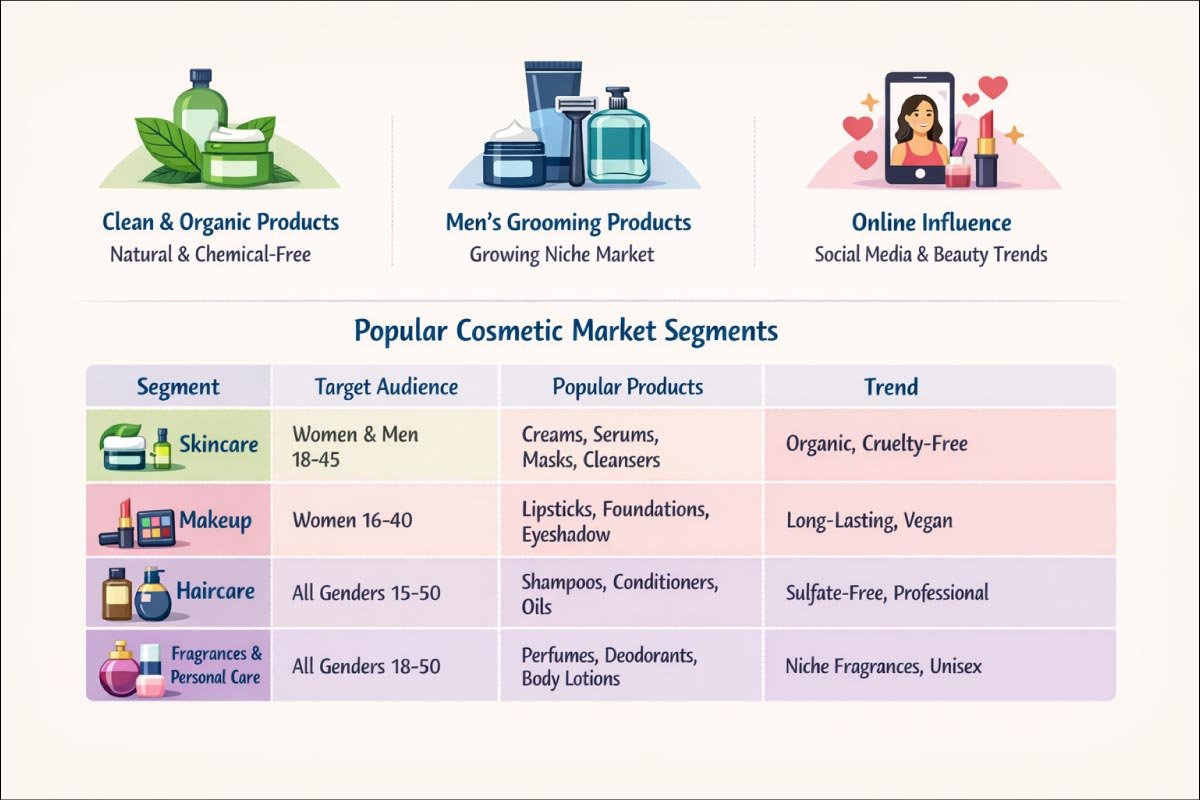
Key trends in the cosmetic market include:
-
Clean and organic products: Consumers are increasingly favoring natural and chemical-free products.
-
Men’s grooming products: This niche is growing rapidly as more men invest in skincare and grooming products.
-
Online influence: Social media influencers, beauty blogs, and video tutorials are shaping consumer preferences.
Popular Cosmetic Market Segments
| Segment | Target Audience | Popular Products | Trend |
|---|---|---|---|
| Skincare | Women and men, 18-45 | Creams, serums, masks, cleansers | Organic, cruelty-free |
| Makeup | Women, 16-40 | Lipsticks, foundations, eyeshadow | Long-lasting, vegan |
| Haircare | All genders, 15-50 | Shampoos, conditioners, oils | Sulfate-free, professional |
| Fragrances & Personal Care | All genders, 18-50 | Perfumes, deodorants, body lotions | Niche fragrances, unisex |
2. Planning Your Cosmetic Shop Business
A well-structured business plan is essential for the success of any cosmetic shop. Planning will help you determine your target market, product range, store location, and financial strategy.
Key Steps in Planning:
-
Identify Your Niche: Decide whether you want to target high-end luxury cosmetics, budget-friendly products, organic cosmetics, or a mix of all.
-
Define Your Target Audience: Understand the demographics, preferences, and buying behavior of your potential customers.
-
Choose Your Store Format: Options include a physical store, an online store, or a combination (omnichannel). Each has its pros and cons:
-
Physical store: Direct customer interaction, impulse purchases.
-
Online store: Lower overhead, wider reach, easier inventory management.
-
-
Business Plan Components: Your business plan should cover: market analysis, competitive analysis, marketing strategy, financial projections, and operational structure.
3. Legal Requirements and Licensing
Legal requirements and licensing are essential for operating your cosmetic shop lawfully and confidently.
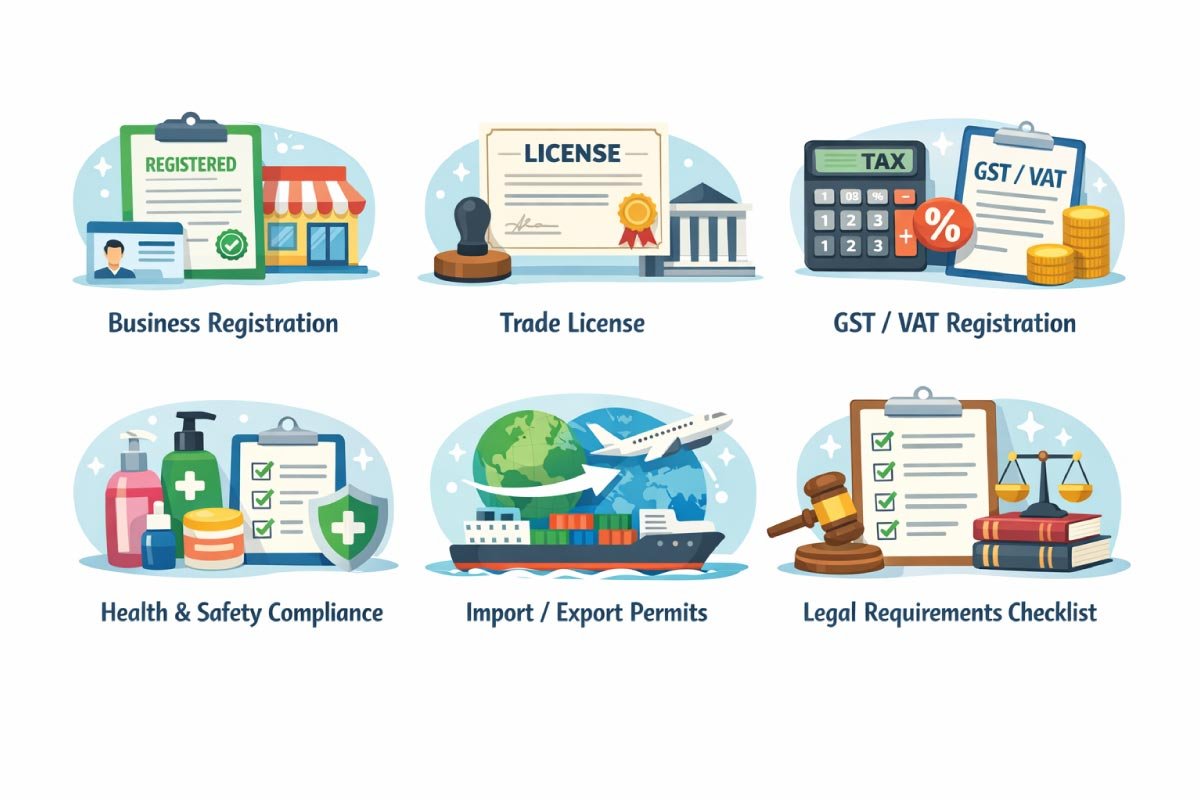
Complying with local regulations, obtaining necessary permits, and adhering to health and safety standards protects your business, builds credibility, and ensures smooth operations without legal complications.
-
Business registration: Register your business name and entity type (sole proprietorship, partnership, or private limited company).
-
Trade license: Obtain a license from your local municipal or business authority.
-
GST/VAT registration: Required for tax compliance.
-
Health and safety compliance: Ensure your products meet safety standards, especially if you sell skincare or haircare products.
-
Import/export permits: If you plan to sell international brands, make sure you adhere to import regulations.
Legal Requirements Checklist
| Requirement | Description | Authority/Source |
|---|---|---|
| Business registration | Register name and entity type | Local registrar office |
| Trade license | Permission to operate retail business | Municipal/city authorities |
| Tax registration | GST/VAT and other applicable taxes | Tax authority |
| Product safety compliance | Certification for safe cosmetic products | Health ministry or labs |
| Import/export permit | If selling imported brands | Customs authority |
Read More:
4. Choosing the Right Location
-
Shopping malls: High visibility, attracts beauty-conscious customers.
-
Main streets or commercial areas: Affordable but may require aggressive marketing.
-
Near salons or spas: Great for targeting regular cosmetic buyers.
For an online store, focus on creating an appealing website with easy navigation, clear product categories, and secure payment options.
5. Sourcing Products
-
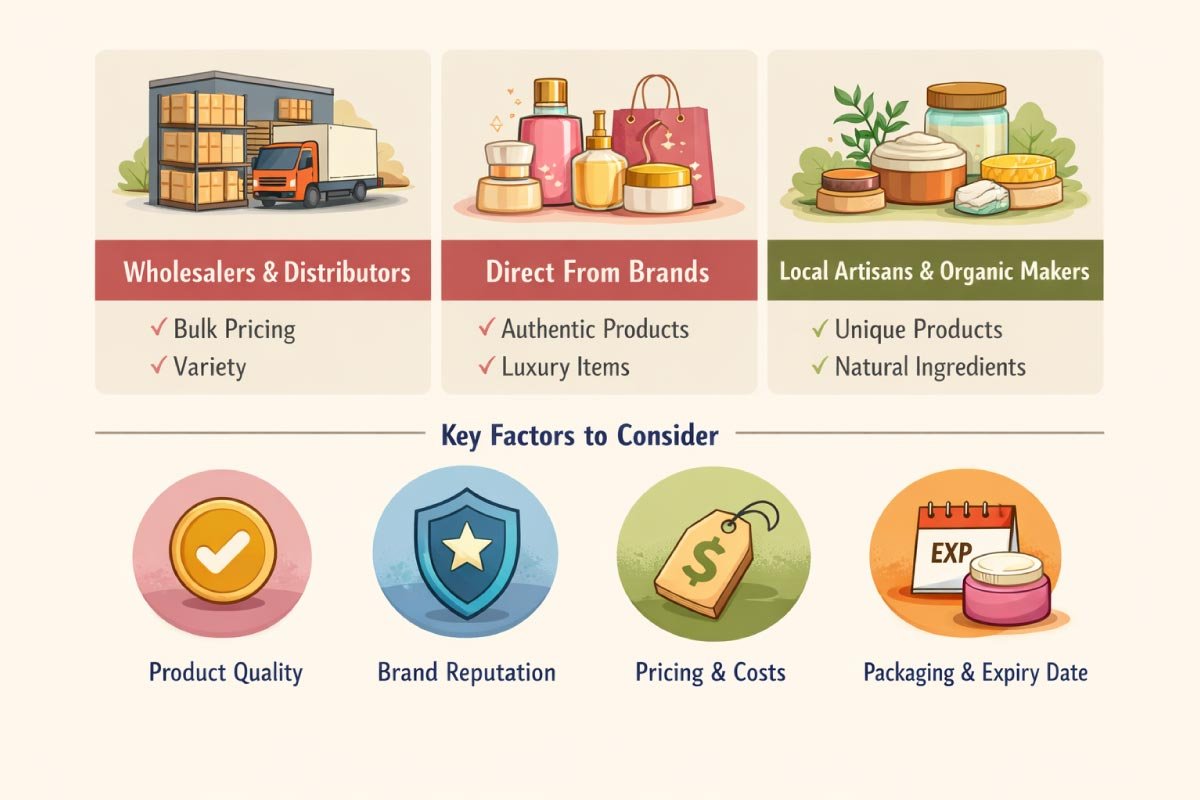
Wholesalers and distributors: Cost-effective for bulk purchases.
-
Direct from brands: Ensures authenticity, often better for luxury items.
-
Local artisans and organic product makers: Unique products that can differentiate your store.
Factors to consider while sourcing: product quality, brand reputation, pricing, packaging, and expiry date.
Sourcing Options for Cosmetic Products
| Source Type | Pros | Cons | Best For |
|---|---|---|---|
| Wholesalers/Distributors | Bulk pricing, variety | May have limited brand choices | Budget-friendly shops |
| Brand Direct | Authenticity, latest products | Higher minimum order, costlier | High-end or luxury shops |
| Local/Artisan Producers | Unique products, niche appeal | Limited stock, higher per unit cost | Organic or boutique stores |
Read More:
6. Setting Up Your Store
Tips for Store Setup:
-
Bright, well-lit interiors to highlight products.
-
Organized shelves by category (skincare, makeup, haircare, etc.).
-
Sample stations for testing products.
-
Attractive signage and brand displays.
For online stores, ensure:
-
User-friendly interface and mobile optimization.
-
High-quality images and detailed product descriptions.
-
Reviews and ratings to build trust.
-
Multiple payment and shipping options.
7. Staffing Your Cosmetic Shop
Staffing your cosmetic shop with the right team is essential for smooth operations and excellent customer experiences.
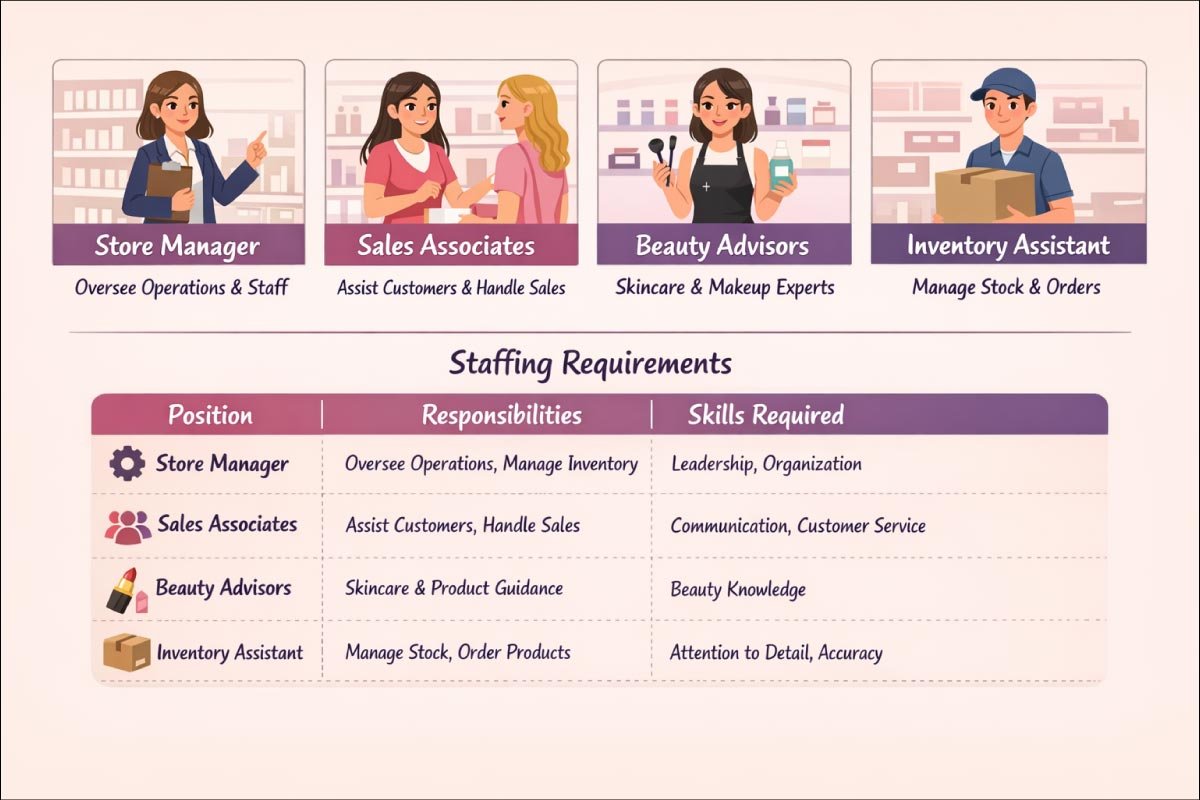
Hiring skilled, motivated, and friendly employees ensures quality service, efficient workflow, and a positive store environment, helping your business grow and build a loyal customer base.
-
Store Manager: Oversees daily operations and staff.
-
Sales Associates: Guides customers, promotes products, and handles sales.
-
Beauty Advisors/Consultants: Specialized staff for skincare, makeup, and product recommendations.
Staffing Requirements
| Position | Responsibilities | Skills Required |
|---|---|---|
| Store Manager | Oversee operations, manage inventory | Leadership, organization |
| Sales Associates | Assist customers, handle transactions | Communication, customer service |
| Beauty Advisors/Consultants | Offer product guidance, upsell products | Knowledge of beauty products |
| Inventory/Stock Assistant | Manage stock, order products | Attention to detail, accuracy |
Read More:
8. Pricing Your Products
Pricing your products strategically is key to profitability and customer appeal.
By considering costs, market demand, and competitor pricing, you can set prices that reflect value while remaining competitive.
Thoughtful pricing ensures sustainable revenue, attracts the right customers, and supports the long-term growth of your cosmetic shop.
-
Cost-based pricing: Price = Cost + Profit Margin
-
Competitive pricing: Align with similar shops in the area.
-
Premium pricing: High price for luxury or organic products, signaling quality.
-
Promotional discounts: Seasonal sales or bundle offers to attract customers.
9. Marketing Your Cosmetic Shop
-
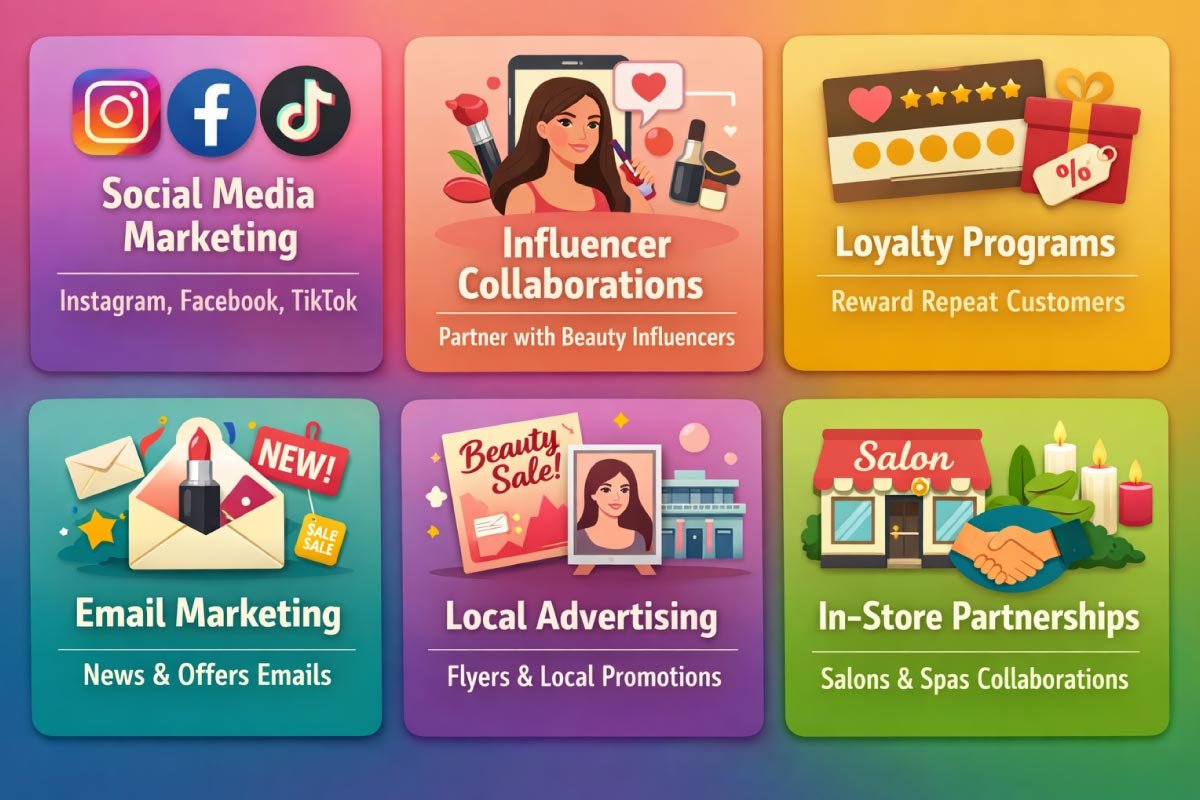
Social Media Marketing: Instagram, Facebook, TikTok are excellent for cosmetic brands.
-
Influencer Collaborations: Partner with beauty influencers for brand promotion.
-
Loyalty Programs: Reward repeat customers with discounts or free samples.
-
Email Marketing: Inform customers about new arrivals, offers, and beauty tips.
-
Local Advertising: Flyers, posters, and collaborations with local salons or spas.
10. Managing Inventory and Operations
Managing inventory and operations efficiently ensures your business runs smoothly and meets customer demand.
By tracking stock levels, optimizing supply chains, and streamlining daily processes, you reduce waste, save costs, and maintain consistent product availability, creating a reliable and well-organized business foundation.
-
POS systems: Track sales, manage inventory, and generate reports.
-
Regular stock audits: Ensure accuracy and prevent theft.
-
Reordering schedule: Maintain minimum stock levels for top-selling items.
Read More:
11. Financial Planning and Funding
-
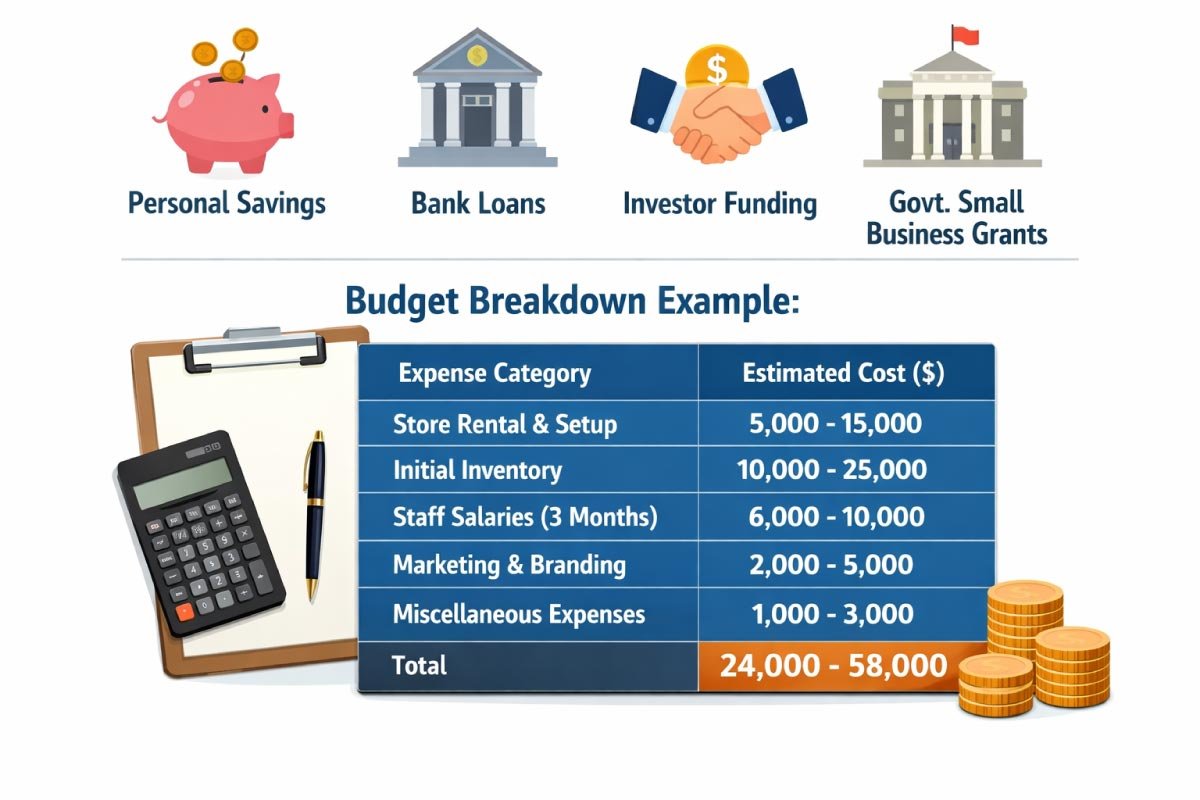
Personal savings
-
Bank loans
-
Investor funding
-
Government small business grants
Budget Breakdown Example:
| Expense Category | Estimated Cost ($) |
|---|---|
| Store rental & setup | 5,000 – 15,000 |
| Initial inventory | 10,000 – 25,000 |
| Staff salaries (3 months) | 6,000 – 10,000 |
| Marketing & branding | 2,000 – 5,000 |
| Miscellaneous expenses | 1,000 – 3,000 |
| Total | 24,000 – 58,000 |
12. Customer Service and Retention
Customer service and retention are vital for building loyalty and long-term success in your business.
Providing exceptional support, addressing concerns promptly, and creating memorable experiences encourages repeat purchases.
By nurturing strong relationships, you turn satisfied customers into brand advocates, boosting both reputation and sustainable growth.
-
Train staff in product knowledge and communication.
-
Offer loyalty programs and personalized offers.
-
Provide after-sales support, returns, and feedback channels.
Happy customers often become brand advocates and refer your store to others.
13. Expanding Your Cosmetic Shop
Expanding your cosmetic shop opens new opportunities for growth and increased revenue.
By exploring additional product lines, reaching new markets, or enhancing your services, you can attract more customers and strengthen your brand.
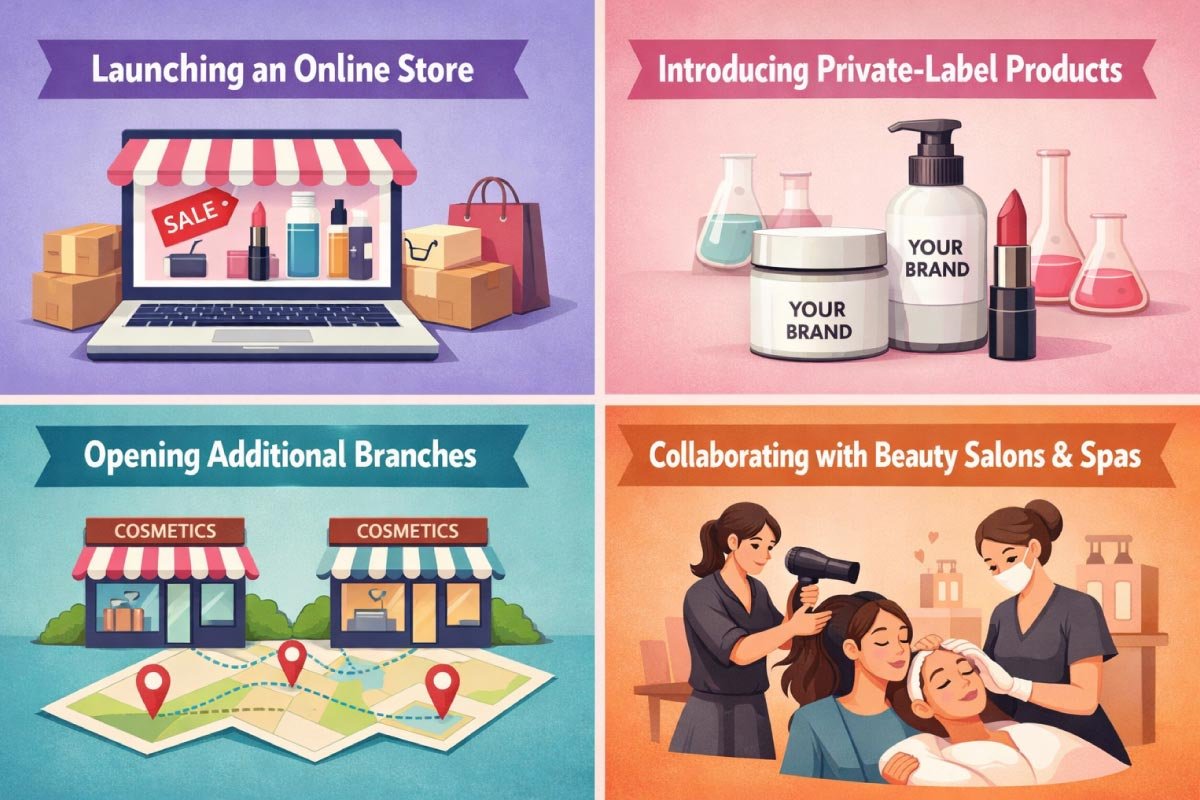
Strategic expansion ensures your business evolves while maintaining quality and customer satisfaction.
-
Launching an online store if you only have a physical store.
-
Introducing private-label products.
-
Opening additional branches in high-demand areas.
-
Collaborating with beauty salons and spas.
Read More:
14. Key Tips for Success
Key tips for success help you navigate challenges and maximize growth in your business. Focusing on strategy, consistency, client satisfaction, and continuous learning ensures you stay ahead.
By applying proven practices and maintaining a proactive mindset, you increase your chances of achieving long-term success and sustainable results.
-
Stay updated with beauty trends and new product launches.
-
Offer a mix of high-demand and niche products.
-
Focus on excellent customer service.
-
Use social media to build brand identity and trust.
-
Regularly evaluate financial performance and inventory turnover.
Conclusion
Starting a cosmetic shop can be highly rewarding if approached strategically.
Understanding the market, sourcing quality products, setting up the right store environment, and marketing effectively are all critical components of success.
With dedication, planning, and attention to customer needs, your cosmetic shop business can thrive and grow into a recognizable beauty brand.