
Starting a burger shop can be an exciting and profitable venture if done strategically. With the global love for burgers, from classic cheeseburgers to gourmet creations, there is always a demand for high-quality, delicious offerings.
However, success in this business requires careful planning, smart investments, and a keen understanding of your target market.
This guide will walk you through the entire process of starting a burger shop, from initial planning to achieving long-term success.
Conduct Market Research
Before starting any business, understanding the market is crucial. Market research helps you identify your target audience, competitors, and trends in the fast-food industry.
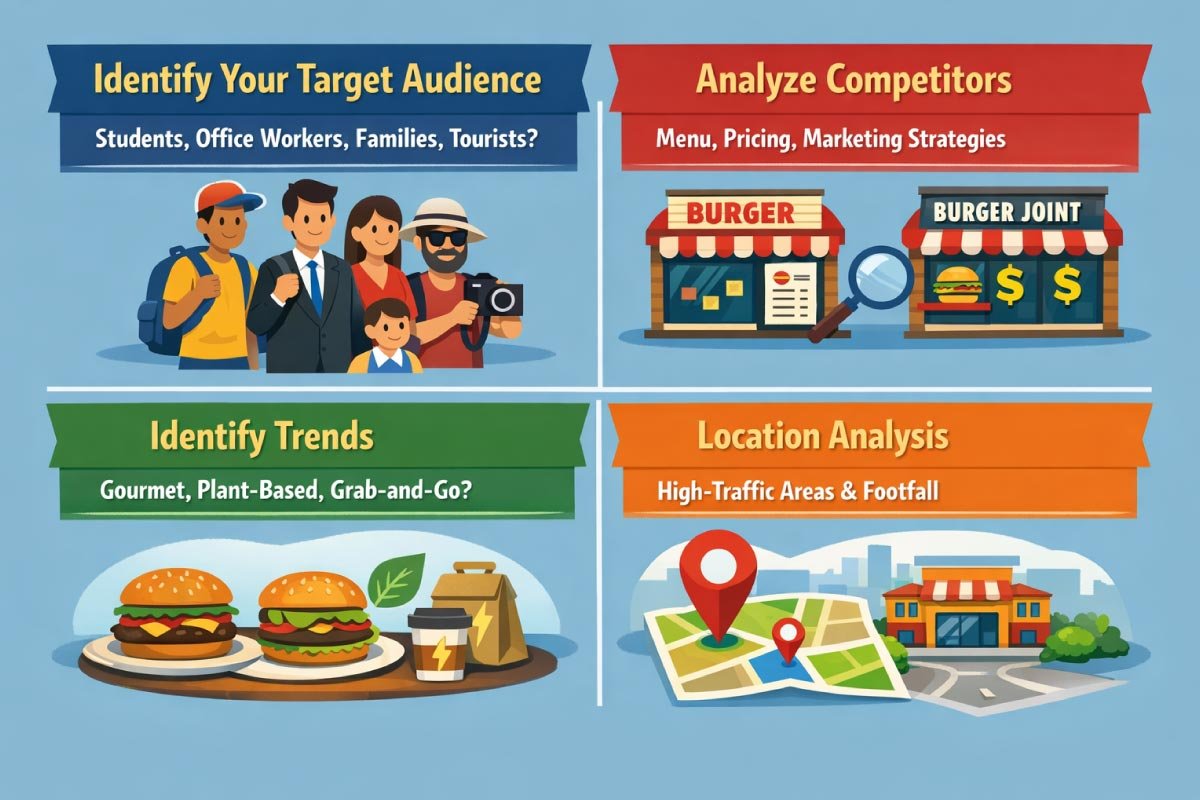
Key Steps in Market Research:
-
Identify Your Target Audience: Understand who your customers are. Are they students, office workers, families, or tourists?
-
Analyze Competitors: Study existing burger shops in your area. Note their menu, pricing, customer service, and marketing strategies.
-
Identify Trends: Are customers leaning toward gourmet burgers, plant-based options, or quick grab-and-go meals?
-
Location Analysis: Look at high-traffic areas like shopping malls, near schools, or busy streets for potential footfall.
Sample Market Research Template
| Aspect | Details to Analyze |
|---|---|
| Target Audience | Age group, income level, preferences |
| Competitors | Menu offerings, pricing, unique selling points |
| Customer Trends | Food trends, health preferences, flavors |
| Location Viability | Foot traffic, accessibility, nearby businesses |
Create a Business Plan
A solid business plan serves as a roadmap for your burger shop and is crucial for securing funding from investors or banks. Your business plan should cover:
-
Business Concept: Define your burger shop’s unique identity. Will it be gourmet, fast food, or a specialty theme?
-
Menu Offerings: Decide on your burger varieties, sides, beverages, and any signature items.
-
Marketing Strategy: Outline how you will attract customers, including social media, local advertising, and promotions.
-
Operational Plan: Detail staffing needs, suppliers, kitchen setup, and workflow.
-
Financial Projections: Estimate startup costs, break-even point, and expected profits.
Business Plan Outline
| Section | Key Points to Include |
|---|---|
| Executive Summary | Mission, vision, concept, and unique features |
| Market Analysis | Target audience, competitors, market trends |
| Menu & Services | Burger types, sides, drinks, pricing |
| Operations | Staff roles, suppliers, equipment, location |
| Marketing & Sales | Promotion strategies, social media, offers |
| Financial Plan | Startup costs, break-even analysis, revenue projections |
Estimate Startup Costs
Choosing a prime location is vital for your burger shop’s visibility and success.
A high-traffic area with easy accessibility attracts more customers and boosts sales.

By analyzing demographics, nearby competition, and local demand, you can select a location that maximizes revenue and supports long-term growth.
Essential Startup Costs:
-
Location Rental/Lease: Costs depend on size, city, and foot traffic.
-
Equipment: Grills, fryers, refrigerators, cash registers, POS systems.
-
Interior Design: Signage, seating arrangements, lighting, décor.
-
Licenses & Permits: Health permits, business registration, food handling certifications.
-
Initial Inventory: Ingredients like buns, patties, cheese, sauces, vegetables.
-
Marketing Budget: Launch campaign, social media, flyers, banners.
Estimated Startup Costs for a Burger Shop
| Item | Estimated Cost Range (USD) |
|---|---|
| Location Lease/Rent | $1,000 – $5,000 per month |
| Equipment | $5,000 – $15,000 |
| Interior & Design | $2,000 – $8,000 |
| Licenses & Permits | $500 – $1,500 |
| Initial Inventory | $1,000 – $3,000 |
| Marketing & Promotion | $500 – $2,000 |
| Total | $10,000 – $34,500 |
Discover More:
Choose a Prime Location
Choosing a prime location is vital for your burger shop’s visibility and success. A high-traffic area with easy accessibility attracts more customers and boosts sales.
By analyzing demographics, nearby competition, and local demand, you can select a location that maximizes revenue and supports long-term growth.
-
Foot Traffic: Busy streets, shopping centers, university areas.
-
Accessibility: Parking availability and public transport access.
-
Demographics: Ensure the location aligns with your target audience.
-
Competitor Proximity: Being close to competitors can be positive (food hubs) or negative (oversaturation).
Develop a Winning Menu
Developing a winning menu is crucial for attracting and retaining customers in your burger shop.
Focus on signature burgers, complementary sides, and beverages that appeal to your target audience.

Balancing variety, quality, and pricing ensures customer satisfaction, encourages repeat visits, and drives overall profitability.
Menu Tips:
-
Offer a mix of classic and specialty burgers.
-
Include vegetarian or vegan options to cater to diverse customers.
-
Keep sides and drinks simple but tasty.
-
Experiment with signature sauces or burger combos to create a brand identity.
-
Consider seasonal or limited-time offerings to attract repeat customers.
Table 4: Sample Burger Shop Menu
| Category | Items | Price Range (USD) |
|---|---|---|
| Classic Burgers | Cheeseburger, Hamburger, Bacon Burger | $5 – $8 |
| Specialty Burgers | BBQ Chicken, Veggie Burger, Double Patty | $7 – $12 |
| Sides | Fries, Onion Rings, Nuggets | $2 – $5 |
| Beverages | Soft Drinks, Milkshakes, Lemonade | $2 – $5 |
Discover More:
Acquire Necessary Licenses and Permits
Acquiring necessary licenses and permits is essential to operate your burger shop legally and safely.
This includes health permits, business registration, and food service licenses.
Ensuring compliance with local regulations protects your business, builds customer trust, and provides a solid foundation for smooth, uninterrupted operations.
-
Business registration certificate.
-
Health and safety permits.
-
Food handler certificates for staff.
-
Fire safety approvals.
-
Local municipality permits for signage and operation.
Failing to comply with regulations can result in fines, closure, or reputational damage.
Design Your Burger Shop Layout
Designing your burger shop layout is key to creating an efficient and inviting space.
A well-planned layout optimizes workflow, enhances customer comfort, and highlights your brand’s ambiance.
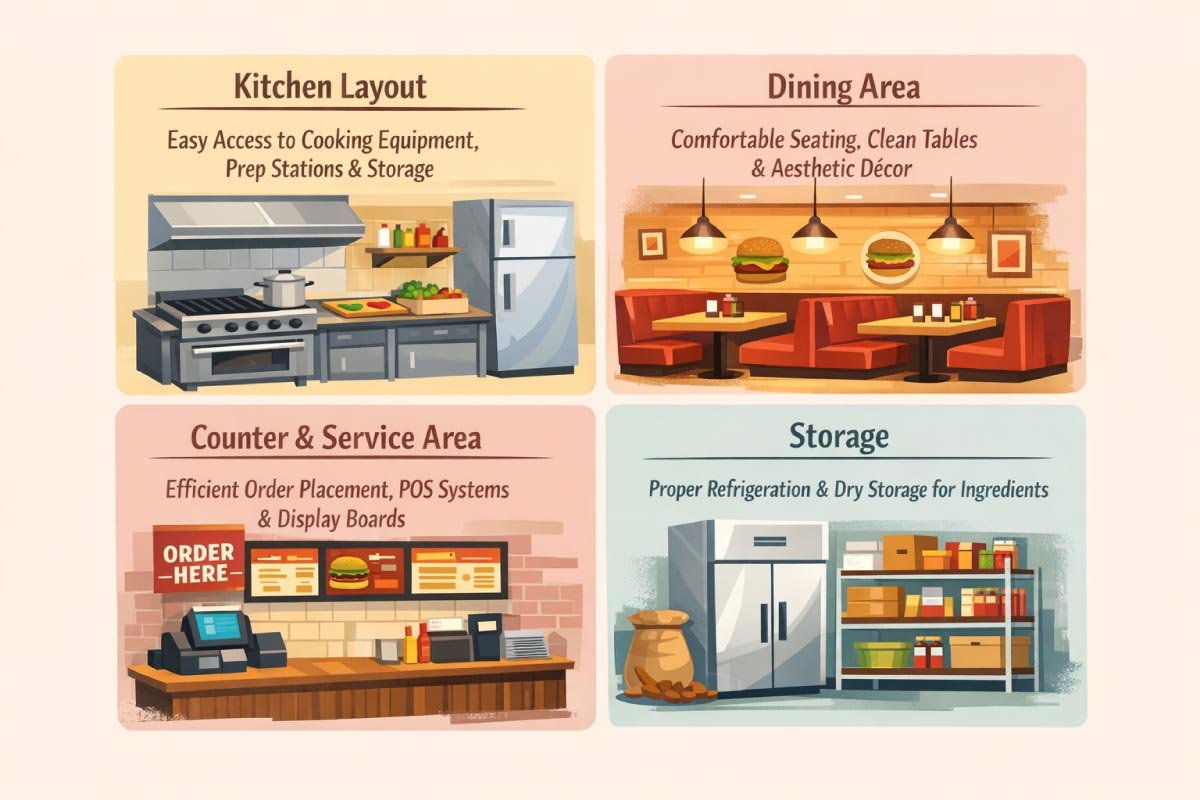
Thoughtful placement of seating, kitchen equipment, and service areas improves operational efficiency and contributes to a positive dining experience.
-
Kitchen Layout: Easy access to cooking equipment, prep stations, and storage.
-
Dining Area: Comfortable seating, clean tables, and aesthetic décor.
-
Counter & Service Area: Efficient order placement, POS systems, and display boards.
-
Storage: Proper refrigeration and dry storage for ingredients.
Discover More:
Hire and Train Staff
Hiring and training staff is crucial for running a successful burger shop. Recruiting skilled, motivated team members and providing thorough training ensures efficient operations, consistent food quality, and excellent customer service.
A well-prepared staff enhances the dining experience, fosters loyalty, and supports the long-term growth of your business.
Training Tips:
-
Standardize cooking methods for consistency.
-
Teach excellent customer service and upselling techniques.
-
Ensure food safety protocols are followed strictly.
-
Encourage teamwork and a positive work environment.
Marketing Your Burger Shop
Marketing your burger shop is essential for attracting customers and building brand loyalty.
Effective strategies include social media promotion, local advertising, special offers, and highlighting signature menu items.

By creating a strong brand presence and engaging with your audience, you can drive traffic, increase sales, and stand out in a competitive market.
-
Social Media Marketing: Post engaging content on Instagram, Facebook, and TikTok.
-
Local Advertising: Flyers, banners, and local newspaper ads.
-
Grand Opening Event: Offer discounts or free samples to attract initial customers.
-
Loyalty Programs: Reward repeat customers with discounts or free items.
-
Collaborations: Partner with local influencers or delivery platforms to reach a wider audience.
Discover More:
Implement Technology and Delivery Options
Implementing technology and delivery options is vital for modern fast food operations.
Online ordering systems, mobile apps, and efficient POS integrations streamline service and enhance convenience.
Offering delivery and digital solutions expands your customer reach, improves satisfaction, and boosts sales, giving your business a competitive edge in today’s fast-paced market.
-
POS System: Efficient billing, inventory tracking, and sales reporting.
-
Online Ordering: Website or app for pickup and delivery orders.
-
Food Delivery Partnerships: Tie up with UberEats, DoorDash, or local delivery services.
Financial Planning and Break-Even Analysis
Financial planning and break-even analysis are essential for understanding your fast food business’s profitability.
By projecting expenses, revenues, and cash flow, you can determine when your business will become self-sustaining.

Accurate financial planning helps control costs, set realistic goals, and make informed decisions for long-term growth.
-
Fixed Costs: Rent, utilities, salaries, insurance.
-
Variable Costs: Ingredients, packaging, marketing campaigns.
-
Revenue Forecast: Estimate daily sales based on foot traffic and average spend.
-
Break-Even Analysis: Determine how many burgers you need to sell monthly to cover costs.
Discover More:
Focus on Quality and Customer Experience
-
Use fresh, high-quality ingredients.
-
Maintain hygiene and cleanliness.
-
Respond to customer feedback promptly.
-
Offer a friendly and welcoming atmosphere.
Long-Term Growth Strategies
Long-term growth strategies are essential for sustaining and expanding your fast food business.
By focusing on brand development, customer loyalty, menu innovation, and operational efficiency, you can adapt to market changes and increase profitability.

Strategic planning ensures your business remains competitive, scalable, and successful over time.
-
Expand Menu Options: Introduce seasonal or trendy items.
-
Open New Locations: Replicate the successful model in other high-demand areas.
-
Franchising Opportunities: Allow others to use your brand in exchange for fees or royalties.
-
Merchandising: Sell branded items like T-shirts, mugs, or sauces.
Final Thoughts
Starting a burger shop requires more than just cooking skills. Success depends on careful planning, a strong brand identity, consistent quality, and smart marketing. By following this detailed guide, you can turn your passion for burgers into a thriving business.
Remember, the key is to combine delicious food with an excellent customer experience and strategic growth planning.