

Lighting can make or break a bedroom. It’s not just about illumination—it’s about creating a mood, enhancing your décor, and making your bedroom a comfortable sanctuary.
Choosing the right bedroom lighting fixtures may feel overwhelming given the sheer variety available, from chandeliers to wall sconces, table lamps to pendant lights. But with a strategic approach, you can select lighting that balances functionality and style perfectly.
In this guide, I will share 7 expert tips for choosing bedroom lighting fixtures, along with personal experiences to help you envision how these choices can transform your space.
1. Understand the Purpose of Each Light
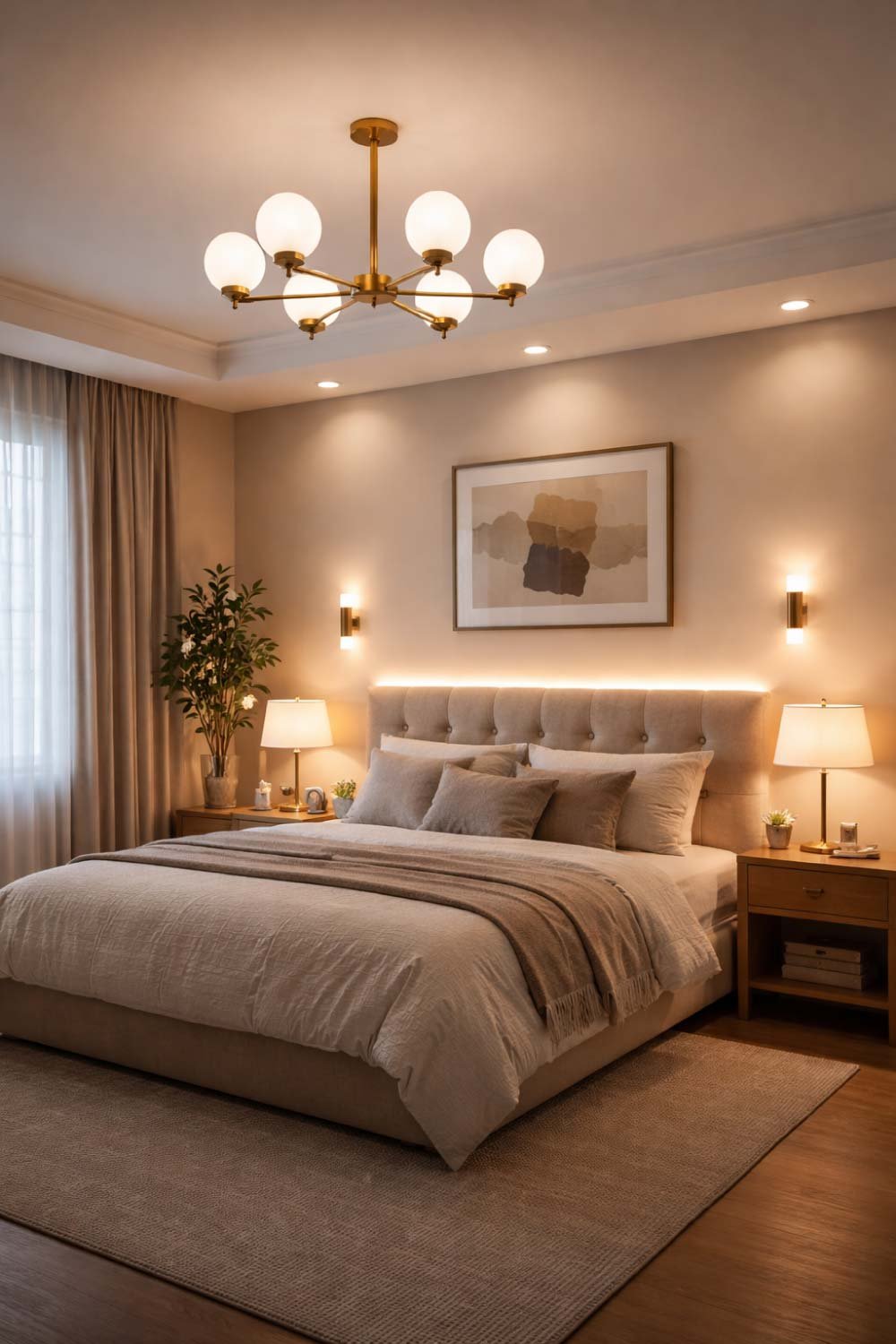
When it comes to designing the perfect bedroom, lighting is often underestimated. Many people think a single ceiling fixture is sufficient, but the truth is that bedroom lighting is layered and multifaceted.
Understanding the purpose of each type of light is the first step toward creating a room that is functional, cozy, and visually appealing. There are three main types of lighting to consider: ambient, task, and accent lighting. Each serves a distinct purpose and works together to enhance your space.
Ambient Lighting
Ambient lighting provides the general illumination of your room. It’s what allows you to see and navigate the space comfortably. Common fixtures for ambient lighting include ceiling lights such as chandeliers, flush mounts, semi-flush mounts, or recessed lights.
The goal here is even, shadow-free lighting that fills the room without being harsh or glaring. For bedrooms, warm ambient lighting is usually preferred because it sets a relaxing tone.
Avoid overly bright or cool-toned lights as your primary source, unless your bedroom doubles as a workspace.
Task Lighting
Task lighting is designed to focus light on specific areas for functional activities. Examples include reading, writing, applying makeup, or working on a laptop in bed.
Desk lamps, bedside reading lamps, and vanity lights are all forms of task lighting. Unlike ambient lighting, which floods the entire room, task lighting is directional and concentrated, helping you perform specific activities without straining your eyes.
Adjustable lamps or fixtures with dimmers are especially useful because they allow you to control the intensity and direction of light.
Accent Lighting
Accent lighting is all about aesthetics. Its purpose is to highlight architectural features, artwork, plants, or decorative elements, adding depth and character to the room.
Think LED strips behind your headboard, wall sconces illuminating a textured wall, or small spotlights on artwork.
Accent lighting doesn’t necessarily illuminate the entire room, but it creates layers of light that enrich the overall mood. This layer also allows you to play with shadows and contrasts, making your bedroom feel more sophisticated.
Personal Experience
When I first moved into my apartment, I installed only a single ceiling light. I assumed it would provide enough illumination for everything. Within a week, I realized the harsh overhead lighting made the room feel cold and impersonal during the evenings.
To address this, I added two bedside table lamps with warm LED bulbs and a subtle LED strip behind my headboard. Instantly, the bedroom felt more inviting and cozy. This experience taught me that lighting isn’t just about brightness—it’s about layering and interaction with the space.
A well-lit bedroom has multiple layers of light, each serving a unique purpose, yet harmonizing with the overall design.
Also Read:
2. Choose the Right Fixture Style
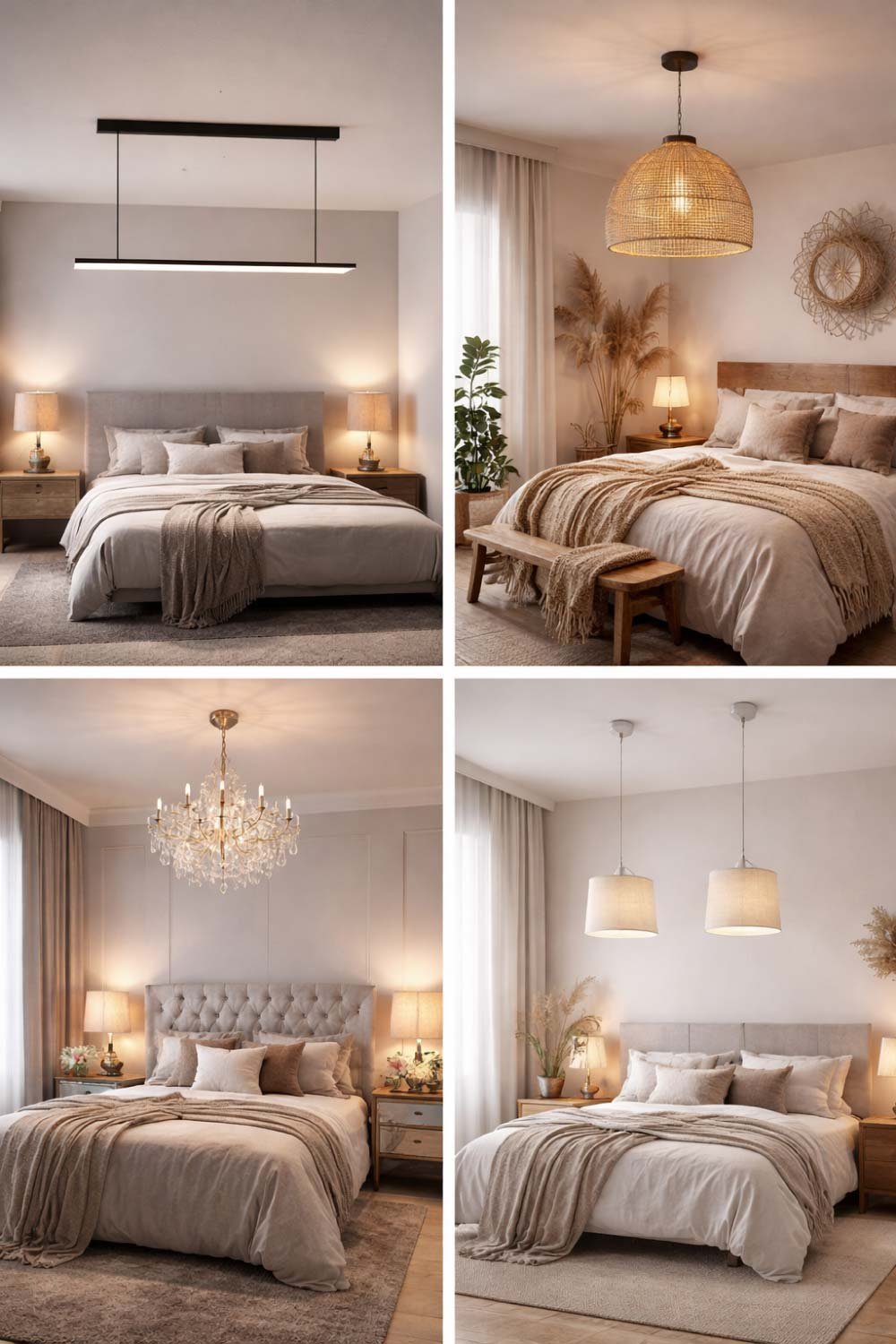
After understanding the purpose of different types of lighting, the next step is selecting fixtures that align with your bedroom’s interior style. Your lighting should not only be functional but also act as a decorative element. Choosing the wrong style can make even the most practical fixture feel out of place.
Modern and Minimalist Styles
For modern or minimalist bedrooms, simplicity is key. Sleek recessed lighting, geometric pendant lights, or fixtures with clean lines work best. Opt for materials like matte metal, glass, or even concrete to maintain a streamlined look. Minimalist lighting emphasizes form and function without unnecessary ornamentation. For example, a slim linear pendant over the bed can create a subtle focal point while maintaining visual calm.
Rustic and Bohemian Styles
Rustic or bohemian bedrooms thrive on warmth and texture. Lighting that incorporates natural materials, like woven rattan pendants, vintage chandeliers, or Edison bulbs, enhances this aesthetic. A bohemian-style lamp with fringed shades or handmade details can become a statement piece while reinforcing the room’s cozy, eclectic vibe. The key is to combine charm with subtle artistry, avoiding overly sleek or sterile fixtures that clash with the rustic atmosphere.
Glamorous Styles
If your bedroom leans toward glamour, think sparkle, shine, and luxury. Crystal chandeliers, metallic table lamps, or mirrored finishes can add a touch of sophistication. Even a small accent lamp with a reflective base can elevate the aesthetic. Glamorous lighting often acts as a centerpiece, drawing the eye and serving as a decor statement beyond functionality.
Scandinavian Styles
Scandinavian design emphasizes simplicity, functionality, and comfort. Lighting in this style often features neutral tones, soft diffused light, and natural materials like wood or fabric. Minimalist shapes and matte finishes create a sense of calm, perfect for a serene bedroom environment.
Personal Experience
My bedroom leans toward Scandinavian minimalism, so I opted for a matte black cylindrical ceiling fixture paired with simple wooden bedside lamps. The lighting blends seamlessly with my décor while enhancing the cozy ambiance. The lesson here is clear: choosing a style that complements your bedroom is crucial. Even the most functional light fixture can feel out of place if it clashes with the room’s design.
Also Read:
20 Budget Bedroom DIY Ideas to Transform Your Space Affordably
3. Consider the Size and Scale
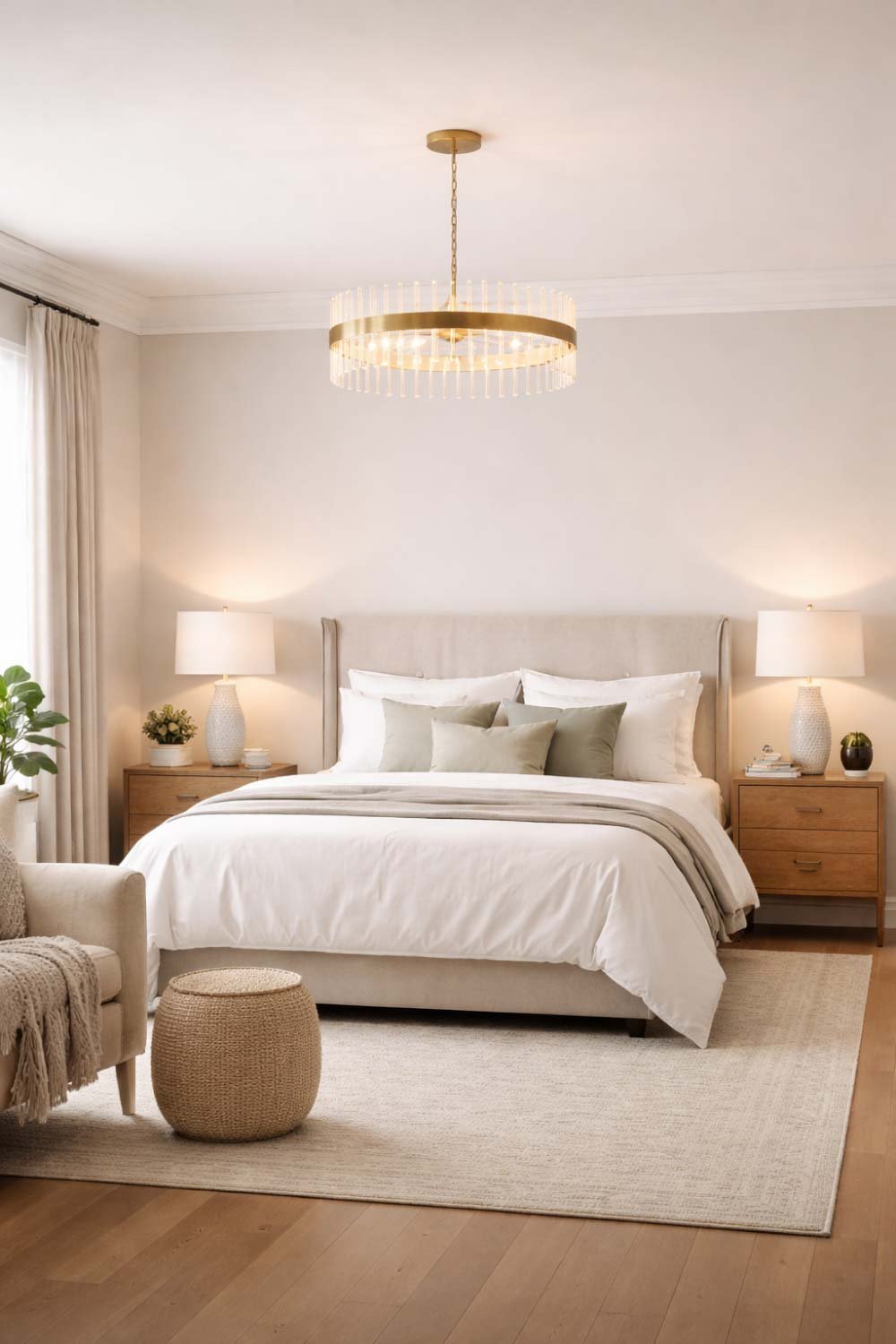
The size of your lighting fixture is just as important as its style. A fixture that is too large can dominate the room and make it feel cramped, while one that is too small can look lost and ineffective. Understanding how to balance scale with room dimensions is critical for visual harmony.
Ceiling Lights
When choosing ceiling lights like chandeliers or pendant lights, measure your room first. A simple formula can help determine the ideal diameter:
Diameter (in inches)=Room Length (ft)+Room Width (ft)\text{Diameter (in inches)} = \text{Room Length (ft)} + \text{Room Width (ft)}
For example, if your bedroom is 12’ x 14’, the ideal ceiling fixture diameter would be around 26 inches. Height also matters; ensure that hanging fixtures don’t obstruct movement or feel overwhelming in smaller spaces. Chandeliers in smaller bedrooms should have a more compact profile, while taller rooms can accommodate more dramatic designs.
Bedside Lamps
Proportion is key for bedside lamps. A tall lamp on a tiny nightstand can feel awkward, and a small lamp on a large nightstand may appear insignificant. Aim for lamps that are roughly two-thirds the height of your bed’s headboard.
This balance ensures functionality and aesthetic coherence. Don’t forget to consider lamp width relative to nightstand size—oversized shades can overwhelm small tables, while tiny lamps may look lost on large surfaces.
Personal Experience
I once purchased a large, ornate chandelier for my 10×12 bedroom, thinking it would make the space feel luxurious. In reality, it overwhelmed the room, making the ceiling feel lower and the space crowded.
I exchanged it for a smaller, minimalist pendant, and suddenly the room felt balanced and airy. This experience reinforced that scale and proportion are critical in lighting design. A fixture should enhance the room, not dominate it.
Also Read:
4. Pay Attention to Light Temperature
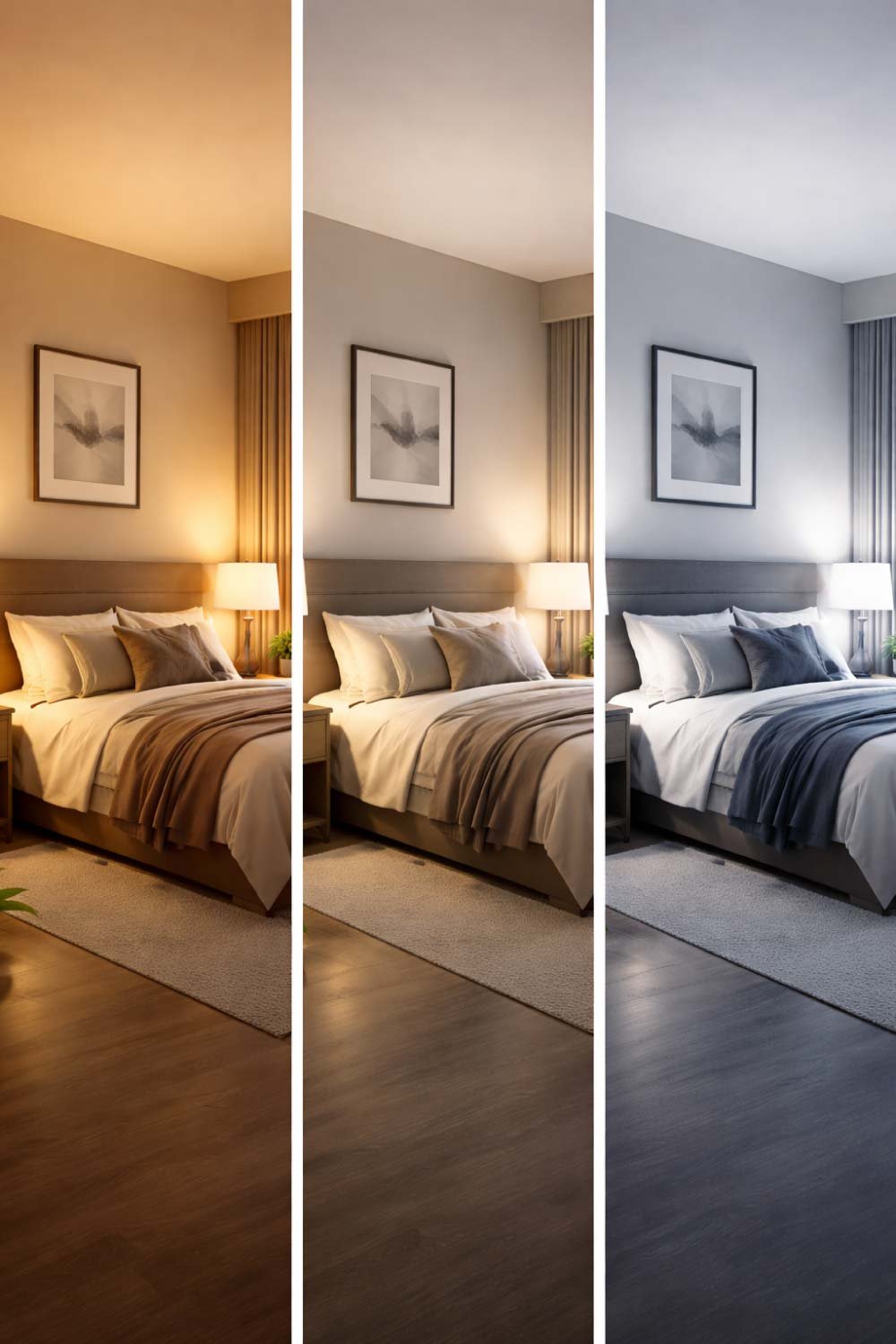
Light temperature, measured in Kelvins (K), affects the ambiance and mood of your bedroom. Choosing the right temperature is just as important as selecting the fixture itself.
Warm Light (2700K–3000K)
Warm light emits a soft, golden glow that creates a cozy, inviting atmosphere. This is ideal for bedrooms, as it promotes relaxation and calmness. Warm light works well for bedside lamps, accent lighting, and general ambient illumination. It encourages the body’s natural winding-down process, signaling that it’s time to rest.
Neutral Light (3500K–4100K)
Neutral light offers a balance between warmth and coolness. It’s practical for areas where clarity is needed without creating a stark, clinical feel. Neutral lighting works well for vanities, desks, or multipurpose bedrooms where reading or light work might occur.
Cool Light (5000K+)
Cool light is bright, energizing, and highly focused. While ideal for offices or task-heavy environments, it can feel too harsh in a bedroom. Overly cool lighting can make a space feel sterile, disrupt sleep patterns, and create a less inviting atmosphere.
Personal Experience
Initially, I used a 5000K LED bulb in my bedside lamp, thinking brighter was better for reading. The effect was harsh, almost like working in an office late at night. After switching to a 2700K warm LED, the room instantly felt more tranquil and relaxing. This taught me that bulb choice is just as important as the fixture. Light temperature dramatically affects mood, and warm light is generally the best choice for bedrooms designed for rest and relaxation.
Also Read:
5. Incorporate Dimmers and Smart Controls
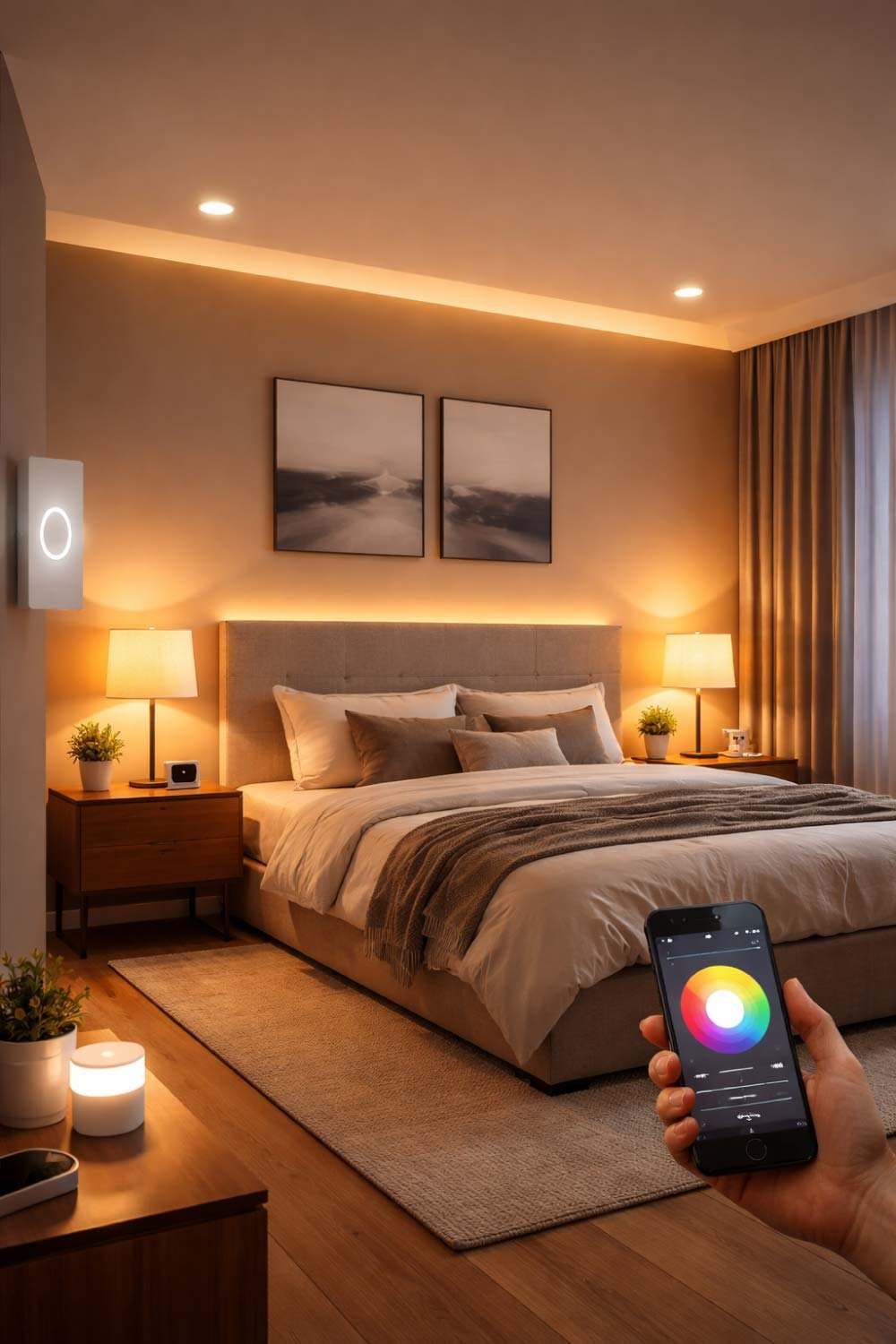
Modern bedrooms are no longer limited to a simple on/off switch. The integration of dimmers and smart controls transforms lighting from purely functional to highly customizable, allowing you to set the mood, adjust brightness, and even automate routines. This flexibility makes a bedroom more comfortable, efficient, and visually appealing.
The Benefits of Dimmers
Dimmers give you full control over the intensity of your lights. For example, bright lighting is useful for activities like cleaning, dressing, or organizing, whereas softer, dimmed lighting creates a cozy atmosphere for reading or winding down before sleep.
Installing a dimmer on your overhead light is one of the simplest yet most effective upgrades you can make. It allows you to adjust the light throughout the day, adapting your bedroom to different needs without adding extra fixtures. Dimmers also save energy and prolong the life of your bulbs since you are not always running lights at full power.
Smart Lighting Controls
Smart bulbs take bedroom lighting to the next level. With a smart system, you can control your lights remotely via your smartphone, tablet, or voice assistant.
Some bulbs allow you to change color temperatures, from bright white for productivity to warm amber for relaxation. Others can be scheduled to turn on gradually, mimicking a sunrise to wake you gently, or turn off automatically at bedtime.
For accent lighting, smart LED strips can be programmed to shift colors or dim according to the time of day, creating dynamic effects and highlighting décor elements.
Practical Tips for Implementation
- Install a dimmer on your main overhead fixture for maximum versatility.
- Use smart bedside lamps that can be controlled remotely or programmed for gentle wake-up routines.
- Consider smart LED strips behind your headboard, under shelves, or along molding to create accent lighting that can change color or intensity based on mood.
Personal Experience
Adding a dimmer to my ceiling light completely changed my bedroom experience. I could have bright light for cleaning or getting dressed and soft, soothing light for reading or winding down.
On top of that, installing smart bulbs in my nightstand lamps allowed me to switch colors from soft amber for relaxing evenings to bright white when working from bed.
The convenience and comfort were transformative—I no longer had to get up to adjust lights, and the ability to control color and brightness made the room feel both high-tech and cozy.
Also Read:
6. Mix Different Types of Fixtures
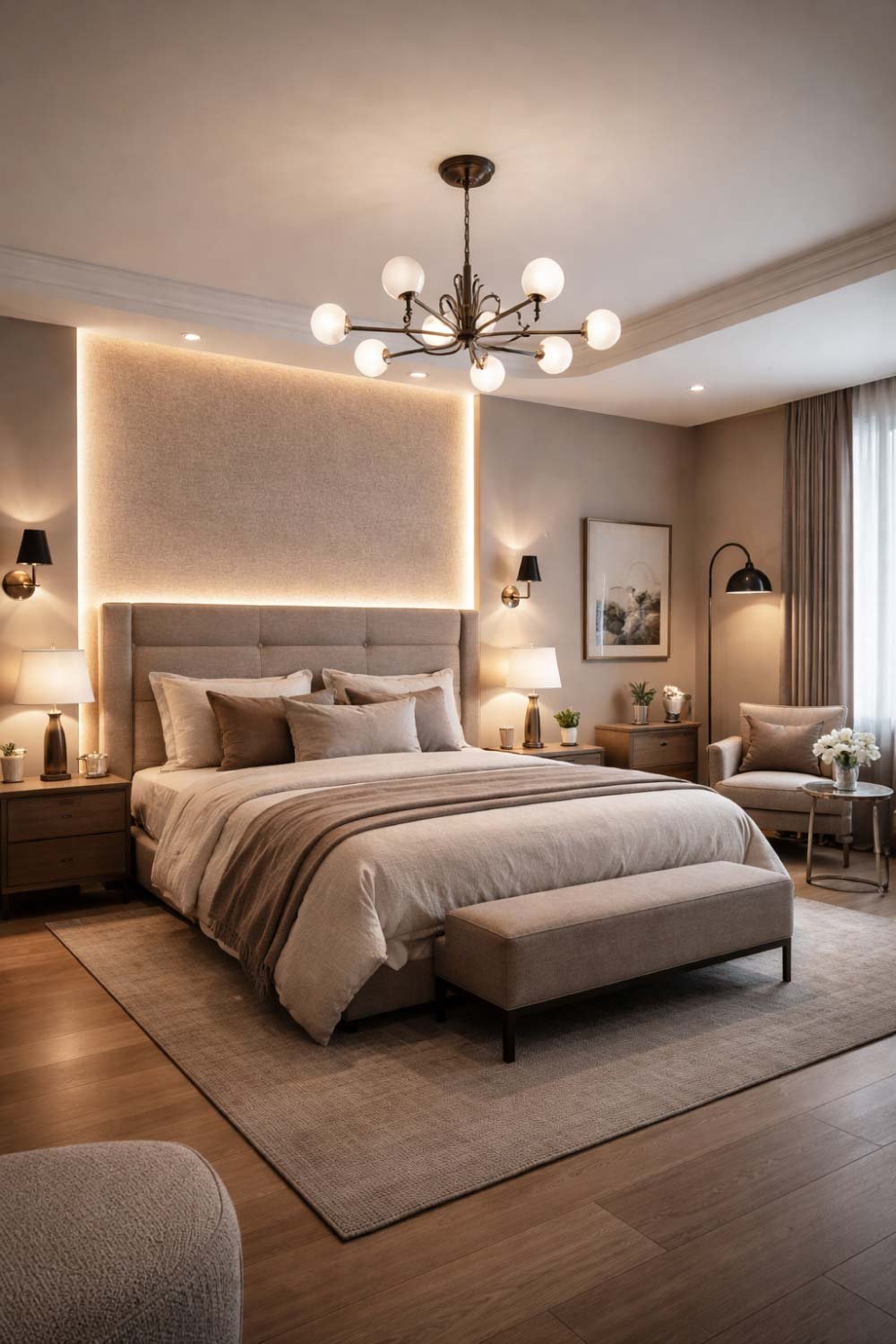
Layering different types of lighting is essential for both aesthetic appeal and practical use. No single fixture can accomplish everything a bedroom requires, so combining ceiling lights, wall fixtures, bedside lamps, and accent lights allows you to tailor illumination to every activity and mood.
Ceiling Fixtures
Ceiling lights serve as your primary source of ambient illumination. They provide even lighting across the room and are ideal for general visibility.
Options range from chandeliers and flush mounts to modern pendants, depending on room size and style. For larger bedrooms, a chandelier can serve as a striking centerpiece, while smaller rooms often benefit from flush or semi-flush mounts to maintain open space.
Table and Floor Lamps
Lamps placed on nightstands or the floor provide softer, more localized lighting. They’re perfect for reading, working, or winding down without lighting up the entire room. Adjustable arm lamps or lamps with dimmers allow you to fine-tune brightness and direction. They also introduce decorative elements—lampshades, colors, and textures can reinforce your bedroom’s aesthetic.
Wall Sconces
Wall-mounted fixtures save space and are versatile for both task and accent lighting. For example, sconces next to your bed free up nightstand space while offering directed reading light. Sconces can also highlight artwork or textured walls, adding depth to your décor. Adjustable or swing-arm sconces offer maximum flexibility, allowing you to change light direction as needed.
Accent and LED Lighting
LED strips and small accent lights highlight design features like headboards, shelves, or artwork. These fixtures aren’t primarily functional, but they dramatically affect mood and perceived depth. Colored or dimmable LED strips can create ambient halos behind furniture or add a playful pop of color for modern bedrooms.
Personal Experience
When I first moved into my apartment, I relied solely on a ceiling fixture. It provided light, but the room felt flat and uninspired.
Once I added a combination of bedside lamps, wall sconces, and LED accent strips, the transformation was immediate.
Wall sconces freed up nightstand space and provided perfect reading light, while LED strips behind my headboard added a warm, inviting glow. The combination of layered fixtures made the room feel dynamic, functional, and visually appealing.
Also Read:
7. Prioritize Functionality Alongside Aesthetics
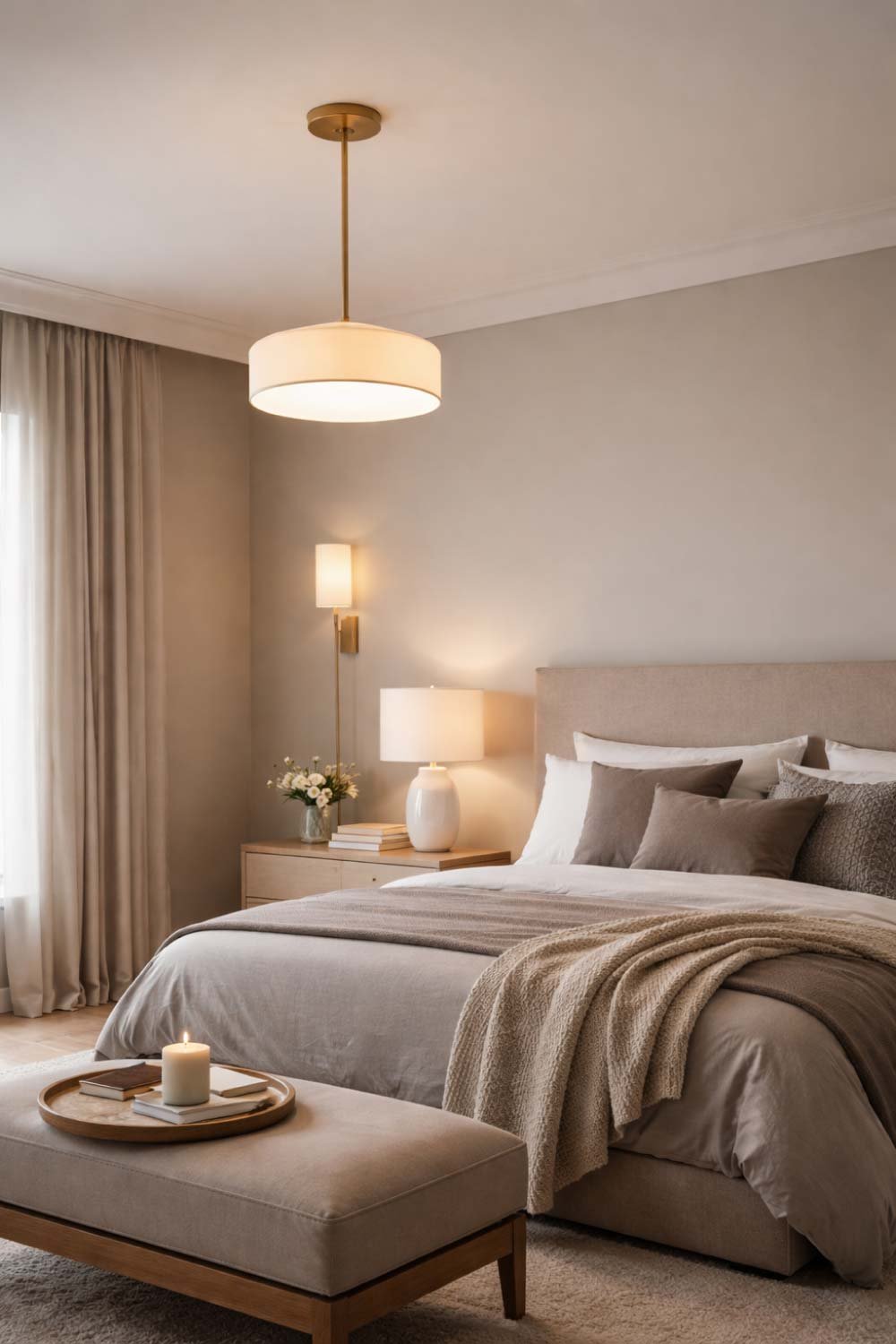
While a beautiful lighting fixture can enhance a bedroom, practicality must never be sacrificed. A stunning chandelier or decorative lamp is pointless if it doesn’t provide adequate illumination, casts harsh shadows, or is difficult to maintain. Balancing aesthetics with functionality ensures your lighting works for your lifestyle while complementing your design.
Key Questions to Ask
- Ease of Use: Can the light be switched on or off from the bed or entryway? Are there dimmer or smart control options?
- Adequate Illumination: Does it provide enough light for intended activities like reading or applying makeup?
- Glare and Shadows: Does the fixture create harsh shadows or reflections? Avoid overly intricate designs that can produce uneven lighting.
- Maintenance: Is the fixture easy to clean and maintain? Fixtures with tiny crevices or complicated designs can become a hassle over time.
Balance Between Beauty and Function
A light fixture should complement your room while serving your daily needs. This might mean choosing a simple but elegant pendant instead of an ornate chandelier or selecting a lamp with a clean-lined shade that distributes light evenly. Even in highly stylized bedrooms, functional choices prevent frustration and ensure your space is comfortable and practical.
Personal Experience
I once bought a stunning glass pendant with an intricate cage design. While it looked luxurious and artistic, it cast bizarre shadows across my ceiling and walls and was a nightmare to clean. Eventually, I replaced it with a simpler, matte fixture that provided evenly distributed light. The lesson was clear: beauty is important, but functionality wins in the bedroom. You want fixtures that look good and perform well in real life.
Extra Tips for a Cohesive Bedroom Lighting Scheme
- Coordinate Finishes: Match or complement fixture finishes with other hardware in your room, such as door handles, drawer pulls, or curtain rods.
- Use Layered Lighting: Combine ambient, task, and accent lighting for flexibility.
- Think About Ceiling Height: Pendant lights work well in rooms with higher ceilings, while flush or semi-flush mounts suit lower ceilings.
- Experiment with Placement: Don’t be afraid to move lamps or sconces slightly to find the most flattering light.
- Consider Energy Efficiency: LEDs use less energy and last longer than traditional bulbs—good for your wallet and the environment.
Conclusion
Choosing bedroom lighting fixtures is about balancing beauty, function, and comfort. From understanding the purpose of each light, selecting styles and scale, considering light temperature, incorporating dimmers, layering fixtures, and prioritizing functionality—you can create a space that’s not only visually stunning but also practical and relaxing.
Personal Reflection:
My own journey with bedroom lighting taught me that small changes—like switching to warm bulbs, adding dimmers, or layering lights—can dramatically enhance your daily living experience. Lighting isn’t just decoration; it sets the tone for your sleep, relaxation, and mood. A well-lit bedroom feels like a retreat you never want to leave.
By following these expert tips and keeping your personal style in mind, you can choose bedroom lighting fixtures that truly transform your space into a cozy, stylish, and functional haven.
Also Read: