
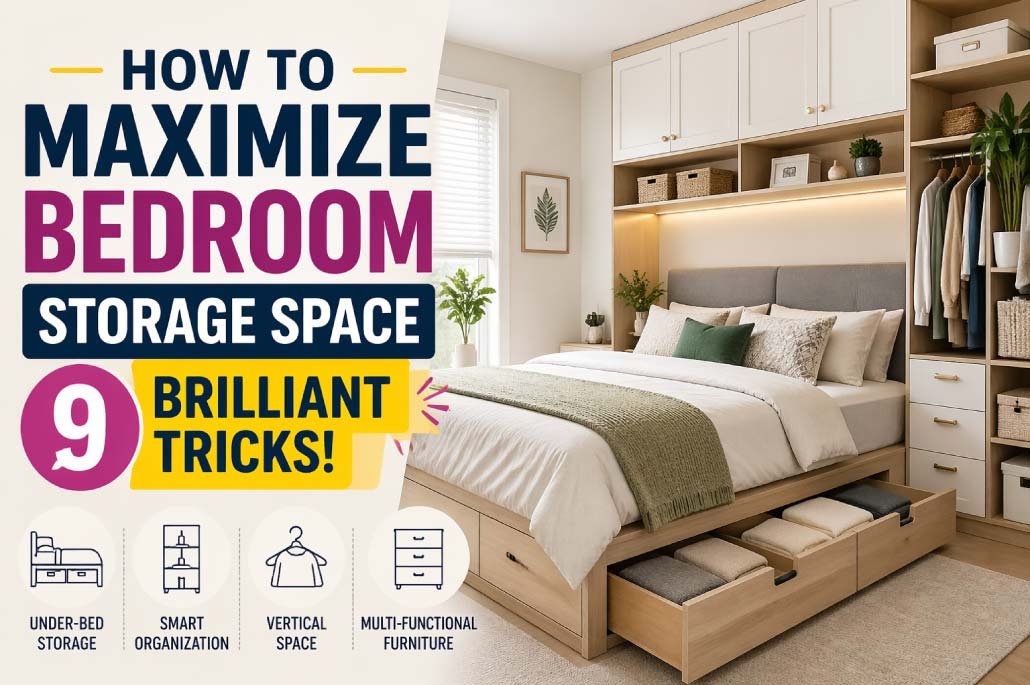
Struggling with a cluttered bedroom? You’re not alone. Whether you live in a small apartment or just have too many belongings, finding enough storage space can feel impossible. The good news is that with a few smart strategies, you can transform even the tiniest bedroom into a well-organized and functional space.
In this guide, I’ll share 9 brilliant tricks to maximize bedroom storage space, along with some personal experiences that helped me turn my own cramped room into a peaceful and clutter-free retreat.
1. Use Vertical Space Wisely
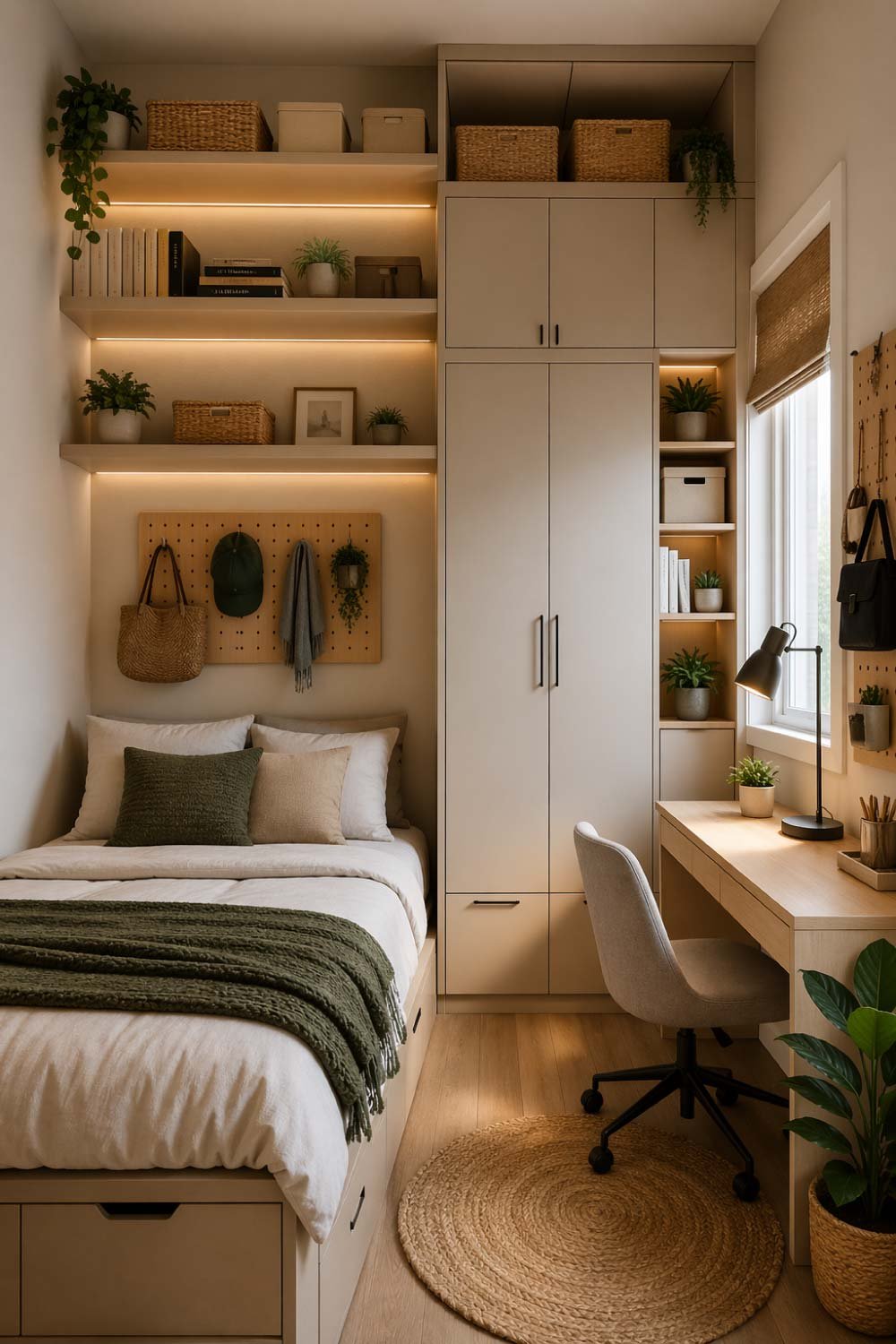
When you’re dealing with a small bedroom, the biggest mistake most people make is thinking only in terms of floor space. Naturally, we tend to organize things at eye level or below, simply because it feels more convenient. But in reality, a large portion of your room’s potential lies above you — in the vertical space that often goes completely unused.
Think of your walls as an extension of your storage system. Instead of seeing them as blank surfaces meant only for decoration, treat them as valuable real estate. By shifting your mindset from horizontal to vertical storage, you instantly unlock a whole new level of organization.
One of the easiest ways to take advantage of vertical space is by installing shelves. These can be placed above your bed, desk, or wardrobe — areas that are typically underutilized. Floating shelves are especially popular because they look modern and don’t take up visual space. You can use them to store books, storage boxes, folded clothes, or even decorative baskets that hide clutter.
Another smart idea is to install tall cabinets or wardrobes that reach up to the ceiling. Many people stop their storage halfway up the wall, which leaves a large empty gap above. That gap is wasted space. By choosing taller furniture, you can store less frequently used items—like seasonal clothing, spare bedding, or old documents—at the top.
Hooks and wall-mounted organizers are also incredibly effective. You can hang bags, scarves, hats, or even jewelry. Pegboards are another creative option that allows you to customize your wall storage based on your needs. They are especially useful if you want flexibility, since you can rearrange hooks and holders anytime.
Vertical storage doesn’t just improve organization—it also makes your room feel bigger. When items are lifted off the floor, the room appears more open and less cluttered. This creates a cleaner, more breathable environment, which can have a positive effect on your mood and productivity.
My experience:
I used to think storage meant stuffing things into drawers and keeping everything within arm’s reach. My walls were mostly empty except for a few decorations. The upper portion of my room was completely wasted.
One day, I decided to experiment by installing a couple of floating shelves near the ceiling. At first, I wasn’t sure what I’d even put there. But slowly, I started using them for things I didn’t need every day—like winter blankets, extra pillows, and some storage boxes.
The difference was immediate. My wardrobe suddenly felt less crowded, my room looked more organized, and I even had space to add a small plant and a few decorative pieces.
That small change completely shifted how I think about space. Now, whenever I feel like I’m running out of room, the first question I ask myself is: “Am I using my walls properly?”
Also Read:
2. Invest in Multi-Functional Furniture
In a small bedroom, every piece of furniture should earn its place. If something only serves one purpose, it might not be the best use of your limited space. That’s where multi-functional furniture comes in—it allows you to combine storage, comfort, and practicality into a single item.
Multi-functional furniture is designed to do more than one job. It’s all about maximizing efficiency without overcrowding your room. Instead of adding more furniture to meet your needs, you choose smarter pieces that handle multiple tasks.
One of the most popular examples is a storage bed. These beds come with built-in drawers underneath or lift-up compartments that provide hidden storage. They’re perfect for storing clothes, shoes, bedding, or anything you don’t need daily.
Ottomans with storage inside are another great option. They can be used as seating, a footrest, or even a small table, while also providing space to store items like blankets or books. Similarly, foldable desks or wall-mounted tables can be tucked away when not in use, freeing up valuable floor space.
Sofa beds or daybeds are ideal if your bedroom also serves as a guest room or relaxation space. They allow you to switch between seating and sleeping arrangements without needing separate furniture.
Even smaller items can be multi-functional. For example, a bedside table with drawers or shelves can double as storage for books, chargers, or personal items. Mirrors with hidden storage compartments are another clever addition.
The key is to think strategically. Before buying any piece of furniture, ask yourself: “Can this serve more than one purpose?” If the answer is yes, it’s probably a smart investment.
My experience:
Switching to multi-functional furniture completely changed how I use my bedroom. I used to have a standard bed, a separate storage unit, and a small table—all taking up space.
Eventually, I replaced my regular bed with one that had built-in drawers underneath. At first, I underestimated how much storage it would actually provide. But once I started using it, it felt like I had doubled my storage overnight.
I now store extra blankets, shoes, old notebooks, and even some seasonal clothes in those drawers. The best part is that everything is hidden, so my room looks neat and uncluttered.
I also added a small ottoman with storage inside. It sits at the corner of my room and holds random items that would otherwise create clutter.
These changes made my room not just more organized, but also more functional. I didn’t need to add more furniture—I just needed smarter furniture.
Also Read:
3. Utilize Under-Bed Storage
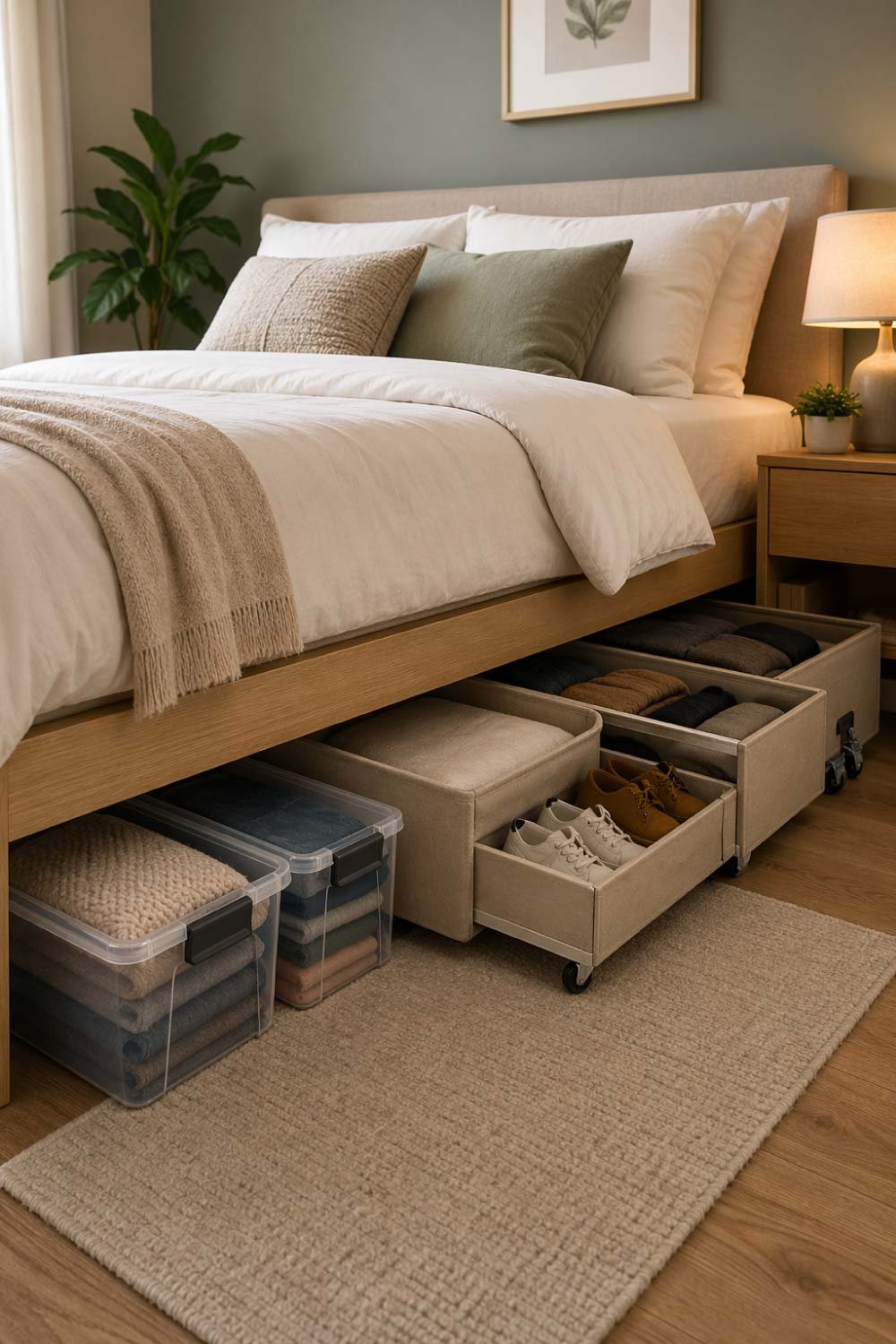
The space under your bed is one of the most overlooked storage areas in any bedroom. It’s easy to ignore because it’s out of sight, but that’s exactly what makes it so valuable. With the right approach, this hidden space can become one of your most efficient storage solutions.
Most beds naturally have some empty space underneath. Instead of letting it collect dust, you can turn it into a practical storage zone. This is especially useful in small bedrooms where every inch counts.
There are several ways to make use of under-bed storage. Storage bins and boxes are the simplest option. You can choose clear containers so you can easily see what’s inside, or labeled boxes for better organization.
Rolling drawers are another convenient choice. They slide in and out easily, making it simple to access your items without lifting heavy containers. Vacuum-sealed bags are perfect for storing bulky items like winter clothes, blankets, or comforters. They reduce the volume significantly, allowing you to store more in less space.
You can also organize items by category. For example, dedicate one section to seasonal clothing, another to shoes, and another to extra bedding. This makes it easier to find what you need without creating a mess.
Keeping the space clean is important. Since it’s close to the floor, it can collect dust quickly. Using covered containers helps protect your belongings and keeps everything hygienic.
My experience:
For the longest time, I completely ignored the space under my bed. It was either empty or filled with random items that I had shoved there without any organization.
One day, I decided to clean it out and actually use it properly. I bought a few flat storage boxes and started organizing my belongings.
I moved all my winter clothes into vacuum bags and stored them under the bed during summer. I also placed extra blankets and some rarely used items there.
The result was incredible. My wardrobe suddenly had more space, and my room looked much cleaner. Everything had a place, and I didn’t have to struggle to find things anymore.
Now, under-bed storage is one of my favorite organization hacks. It’s hidden, efficient, and surprisingly spacious.
Also Read:
Women Clothing Size Chart: Complete Guide for Perfect Fit and Style
4. Declutter Regularly
No amount of storage solutions will help if you’re holding onto too many unnecessary items. Decluttering is the foundation of an organized bedroom. Before you think about adding shelves, boxes, or furniture, you need to reduce what you own.
Clutter builds up over time, often without us noticing. Clothes we no longer wear, items we keep “just in case,” and things we forget about all take up valuable space. Regular decluttering helps you stay in control and prevents your room from becoming overcrowded.
Start by going through your belongings category by category—clothes, accessories, books, and miscellaneous items. Ask yourself simple but honest questions:
- Do I use this regularly?
- Does this still serve a purpose?
- Would I buy this again today?
If the answer is no, it’s probably time to let it go.
You can divide items into three categories: keep, donate, and discard. Donating is a great option for items that are still in good condition but no longer useful to you. It not only frees up space but also helps others.
Make decluttering a habit rather than a one-time task. Even a quick monthly review can make a big difference. The less you own, the easier it is to stay organized.
Decluttering also has mental benefits. A clean, organized space can reduce stress, improve focus, and create a sense of calm.
My experience:
I used to be someone who held onto everything. Clothes that didn’t fit, items I hadn’t used in years—I kept them all, thinking I might need them someday.
Eventually, my room started feeling cramped and overwhelming. No matter how much I organized, it never felt clean.
One day, I decided to do a serious decluttering session. I went through my belongings and forced myself to be honest. If I hadn’t used something in a long time, I let it go.
To my surprise, I ended up removing nearly 30% of my items. It was a bit difficult at first, but once it was done, the difference was unbelievable.
My room felt bigger, cleaner, and more peaceful. I realized that I didn’t need more storage—I just needed fewer things.
Now, I declutter regularly, and it has completely changed how I manage my space.
Also Read:
5. Use Closet Organizers
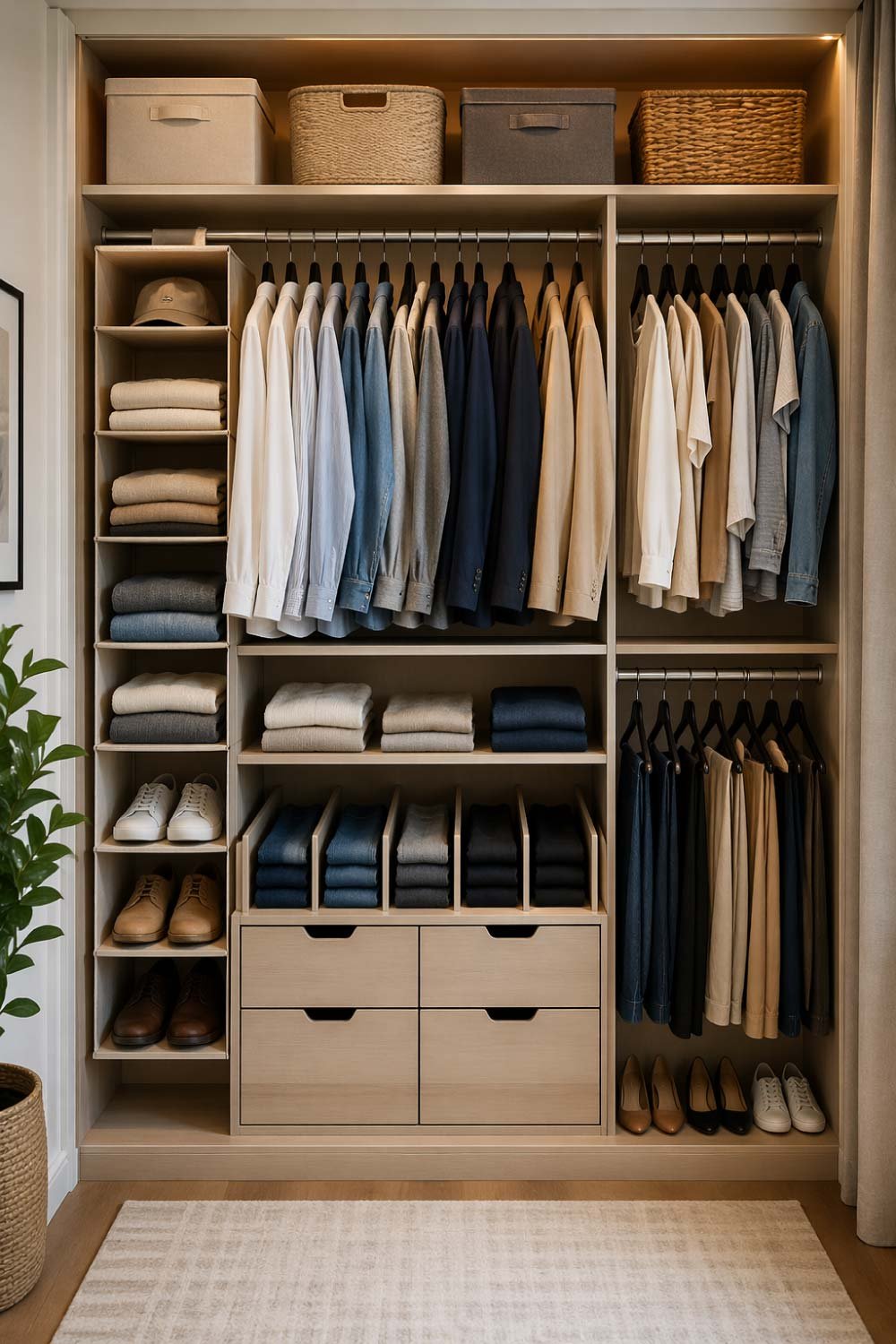
A cluttered closet isn’t just visually chaotic—it can make daily routines inefficient and stressful. Many people underestimate the potential of closet organizers, thinking their wardrobe won’t fit anything new. In reality, the right organization system can double or even triple your usable space.
Understanding Closet Organizers
Closet organizers come in various forms: hanging shelves, shoe racks, dividers, drawer units, and modular systems. Each serves a specific purpose, whether it’s storing folded clothes, accessories, or seasonal items. Using these tools strategically ensures that every inch of your closet is functional.
Hanging Organizers:
These are ideal for small spaces. Fabric hanging shelves are perfect for sweaters, t-shirts, or shoes. They can be suspended from existing rods, allowing vertical use of the closet that otherwise goes wasted. I personally installed a five-tier hanging shelf in the corner of my wardrobe. Previously, my sweaters were piled haphazardly on the top shelf, often falling and creating a mess. After installing this organizer, each sweater had its designated spot. Now, I can pick one without disturbing the rest, and I can visually track what I have, avoiding unnecessary purchases.
Shelf Dividers:
Shelf dividers keep stacks of clothing neat. Without dividers, folded items tend to topple over, creating clutter and wasted space. I invested in adjustable wooden dividers that sit atop my shelves. The difference was immediate—my pants, jeans, and folded shirts now remain perfectly stacked. It’s simple, affordable, and dramatically improves accessibility.
Extra Rods:
Closets with only one hanging rod often waste space above and below. Adding a second rod allows you to hang shorter items like shirts and jackets on top while reserving the lower rod for pants or skirts. In my own setup, adding a second rod effectively doubled my hanging capacity without enlarging the closet. This small change eliminated my habit of draping clothes over chairs or leaving them on the bed.
Slim Hangers:
Bulky hangers eat up valuable space. Slim, non-slip hangers can significantly increase your storage capacity. I switched all my wooden hangers for velvet slim hangers, and the impact was immediate—I could fit nearly 30% more clothing on the same rod. Plus, they prevent garments from slipping off, which was a constant problem with my old plastic hangers.
Personal Experience:
Before introducing organizers, my closet felt overwhelming. I’d spend ten minutes looking for a shirt or digging through piles of clothes that kept tumbling down. Installing a combination of hanging shelves, dividers, and slim hangers completely transformed my experience. Not only does it save time, but it also makes the space more aesthetically pleasing. I now start each day with a sense of order rather than stress, and shopping for new clothes is easier because I can see exactly what I already own.
Tips for Maximizing Closet Organizer Use:
- Group by Category: Keep similar items together—shirts, pants, jackets, and accessories. This reduces the time spent searching.
- Seasonal Rotation: Use the upper shelves or storage boxes for off-season clothing. This keeps your everyday wardrobe easily accessible.
- Labeling: Label shelves or boxes to make it even easier to maintain order. I used small chalkboard tags for a practical yet stylish touch.
- Adjustable Systems: Modular organizers are ideal because they can evolve with your wardrobe. I often switch shelf positions depending on new clothing acquisitions.
The result of thoughtful closet organization isn’t just a cleaner space—it’s a more efficient lifestyle. You’ll save time, reduce stress, and even protect your clothes from unnecessary wear and tear.
Also Read:
6. Install Hooks and Wall Racks
Hooks and wall-mounted racks are deceptively simple, yet transformative for small bedrooms. They are inexpensive, versatile, and can drastically reduce clutter if used effectively.
Benefits of Hooks
Hooks utilize vertical space that is often overlooked. The back of doors, blank wall sections, or the sides of wardrobes are all ideal places. They provide instant accessibility for frequently used items, preventing clutter from accumulating on beds, chairs, or floors.
Types of Hooks and Racks:
- Single Hooks: Perfect for hanging hats, bags, or scarves.
- Multi-Hook Racks: Ideal for grouping multiple items in one space, like jackets or robes.
- Adhesive Hooks: Useful for renters who cannot drill into walls; these can be removed without damage.
- Rotating or Pegboard Systems: Excellent for a larger collection of accessories, such as belts, jewelry, or ties.
Personal Experience:
I installed hooks behind my bedroom door and along a free wall near my desk. This small intervention changed the room entirely. My backpack, headphones, jackets, and even hats now have a designated spot. The visual clutter disappeared, making the room feel larger and more organized. What I love is that it keeps items within reach without encroaching on limited floor space.
Wall Racks:
Wall racks extend the concept of hooks by allowing multiple items to be hung or even stored in baskets. I installed a simple wooden rack above my bed to hold my frequently used bags and small accessories. Not only did this free up space in my closet, but it also added a functional decorative element.
Tips for Using Hooks and Racks Effectively:
- Strategic Placement: Hang frequently used items at eye level for easy access.
- Categorize: Group similar items on one rack—coats together, hats together—to reduce visual chaos.
- Double Function: Combine hooks with shelves for dual storage. I added small floating shelves above a set of hooks to store small decorative items.
- Consider Aesthetics: Hooks come in a variety of finishes and styles. Choosing ones that match your bedroom décor ensures functionality doesn’t sacrifice style.
Hooks and wall racks are a perfect example of small interventions yielding big results—they are affordable, easy to install, and make maintaining order effortless.
Also Read:
7. Make Use of Corners
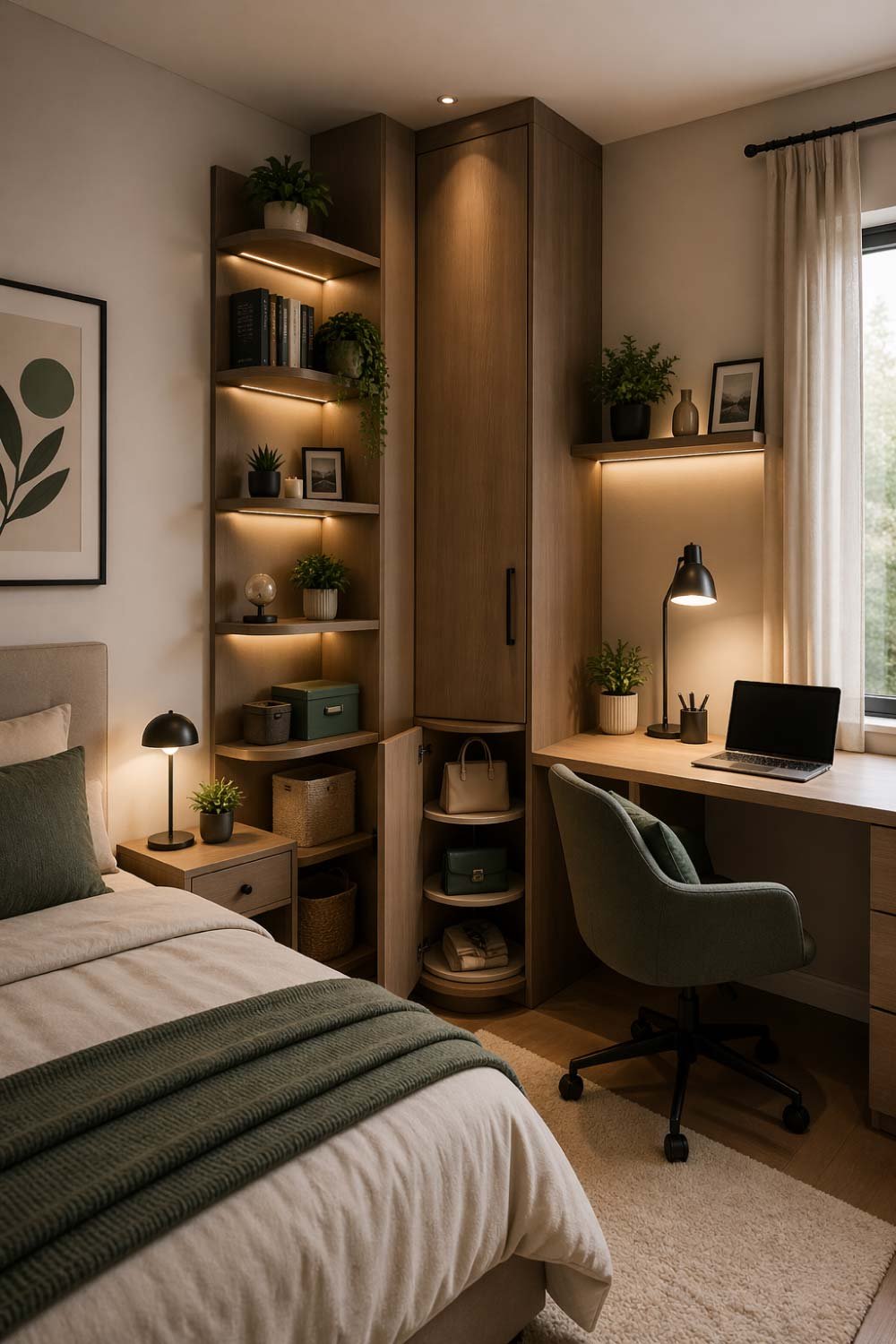
Corners are often the most neglected parts of a room, yet they hold significant potential for storage and functionality. Many people see them as awkward or unusable, but with a little creativity, they can become highly functional spaces.
Corner Shelves:
Installing triangular shelves or floating corner units allows you to store books, décor, or accessories without taking up main floor space. I had an empty corner near my desk for years, and it always felt wasted. Adding a corner shelf unit allowed me to store my books, a few decorative items, and small storage boxes. It not only maximized space but also gave the room a more balanced and complete look.
Corner Desks or Cabinets:
For bedrooms doubling as workspaces, a corner desk utilizes the room efficiently while providing adequate work surface. I installed a small L-shaped desk in my room’s corner, which freed up the central area for movement and other furniture. Similarly, corner cabinets can be used to store items vertically, making the space functional without appearing cramped.
Rotating or Lazy Susan Units:
Some corner storage units rotate or have shelves that make accessing items easier. These are excellent for corners where regular shelves are hard to reach. I use one of these in my closet corner for accessories like scarves and belts, which makes finding and using them convenient.
Personal Experience:
I had always avoided the corners in my room, thinking they were dead space. Implementing corner shelves and a small corner cabinet completely changed how I used the room. Items that were previously scattered across desks and drawers now had dedicated spaces. This approach turned previously neglected areas into useful storage zones and gave my bedroom a more cohesive, organized look.
Tips for Corner Optimization:
- Use Vertical Space: Stack storage boxes or shelves upward rather than outward.
- Multi-Functional Furniture: Consider corner units that double as seating, desk, or storage.
- Measure Carefully: Ensure furniture fits snugly into corners without blocking doors or windows.
- Keep It Accessible: Avoid overcrowding corner storage, which can make items hard to reach.
Corners can go from wasted space to integral parts of your storage strategy with minimal effort and thoughtful planning.
Also Read:
8. Use Storage Boxes and Baskets
Storage boxes and baskets are the unsung heroes of bedroom organization. They allow you to compartmentalize your belongings, maintain a uniform look, and make cleaning much simpler.
Types of Storage Boxes:
- Fabric Bins: Soft-sided, collapsible, and ideal for clothes, blankets, or accessories.
- Plastic Bins: Durable, often stackable, and great for seasonal storage or heavier items.
- Decorative Baskets: Woven or wire baskets double as décor and storage, blending aesthetics with functionality.
Organization Techniques:
- Label Everything: Labels make finding items effortless. I use small chalkboard tags on my baskets for instant visual reference.
- Stack Smartly: Heavy or frequently used items should go on lower shelves, while lighter, decorative boxes can go higher.
- Group Similar Items: Keep socks, scarves, or tech accessories together. This saves time and prevents misplacement.
Personal Experience:
Before I started using storage boxes, my shelves and drawers were chaotic. Books and small items jumbled together, and cleaning took forever. Once I invested in matching baskets and labeled them, my shelves became visually uniform and easier to maintain. I now store scarves, belts, and miscellaneous items in baskets inside my closet, making it simple to access what I need while keeping everything tidy. Plus, they add a decorative element to otherwise mundane storage spaces.
Tips for Maximizing Storage Boxes and Baskets:
- Choose uniform colors or patterns for a cohesive look.
- Use under-bed storage boxes for off-season clothing.
- Rotate items seasonally to keep storage spaces functional.
- Consider transparent boxes for items you need to locate quickly.
9. Go Minimal with Decor
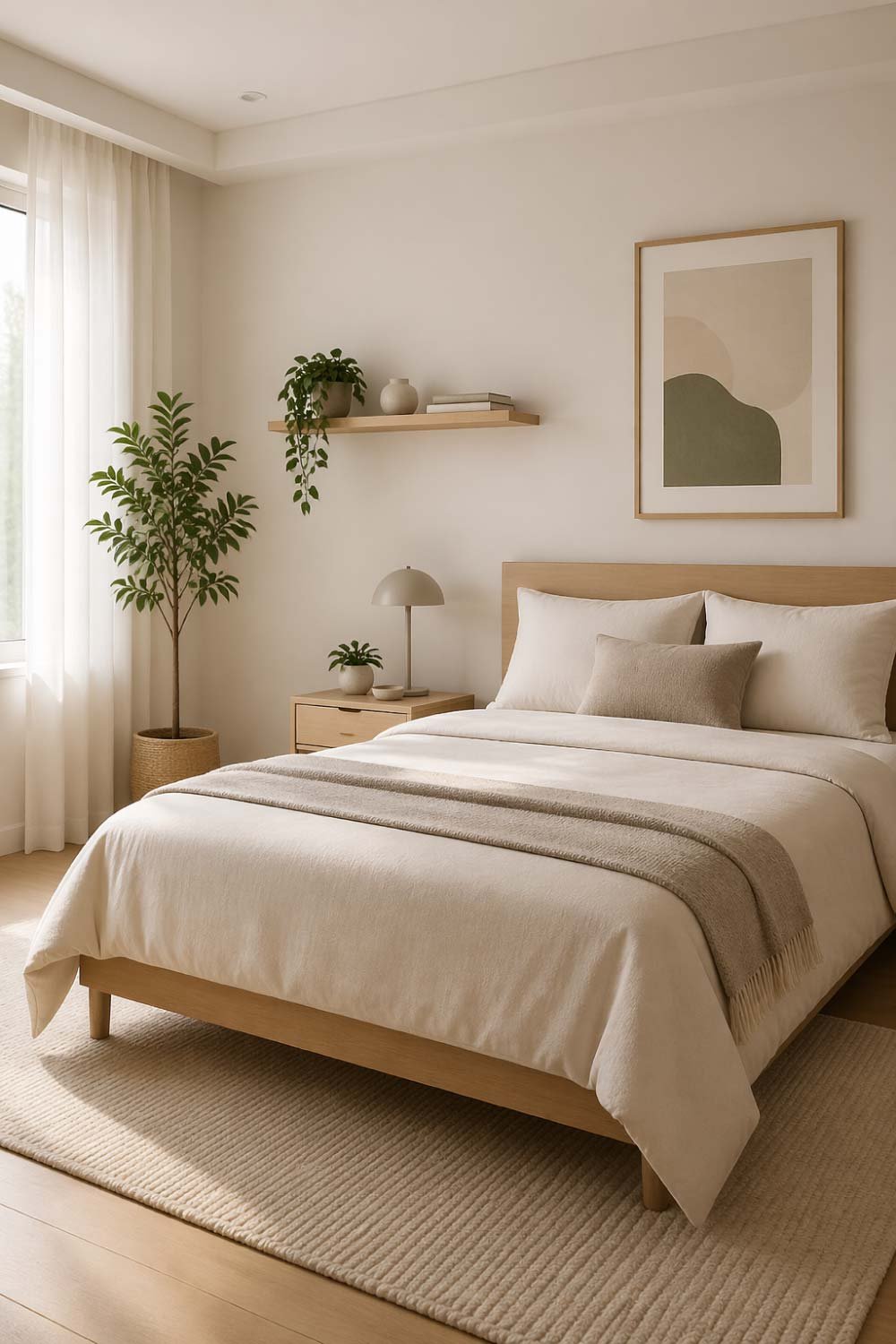
Minimalism in décor isn’t about having a bare room—it’s about curating your space to be functional, visually pleasing, and uncluttered. Over-decorating can create visual chaos, making a room feel smaller than it is.
Practical Tips:
- Choose Meaningful Pieces: Only display décor items that bring joy or serve a function.
- Limit Surfaces: Avoid overcrowding desks, shelves, and nightstands.
- Use Vertical Decoration: Wall art or shelves draw the eye upward, emphasizing room height.
- Consistent Color Palette: Harmonizing colors makes the room feel larger and calmer.
Personal Experience:
I used to decorate every surface of my bedroom with knick-knacks, photos, and random souvenirs. While aesthetically interesting, it made the room feel cramped and chaotic. I gradually reduced the number of items, keeping only the ones I truly loved. The result was transformative: the bedroom felt larger, more serene, and easier to maintain. Less truly became more, both visually and practically.
Benefits of Minimal Décor:
- Reduces dusting and cleaning effort.
- Creates a calming environment.
- Highlights the furniture and functional elements rather than distracting from them.
- Enhances perception of space in small bedrooms.
Final Thoughts
Maximizing bedroom storage space doesn’t require a complete makeover or a big budget. With a little creativity and smart planning, you can make the most of every inch of your room.
From using vertical space and multi-functional furniture to decluttering and organizing, these small changes can have a big impact.
What worked best for me was combining multiple strategies—especially under-bed storage, wall shelves, and decluttering. Together, they completely transformed my bedroom from cluttered to calm.
If you’re feeling overwhelmed, start small. Pick one or two tips from this list and try them out. Once you see the difference, you’ll feel motivated to do more.
Also Read: