
Starting a fast food business can be a highly profitable venture if approached strategically. With busy lifestyles and increasing demand for convenient meals, fast food businesses have significant growth potential.
However, like any business, success requires careful planning, a solid business model, and efficient operations. This guide provides a detailed roadmap to help you start and grow a thriving fast food business.
Conduct Market Research
Market research is the foundation of any successful business. Understanding the local market, consumer preferences, and competition will help you make informed decisions.
-
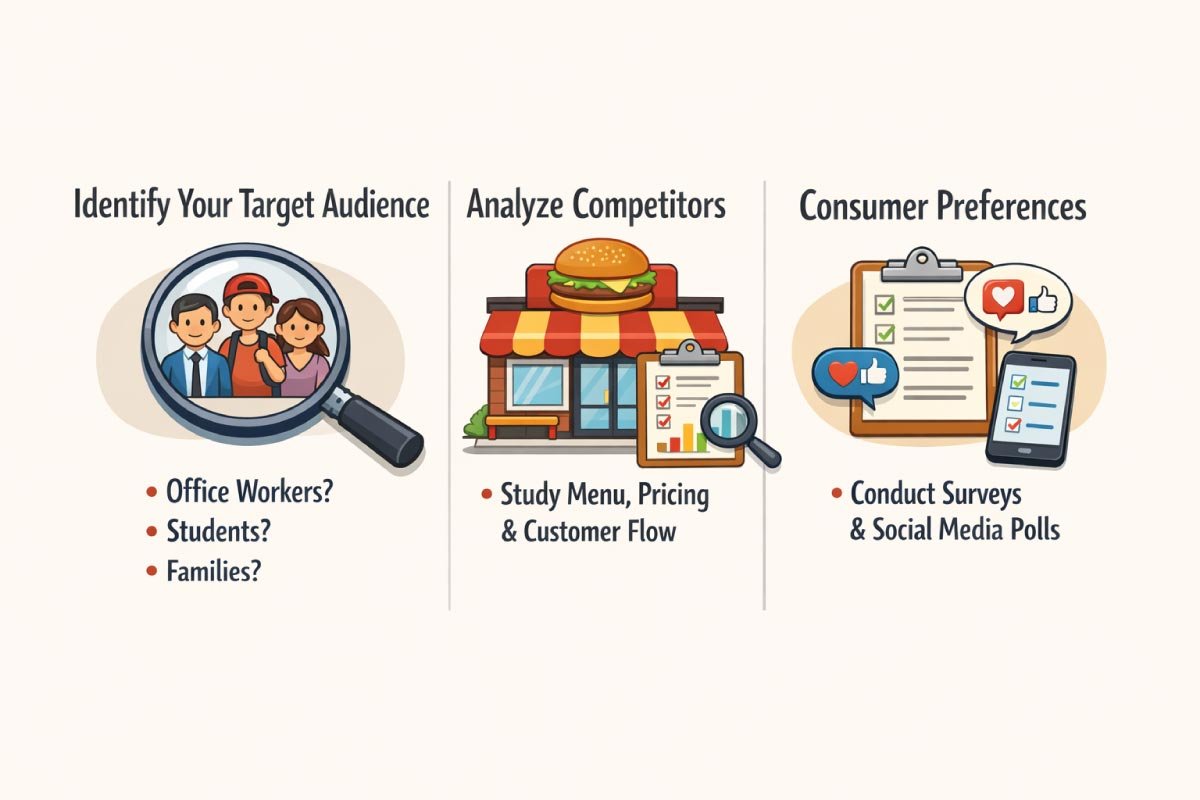
Identify Your Target Audience: Determine who your primary customers will be. Are you targeting office workers, students, families, or a mix? Their preferences will guide your menu, pricing, and marketing strategies.
-
Analyze Competitors: Visit local fast food outlets and study their offerings, pricing, customer flow, and marketing tactics. Identify gaps in the market that your business can fill.
-
Consumer Preferences: Surveys, focus groups, and social media polls can provide insights into what potential customers are looking for in terms of taste, portion size, and price.
Define Your Niche and Concept
Defining your niche and concept is crucial for standing out in the fast food industry. By identifying your target audience, signature offerings, and unique value proposition, you can create a focused brand identity.
A clear concept guides menu development, marketing strategies, and customer experience, setting the stage for business success.
-
Burgers and Sandwiches
-
Pizza and Pasta
-
Asian Fast Food (Chinese, Thai, Japanese)
-
Healthy/Organic Fast Food
-
Snack Bars and Desserts
Your niche will influence your branding, location choice, equipment, and staffing requirements.
Develop a Business Plan
Developing a business plan is a vital step for your fast food business. It outlines your goals, target market, menu offerings, operational strategies, and financial projections.
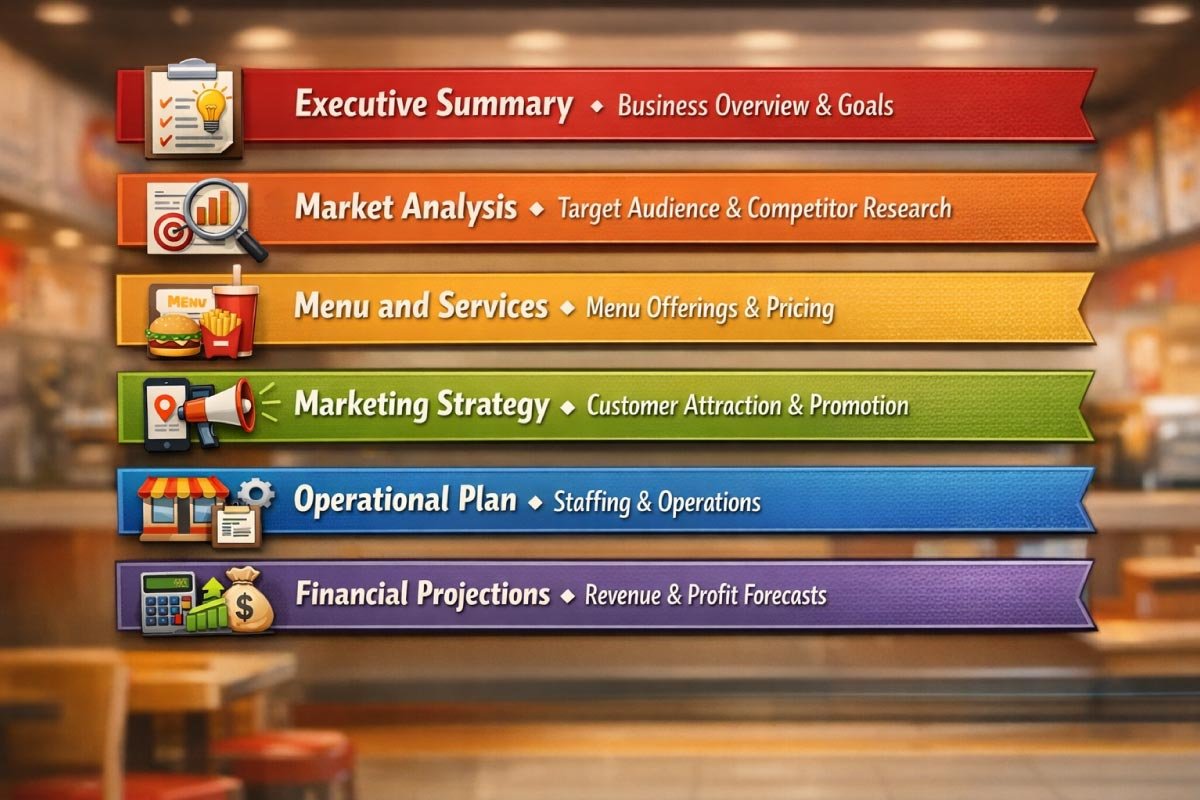
A clear, detailed plan guides decision-making, attracts investors, and provides a roadmap for launching and growing your business successfully.
| Section | Description |
|---|---|
| Executive Summary | Overview of your fast food business, goals, and vision. |
| Market Analysis | Insights from your market research, target audience, and competitor analysis. |
| Menu and Services | Details of your offerings, portion sizes, pricing, and special promotions. |
| Marketing Strategy | How you plan to attract and retain customers, including online and offline marketing. |
| Operational Plan | Staffing, location, supplier relationships, inventory management, and workflow. |
| Financial Projections | Startup costs, expected revenue, break-even analysis, and profit margins. |
A strong business plan will not only guide your actions but also instill confidence in potential investors.
Choose the Right Location
-
Busy Areas: Near schools, offices, shopping centers, or transport hubs.
-
Competition Considerations: Avoid oversaturated areas unless you have a unique selling point.
-
Space Requirements: Ensure there is enough space for a kitchen, storage, seating (if dine-in is offered), and staff movement.
| Factor | Considerations |
|---|---|
| Foot Traffic | High pedestrian or vehicle flow increases chances of spontaneous orders. |
| Visibility | A location that is easily seen from main roads or intersections attracts more customers. |
| Accessibility | Ensure easy parking, entrances, and exits for customers. |
| Cost | Rent should align with your projected revenue and not compromise profitability. |
Legal Formalities and Licensing
Legal formalities and licensing are essential to operate your fast food business compliantly and avoid penalties.
This includes registering your business, obtaining health and safety permits, and securing food service licenses.
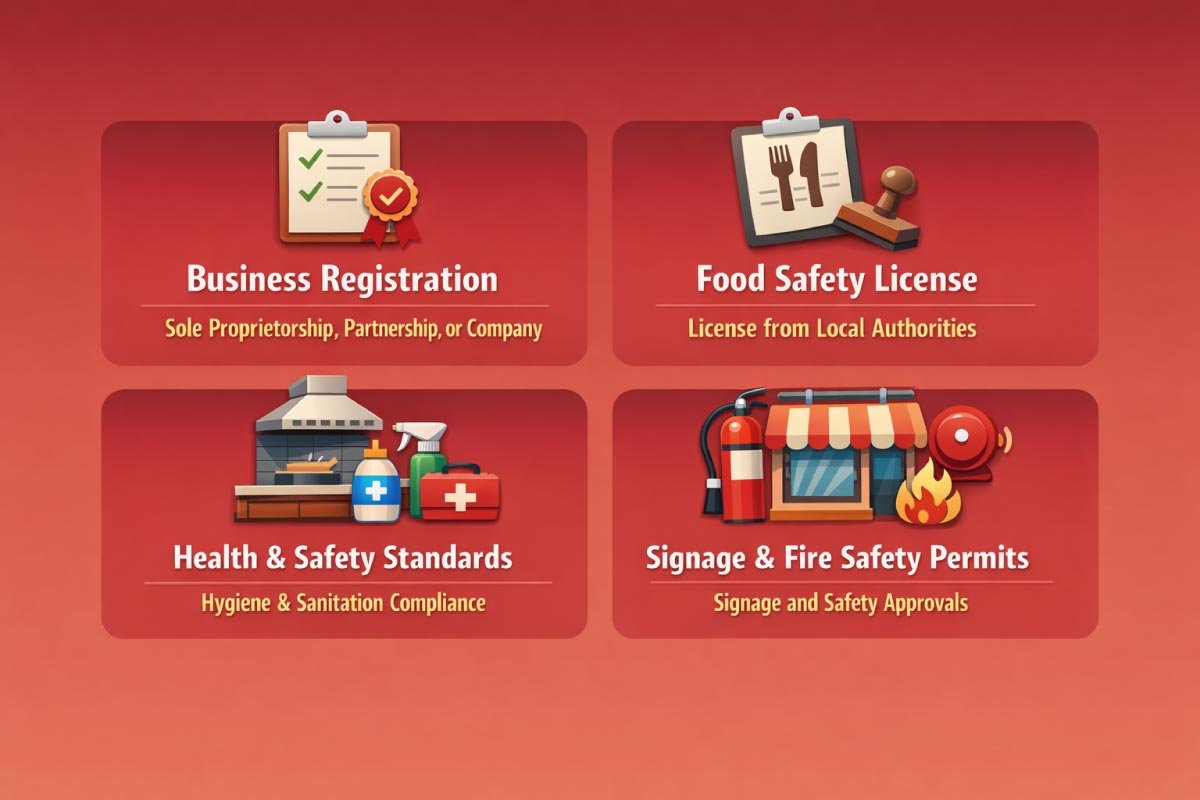
Proper compliance ensures legal protection, builds customer trust, and provides a strong foundation for sustainable operations.
-
Business Registration: Register your business under the appropriate structure (sole proprietorship, partnership, or company).
-
Food Safety License: Obtain a food license from local authorities to operate legally.
-
Health and Safety Standards: Ensure your kitchen, storage, and staff meet hygiene regulations.
-
Signage and Fire Safety Permits: Required for public-facing signage and safety compliance.
Discover More:
Plan Your Menu
Planning your menu is essential for defining your fast food business’s identity and appeal. A well-designed menu balances variety, pricing, and customer preferences while highlighting signature items.
Thoughtful planning streamlines kitchen operations, attracts target customers, and maximizes profitability.
-
Signature Dishes: Offer 1-2 standout items that set your business apart.
-
Portion Sizes: Ensure consistent portion sizes for quality control.
-
Pricing Strategy: Use cost-plus pricing to ensure each item covers costs and delivers profit.
-
Seasonal Items: Introducing limited-time items can attract repeat customers.
| Menu Item | Ingredients | Price | Prep Time |
|---|---|---|---|
| Classic Burger | Beef patty, bun, lettuce, tomato, cheese | $5 | 7 mins |
| Chicken Nuggets | Chicken, breadcrumbs, spices | $4 | 5 mins |
| Veggie Wrap | Vegetables, tortilla, sauce | $3.5 | 6 mins |
| French Fries | Potatoes, oil, salt | $2 | 5 mins |
Sourcing Ingredients and Equipment
Sourcing ingredients and equipment is vital for maintaining quality and efficiency in your fast food business.
Partnering with reliable suppliers ensures fresh, consistent ingredients and durable, high-performing equipment.
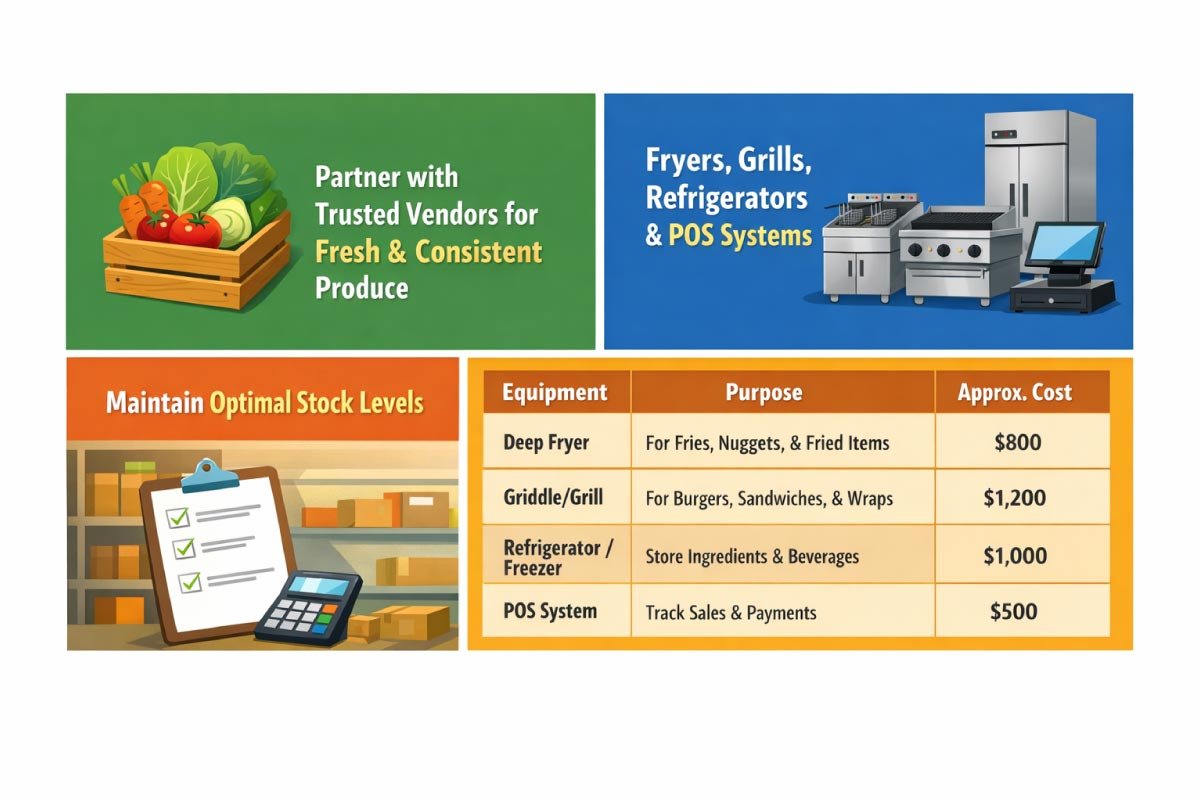
Effective sourcing helps control costs, streamline operations, and deliver a satisfying experience that keeps customers coming back.
-
Ingredients: Partner with trusted vendors to ensure fresh and consistent produce.
-
Equipment: Key equipment includes fryers, grills, refrigerators, prep tables, and point-of-sale (POS) systems.
-
Inventory Management: Maintain optimal stock levels to reduce waste and avoid shortages.
| Equipment | Purpose | Approximate Cost |
|---|---|---|
| Deep Fryer | For fries, nuggets, and fried items | $800 |
| Griddle/Grill | For burgers, sandwiches, and wraps | $1,200 |
| Refrigerator/Freezer | Store ingredients and beverages | $1,000 |
| POS System | Track sales, inventory, and payments | $500 |
Discover More:
Hire and Train Staff
Hiring and training staff is critical for delivering consistent service and maintaining operational efficiency.
Recruiting skilled, motivated team members and providing comprehensive training ensures quality, teamwork, and customer satisfaction.
Well-trained staff contribute to a positive work environment, smooth daily operations, and the overall success of your business.
-
Roles: Cashiers, cooks, cleaning staff, and delivery personnel (if applicable).
-
Training: Focus on hygiene, food preparation, customer service, and speed.
-
Team Culture: Encourage teamwork and a customer-first mindset to improve service quality.
Set Up Technology and POS Systems
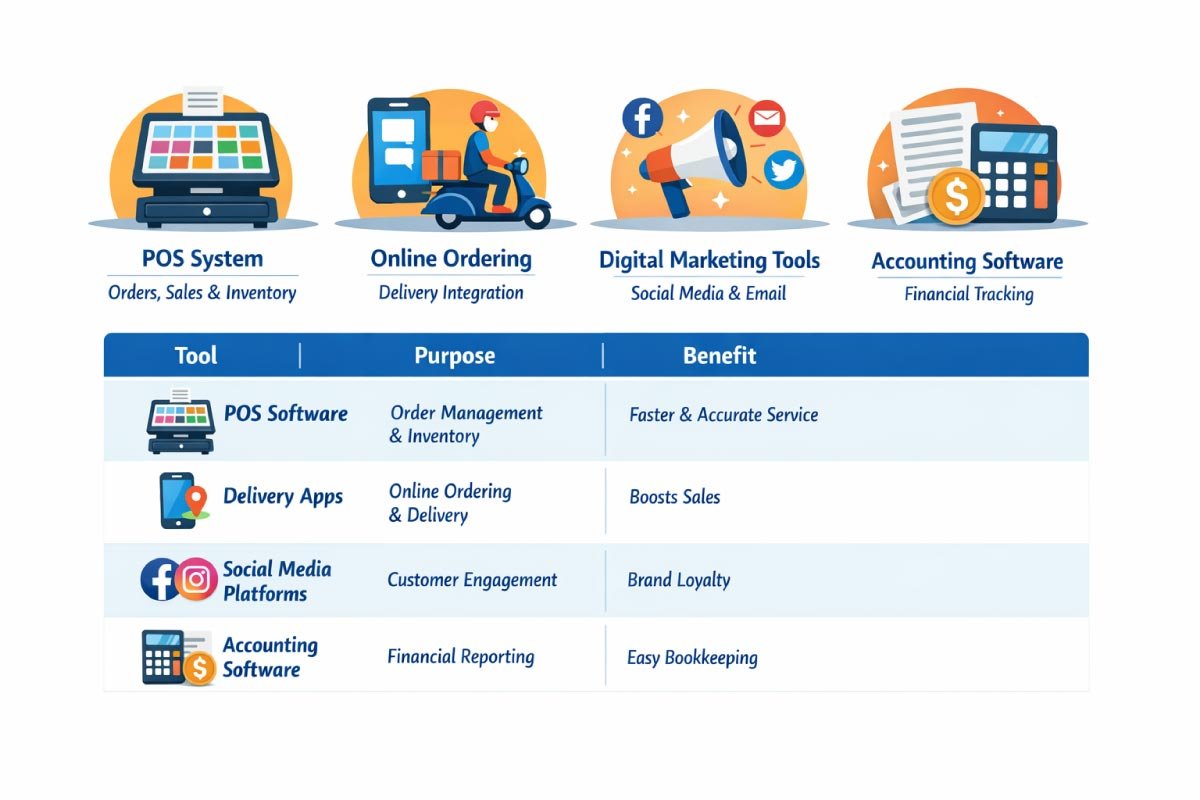
Setting up technology and POS systems is essential for smooth fast food operations. Modern point-of-sale systems streamline order processing, inventory management, and sales tracking.
Integrating efficient technology improves accuracy, speeds up service, enhances customer experience, and provides valuable data to make informed business decisions.
-
POS System: Tracks orders, sales, and inventory.
-
Online Ordering: Integrate with delivery platforms for added convenience.
-
Digital Marketing Tools: Use social media management and email tools to reach customers.
| Tool | Purpose | Benefit |
|---|---|---|
| POS Software | Order management, billing, inventory | Reduces errors and speeds up service |
| Delivery Apps | Online ordering and delivery | Increases sales without extra staff |
| Social Media Platforms | Marketing and engagement | Builds brand awareness and loyalty |
| Accounting Software | Financial tracking and reporting | Simplifies bookkeeping and tax compliance |
Discover More:
Marketing Your Fast Food Business
-
Brand Identity: Develop a memorable logo, color scheme, and tagline.
-
Social Media Presence: Promote your menu, offers, and events on platforms like Instagram, Facebook, and TikTok.
-
Local Marketing: Flyers, banners, and partnerships with nearby offices or schools can boost visibility.
-
Loyalty Programs: Reward repeat customers to encourage brand loyalty.
Financial Planning and Cost Management
-
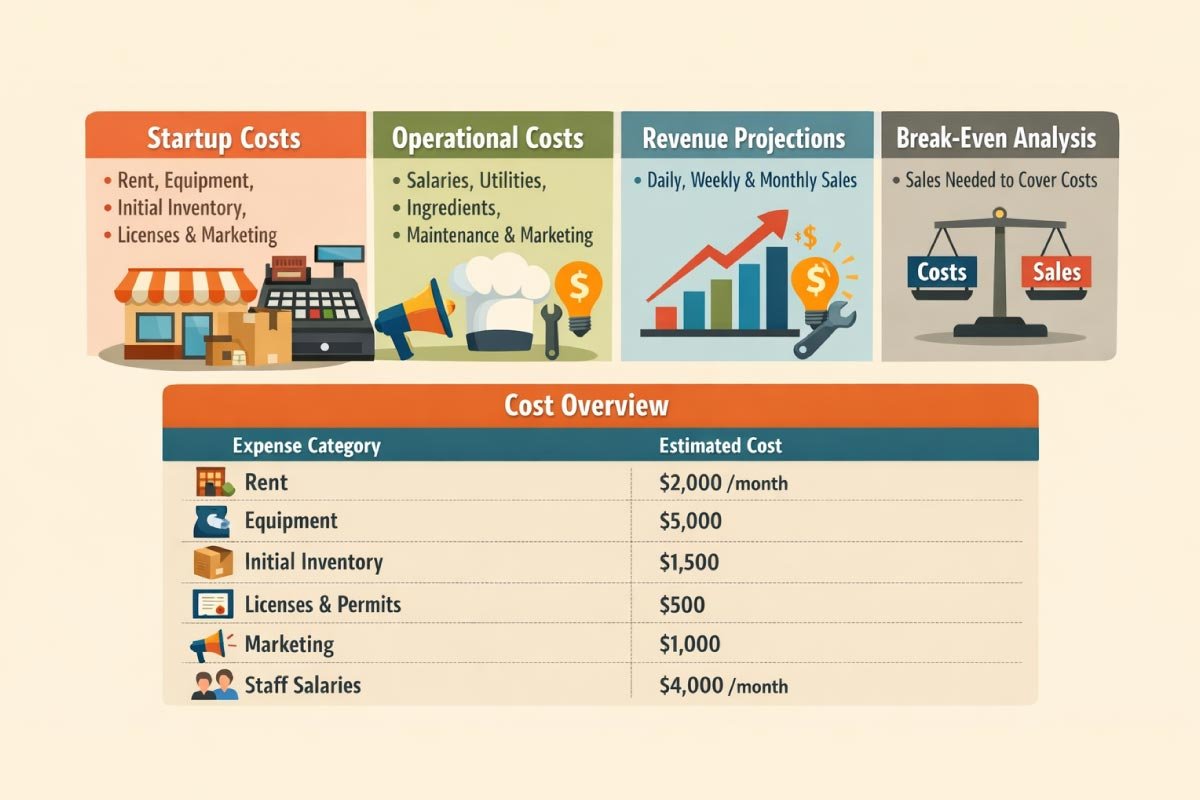
Startup Costs: Include rent, equipment, initial inventory, licenses, and marketing.
-
Operational Costs: Consider salaries, utilities, ingredients, maintenance, and marketing.
-
Revenue Projections: Estimate daily, weekly, and monthly sales to plan for profitability.
-
Break-Even Analysis: Determine how many sales are required to cover costs.
| Expense Category | Estimated Cost |
|---|---|
| Rent | $2,000/month |
| Equipment | $5,000 |
| Initial Inventory | $1,500 |
| Licenses and Permits | $500 |
| Marketing | $1,000 |
| Staff Salaries | $4,000/month |
Discover More:
Monitor Performance and Optimize
Monitoring performance and optimizing operations are essential for sustaining business growth. By tracking sales, customer feedback, and operational metrics,
you can identify strengths and areas for improvement. Continuous optimization enhances efficiency, boosts profitability, and ensures your business adapts effectively to changing market demands.
-
Customer Feedback: Regularly collect and analyze feedback to identify areas for improvement.
-
Sales Analysis: Monitor which menu items are most popular and which are underperforming.
-
Operational Efficiency: Optimize kitchen workflow, staff scheduling, and supply chain management.
-
Innovation: Introduce new menu items, promotions, or services to keep customers engaged.
Scaling Your Fast Food Business
Scaling your fast food business involves expanding operations, increasing revenue, and reaching a wider customer base.
This can include opening new locations, diversifying the menu, or adopting efficient systems.
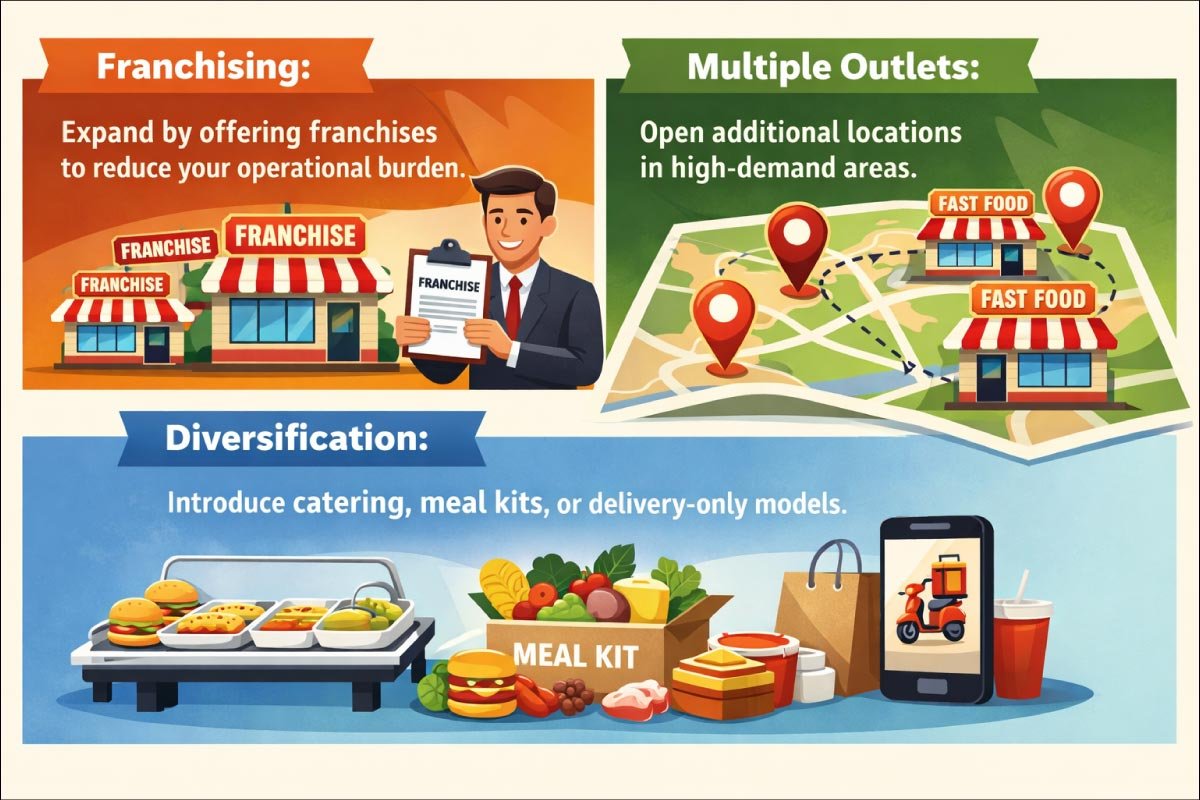
Strategic planning, consistent quality, and strong brand management are key to sustainable growth and long-term success in a competitive market.
-
Franchising: Expand by offering franchises to reduce your operational burden.
-
Multiple Outlets: Open additional locations in high-demand areas.
-
Diversification: Introduce catering, meal kits, or delivery-only models.
Discover More:
Final Thoughts
Starting a fast food business requires careful planning, attention to detail, and dedication. From selecting the right location to sourcing quality ingredients, hiring a capable team, and marketing effectively, every decision impacts your success.
By following this guide, you can build a fast food business that is not only profitable but also sustainable and scalable in the long term.
Remember, the fast food industry is competitive, but with a strong brand, unique offerings, and operational efficiency, your business can carve out a loyal customer base and achieve long-term growth.