
Email marketing remains one of the most powerful tools for businesses to connect with their audience, generate leads, and drive sales.
Despite the rise of social media and digital advertising, email continues to deliver unmatched ROI when executed effectively.
Starting an email marketing business can be both profitable and scalable, whether you are a freelancer or building a full-fledged agency.
This guide will take you through every step of setting up, running, and growing a successful email marketing business.
1. Understanding Email Marketing
Before launching your business, it’s crucial to understand what email marketing involves.
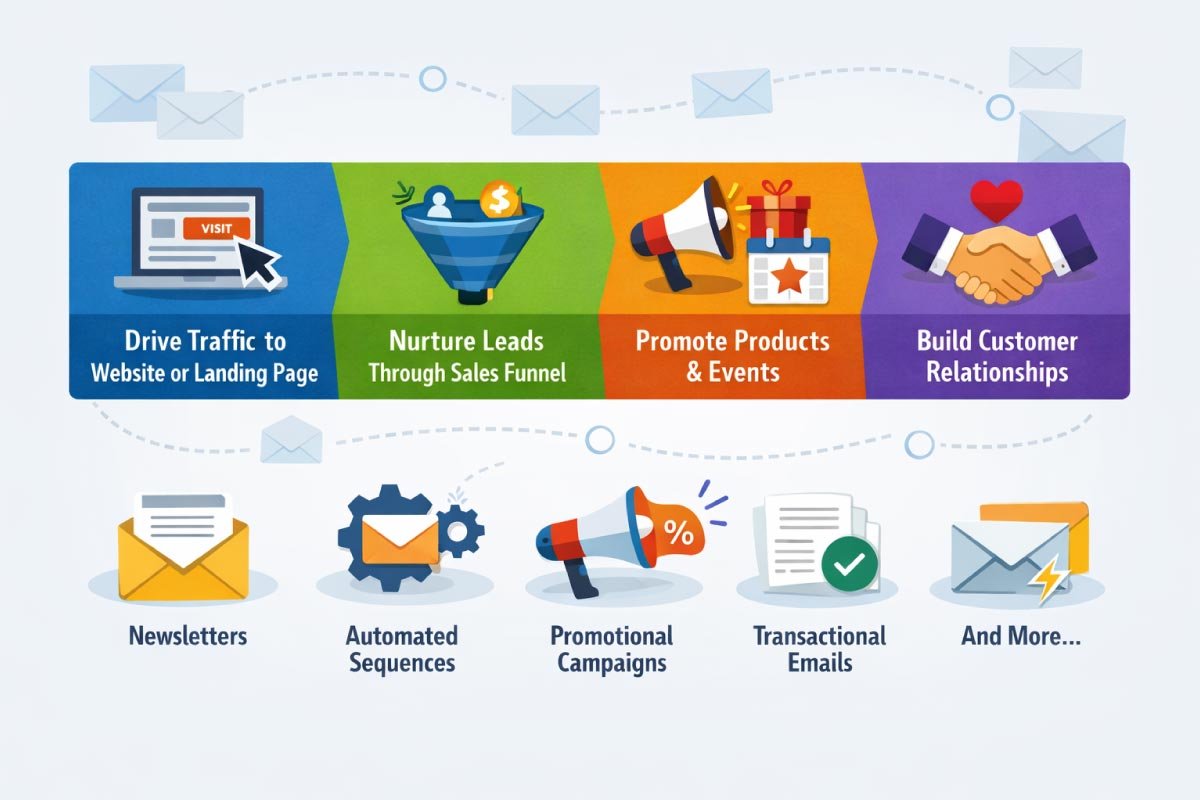
At its core, email marketing is the process of sending targeted emails to a list of subscribers to achieve specific business goals such as:
-
Driving traffic to a website or landing page
-
Nurturing leads through the sales funnel
-
Promoting products, services, or events
-
Building long-term relationships with customers
Email marketing strategies can include newsletters, automated sequences, promotional campaigns, transactional emails, and more. Each approach has its unique role in generating revenue and engagement for clients.
2. Identifying Your Niche
A niche defines the specific audience or type of business you’ll serve. While email marketing can cater to virtually every industry, specializing gives you a competitive edge. Here are some examples of niches:
| Industry | Opportunity | Example Services |
|---|---|---|
| E-commerce | High demand for product launches and cart abandonment campaigns | Email automation, product promotion sequences, abandoned cart recovery |
| SaaS (Software) | Onboarding and retention are crucial | Welcome sequences, feature updates, customer engagement emails |
| Health & Wellness | Regular tips, courses, and promotions | Newsletter creation, lead magnets, promotional campaigns |
| Local Businesses | Driving foot traffic and repeat customers | Event announcements, loyalty campaigns, promotions |
Specializing allows you to craft tailored strategies, speak the client’s language, and position yourself as an expert in that sector.
3. Defining Your Services
Defining your services clearly is key to attracting the right clients and standing out in your market. By outlining what you offer, how you deliver it, and the value it provides, you create a compelling proposition that builds trust, sets expectations, and drives business growth.
-
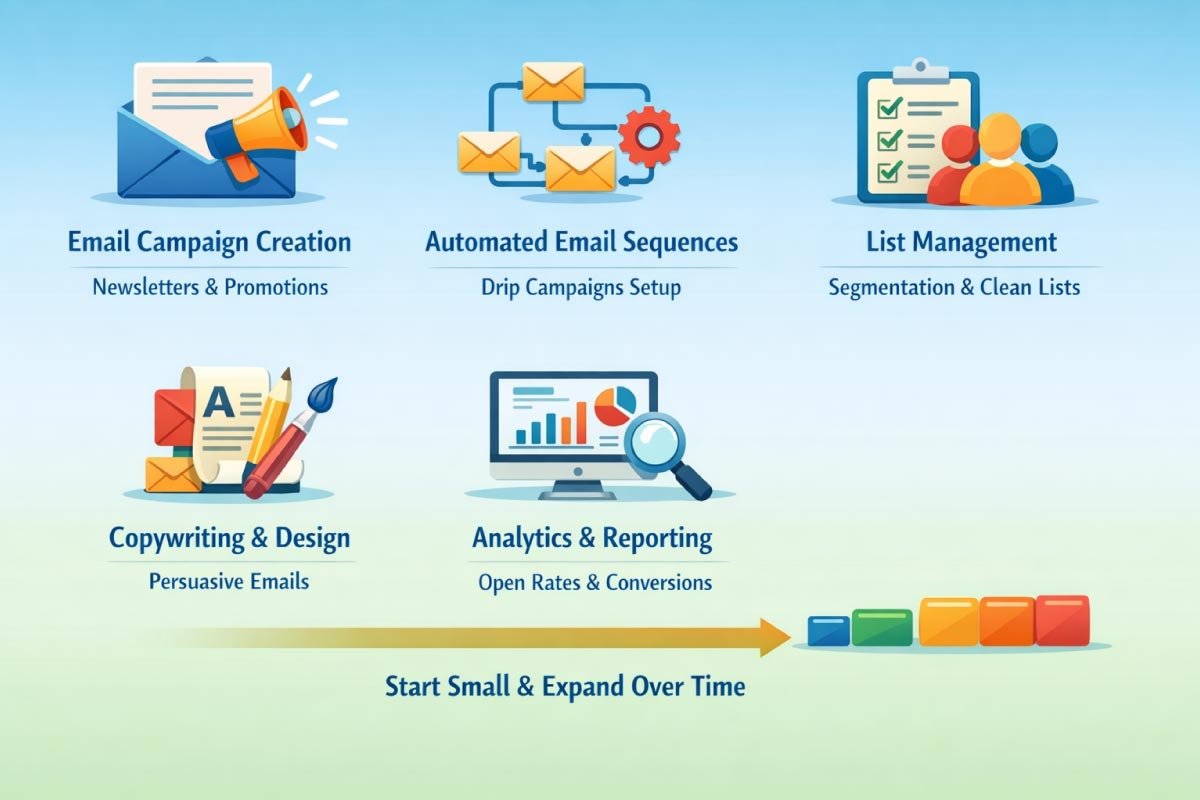
Email Campaign Creation: Designing and sending newsletters, promotions, and updates.
-
Automated Email Sequences: Setting up drip campaigns for onboarding, retention, or upsells.
-
List Management: Segmenting subscriber lists and ensuring data cleanliness.
-
Copywriting & Design: Writing persuasive emails and designing templates.
-
Analytics & Reporting: Monitoring open rates, CTR, and conversion rates to optimize campaigns.
You can start by offering a few core services and gradually expand as your business grows.
Read More:
4. Choosing the Right Tools
Choosing the right tools is essential for efficiency and productivity in your business. The right software, hardware, and resources streamline operations, save time, and reduce errors.
By selecting tools that fit your workflow and goals, you empower your team and create a foundation for smooth, scalable growth.
| Tool Type | Purpose | Examples |
|---|---|---|
| ESP (Email Service Provider) | Sending and managing campaigns | Mailchimp, Klaviyo, ActiveCampaign |
| Automation Tools | Building workflows and sequences | HubSpot, Drip, ConvertKit |
| Analytics & Tracking | Measure campaign performance | Google Analytics, Litmus |
| Design Tools | Creating email templates | Canva, BEE Free, Stripo |
Investing in reliable software improves workflow efficiency, allows for scalable operations, and ensures professional campaign delivery.
5. Setting Up Your Business
Setting up your business is the crucial first step toward turning your vision into reality. It involves careful planning, legal formalities, and creating a solid foundation for growth.
From defining your structure to establishing operations, this stage ensures your business starts strong, efficient, and ready for long-term success.
-
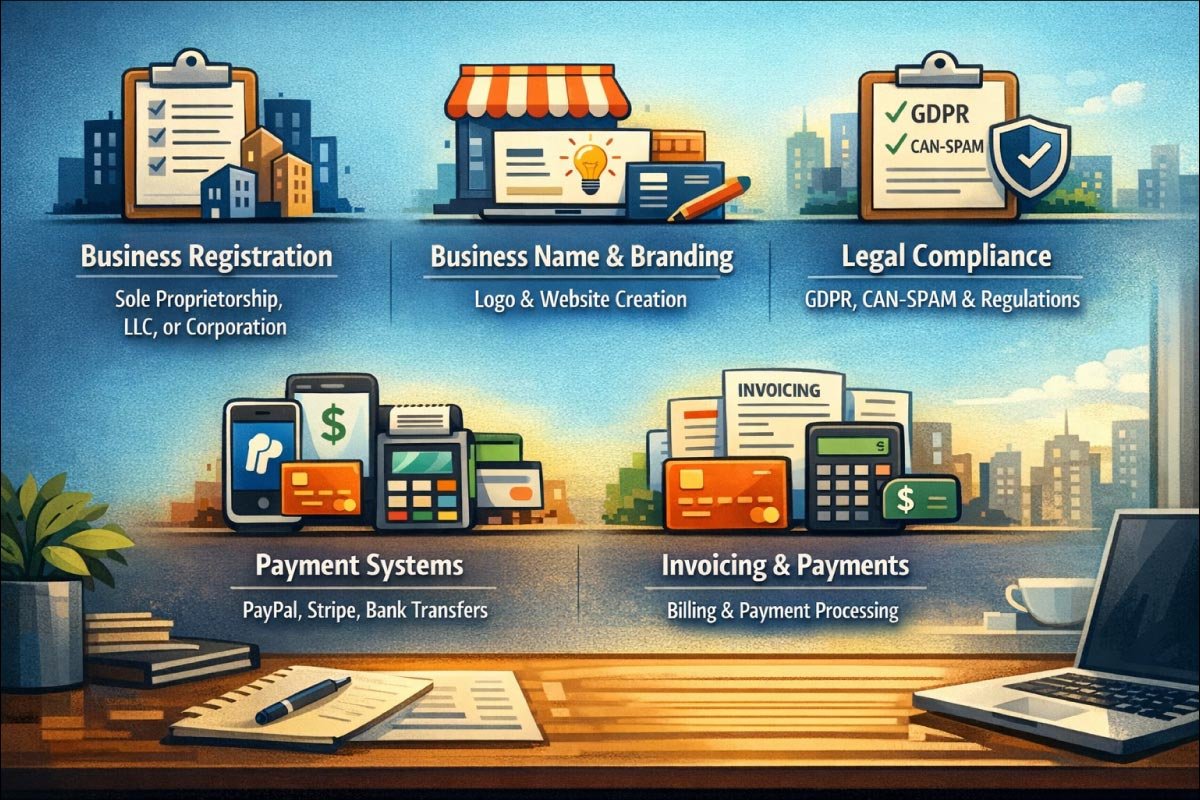
Business Registration: Decide on your structure (sole proprietorship, LLC, or corporation).
-
Business Name & Branding: Choose a professional name, design a logo, and create a website.
-
Legal Compliance: Ensure you understand GDPR, CAN-SPAM, and other email regulations.
-
Payment Systems: Set up invoicing and payment methods such as PayPal, Stripe, or bank transfers.
A polished setup signals professionalism to potential clients and gives you a foundation to scale.
Read More:
6. Building Your Portfolio
Building your portfolio is essential for showcasing your expertise in email marketing. Highlight successful campaigns, measurable results, and client testimonials to demonstrate your skills.
A strong portfolio builds credibility, attracts potential clients, and serves as a powerful marketing tool to grow your email marketing business.
-
Offering discounted or pro bono services for initial clients
-
Creating sample email campaigns for hypothetical businesses
-
Demonstrating campaign results (open rates, CTR, conversions)
-
Gathering client testimonials
| Portfolio Element | Purpose | Example |
|---|---|---|
| Case Studies | Show measurable results | “Boosted e-commerce sales by 30% in 3 months via automated campaigns” |
| Sample Templates | Demonstrate design skills | Responsive, branded email newsletter templates |
| Testimonials | Build credibility | Quotes from satisfied clients highlighting results and professionalism |
| Metrics Dashboard | Highlight analytical skills | Open rates, CTR, conversion, and ROI charts |
A professional portfolio can significantly increase client acquisition rates.
7. Acquiring Clients
Acquiring clients is vital for growing your email marketing business. Focus on networking, referrals, targeted outreach, and showcasing your expertise through case studies or portfolios.
Providing value, building trust, and demonstrating measurable results help secure initial clients and establish long-term relationships that drive sustainable business growth.
-
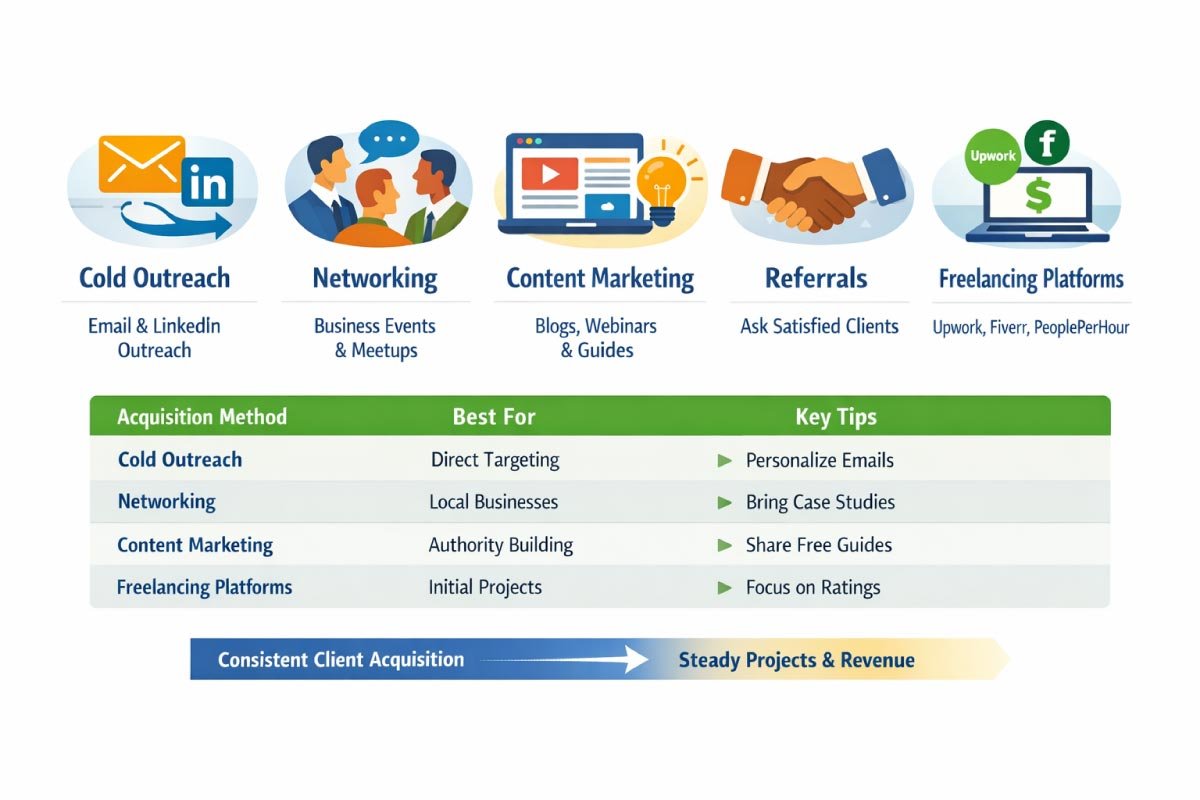
Cold Outreach: Email or LinkedIn messages to businesses in your niche.
-
Networking: Attend local business events, workshops, and online communities.
-
Content Marketing: Publish blogs, webinars, or guides showcasing your expertise.
-
Referrals: Ask satisfied clients to refer you to others.
-
Freelancing Platforms: Offer services on Upwork, Fiverr, or PeoplePerHour to build credibility.
| Acquisition Method | Best For | Key Tips |
|---|---|---|
| Cold Outreach | Direct targeting | Personalize each email and focus on results |
| Networking | Local businesses | Bring sample campaigns or case studies |
| Content Marketing | Authority building | Share free guides or templates to attract leads |
| Freelancing Platforms | Initial projects | Focus on reviews and ratings to attract future clients |
Consistency in client acquisition ensures a steady pipeline of projects and revenue.
Read More:
8. Pricing Your Services
Pricing your services strategically is crucial for sustaining and growing your email marketing business.
Consider factors such as your expertise, campaign complexity, client goals, and market rates.
Clear and competitive pricing ensures profitability, attracts the right clients, and positions your business as a trusted provider of effective email marketing solutions.
-
Hourly Rate: Suitable for small projects or ad-hoc consulting
-
Project-Based: One-time fee for campaigns, sequences, or audits
-
Retainer: Monthly fee for ongoing services, ideal for long-term clients
| Pricing Model | Pros | Cons |
|---|---|---|
| Hourly Rate | Flexibility | Less predictable income |
| Project-Based | Clear deliverables | Hard to scale |
| Retainer | Stable recurring revenue | Requires long-term client commitment |
| Performance-Based | High earning potential | Risk if campaigns underperform |
Start with competitive rates and gradually increase as your results and reputation grow.
9. Optimizing Campaigns and Delivering Results
Optimizing campaigns and delivering results are essential for a successful email marketing business.
Monitor key metrics like open rates, click-through rates, and conversions to evaluate performance.
Use insights to refine content, segmentation, and automation strategies, ensuring campaigns are effective, clients achieve measurable results, and your business maintains a strong reputation.
-
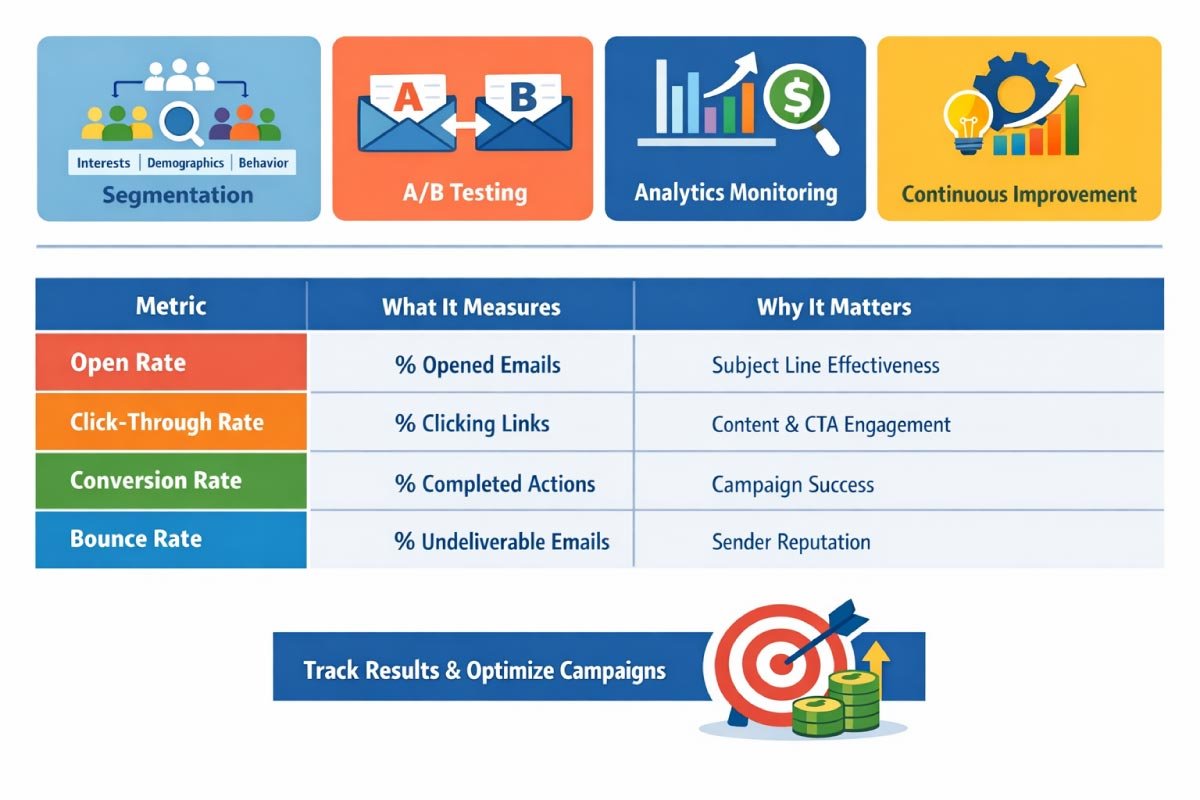
Segmentation: Grouping subscribers by behavior, interests, or demographics.
-
A/B Testing: Testing subject lines, content, and CTA placements.
-
Analytics Monitoring: Tracking opens, clicks, conversions, and revenue generated.
-
Continuous Improvement: Optimizing campaigns based on data insights.
| Campaign Metric | What It Measures | Why It Matters |
|---|---|---|
| Open Rate | % of recipients opening emails | Indicates subject line effectiveness |
| Click-Through Rate | % clicking links | Measures content and CTA engagement |
| Conversion Rate | % completing desired action | Shows overall campaign effectiveness |
| Bounce Rate | % undeliverable emails | Affects sender reputation and deliverability |
Consistently analyzing metrics ensures clients see tangible ROI and strengthens your reputation.
10. Scaling Your Email Marketing Business
Scaling your email marketing business involves growing your client base, expanding campaign offerings, and optimizing processes for efficiency.
By leveraging automation tools, segmentation strategies, and performance analytics, you can deliver more targeted and effective campaigns.
Strategic growth, strong client relationships, and consistent results ensure long-term success in the competitive digital marketing space.
-
Hiring a team of designers, copywriters, and campaign managers
-
Expanding services to include SMS marketing, CRM management, or lead generation
-
Automating repetitive tasks using software
-
Creating subscription-based services for multiple clients
| Scaling Method | Description | Impact |
|---|---|---|
| Hiring Staff | Delegate tasks to a team | Increases capacity and service quality |
| Service Expansion | Add related services | Attracts more clients and revenue streams |
| Automation | Streamline workflows | Saves time and improves efficiency |
| Retainer Packages | Offer monthly packages | Ensures stable recurring income |
Scaling thoughtfully ensures sustainable growth without sacrificing service quality.
Read More:
11. Common Challenges and How to Overcome Them
Common challenges in running a Google Ads management business include stiff competition, changing platform algorithms, and meeting client expectations.
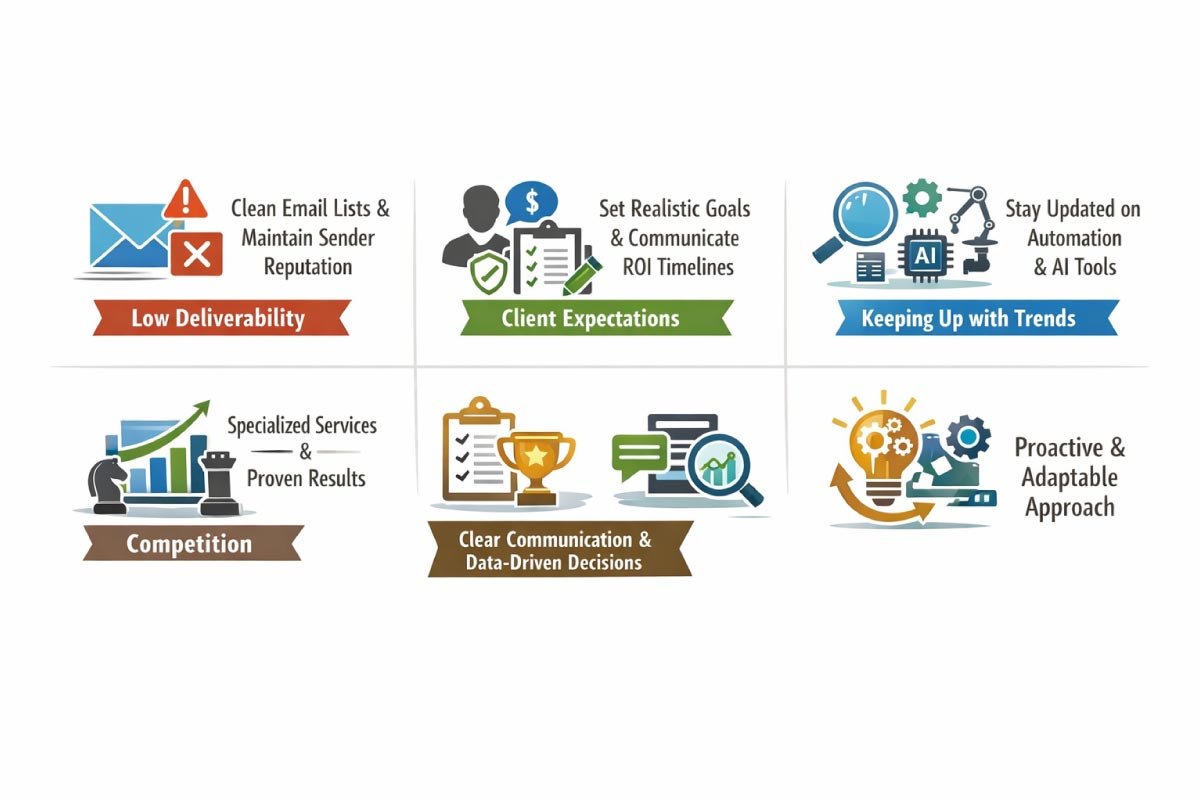
Overcome these by continuously learning, leveraging analytics for data-driven decisions, and maintaining clear communication.
Proactive problem-solving and adaptability ensure consistent results, client satisfaction, and sustainable business growth.
-
Low Deliverability: Ensure email lists are clean, avoid spam triggers, and maintain sender reputation.
-
Client Expectations: Set realistic goals and communicate clearly about ROI timelines.
-
Keeping Up with Trends: Email marketing trends evolve; stay updated with automation, personalization, and AI tools.
-
Competition: Differentiate yourself with specialized services, proven results, and exceptional client service.
Addressing these challenges proactively positions your business for long-term success.
12. Conclusion
Starting an email marketing business can be incredibly rewarding, both financially and professionally.
With the right skills, tools, and strategies, you can help businesses grow while building a scalable, sustainable business of your own.
Focus on understanding your niche, delivering measurable results, and consistently acquiring clients.
By following the steps outlined above, you can transform your email marketing knowledge into a thriving business.
Email marketing is more than sending emails—it’s about creating connections, building trust, and driving results.
When done correctly, your email marketing business can become a reliable revenue-generating venture with immense growth potential.