
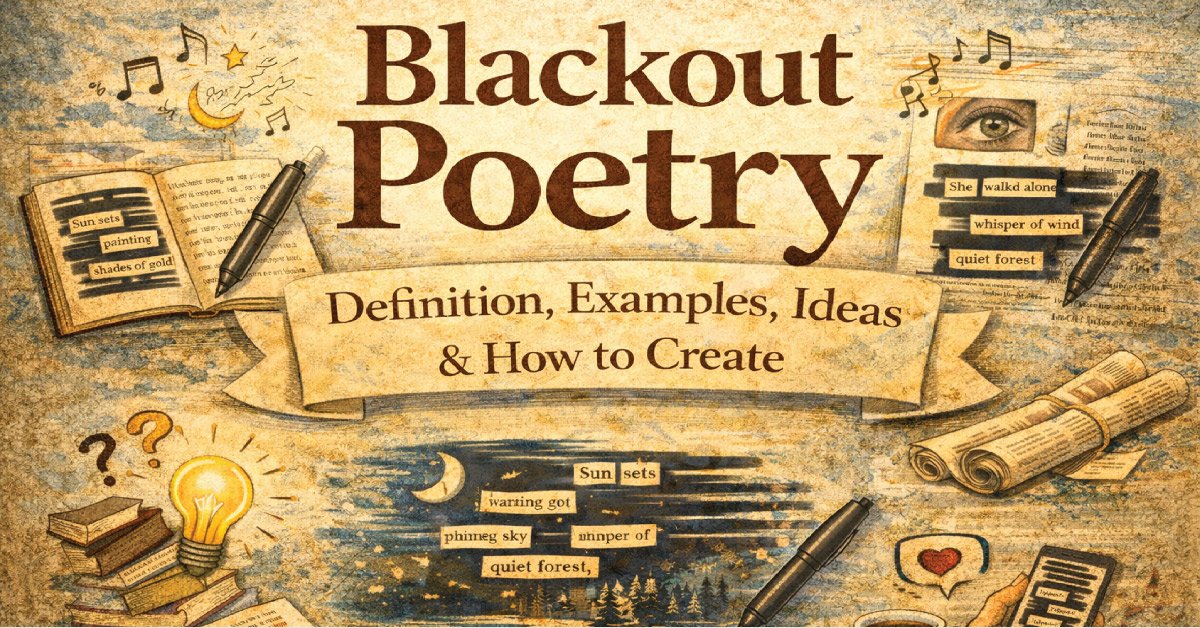
Blackout poetry is an innovative and captivating form of artistic expression that has grown in popularity in recent years. Combining literature, visual art, and personal creativity, blackout poetry allows anyone to transform existing texts into new, meaningful works. Whether you are a seasoned poet, a beginner, or someone looking to explore your creative side, blackout poetry offers a unique and engaging outlet.
In this article, we will explore what blackout poetry is, its history, techniques, benefits, and step-by-step instructions on creating your own.
What is Blackout Poetry?
Blackout poetry is a form of found poetry where the poet takes a printed page, such as from a book, newspaper, or magazine, and selectively blacks out words, leaving only a few visible to create a poem. The words left standing form a poem that often carries new meanings, emotions, or interpretations that differ from the original text.
Unlike traditional poetry, blackout poetry is highly visual and interactive. Each poem becomes not only a literary piece but also a work of art. The blacked-out sections form shapes, patterns, or abstract visuals, making every piece unique.
Blackout Poetry Definition
Blackout poetry is a creative form of found poetry where a poet takes an existing text—like a newspaper, magazine, or book page—and blacks out most words, leaving only a few visible to form a poem. It combines literary expression with visual art, transforming ordinary text into meaningful, unique works.
Key Points:
-
Uses existing printed text as a canvas
-
Selectively highlights words to create a poem
-
Often incorporates visual elements, shapes, or patterns
-
Encourages creativity, self-expression, and artistic exploration
The History of Blackout Poetry
Blackout poetry has roots in the tradition of found poetry, where poets repurpose existing texts into new literary creations. While the concept of erasing or highlighting text can be traced back to early 20th-century experimental poets, blackout poetry as we know it gained traction in the 21st century.
One influential figure in modern blackout poetry is Austin Kleon, author of Newspaper Blackout, who popularized the art form using newspapers. His approach inspired countless artists and writers to explore the creative potential of everyday texts. Today, blackout poetry is widely used in classrooms, therapy, art exhibitions, and social media platforms.
Why Blackout Poetry is Popular
Blackout poetry has gained popularity because it’s accessible, creative, and therapeutic. Anyone can transform ordinary text into a unique artistic expression, while the process encourages mindfulness, self-expression, and social sharing, making it a favorite among writers and artists worldwide.
Accessibility: You don’t need advanced writing skills—anyone can try it with a newspaper or book page.
Creativity: It combines visual art and writing, allowing for personal expression.
Stress Relief: Many find it therapeutic, helping to reduce anxiety and encourage mindfulness.
Unique Expression: Each blackout poem is entirely unique, reflecting the poet’s perspective.
Blackout poetry is also shareable on social media platforms like Instagram, Pinterest, and TikTok, making it a trend among creatives of all ages.
Materials Needed for Blackout Poetry
Blackout poetry is a unique and creative form of expression that transforms ordinary text into powerful, visual poems. By selectively blacking out words, artists reveal new meanings, emotions, and stories. Combining literature and art, blackout poetry offers a fun, accessible, and therapeutic way to explore creativity and self-expression.
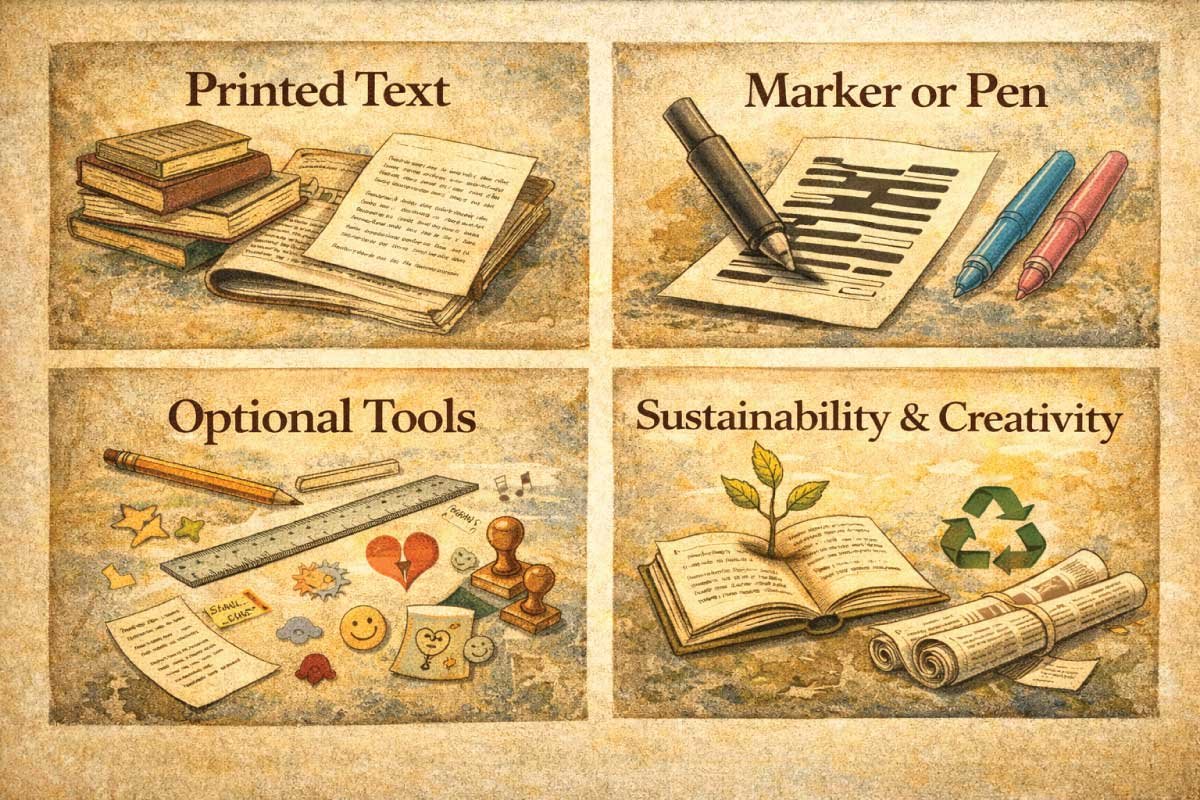
1. Printed Text
To start blackout poetry, you need a printed page as your canvas. Old books, newspapers, magazines, or printouts work perfectly. Selecting text with interesting words or phrases adds depth, and repurposing old materials makes the process creative and sustainable.
2. Marker or Pen
A black marker is essential for blocking out unwanted words, creating contrast, and emphasizing your chosen text. Colored markers or pens can also be used to add visual flair, shapes, or artistic effects, making your blackout poetry unique and visually appealing.
3. Optional Tools
Additional tools like a pencil help plan your poem before permanently marking it. A ruler ensures straight lines, while stickers, stamps, or drawings can enhance the design. These extras allow for creative experimentation and personalization, turning each page into a true work of art.
4. Sustainability and Creativity
Blackout poetry encourages using existing texts rather than discarding them. Repurposing old books, newspapers, or magazines not only reduces waste but also sparks creativity. Each page transforms into a unique piece of literary art, combining eco-consciousness with personal expression.
By using existing texts, blackout poetry is environmentally friendly and encourages repurposing materials that might otherwise be discarded.
Blackout Poetry Ideas
Blackout poetry offers endless possibilities for creativity, turning ordinary text into personal and expressive art. Whether you want to explore emotions, tell a story, or create striking visuals, these ideas will help spark inspiration. Experimenting with different approaches keeps your poetry fresh and unique.
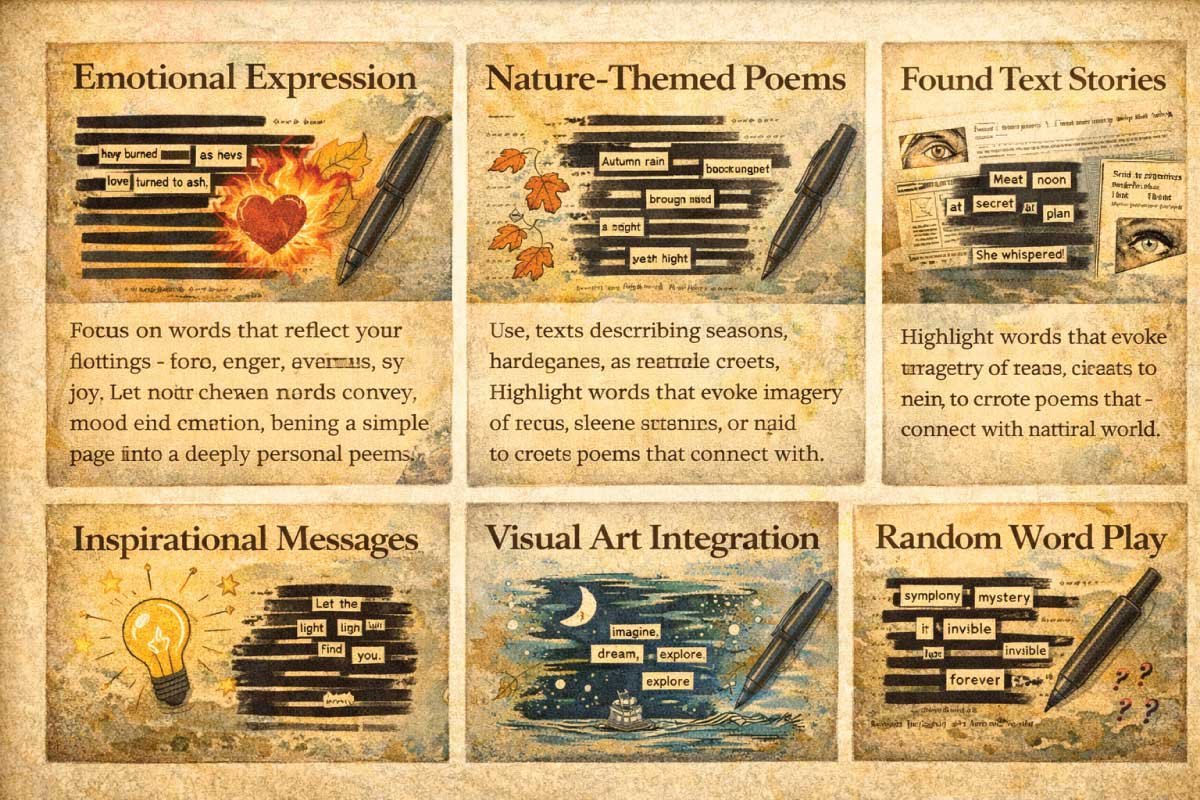
1. Emotional Expression
Focus on words that reflect your feelings—love, anger, sadness, or joy. Let your chosen words convey mood and emotion, turning a simple page into a deeply personal poem.
2. Nature-Themed Poems
Use texts describing seasons, landscapes, or natural events. Highlight words that evoke imagery of trees, rivers, sunsets, or rain to create poems that connect with the natural world.
3. Found Text Stories
Create a short narrative by selecting words that tell a story. Newspapers, magazines, or book pages can provide dialogue, action, or character inspiration for your blackout poem.
4. Inspirational Messages
Craft uplifting or motivational poems by emphasizing positive words or phrases. These can serve as daily affirmations or reminders of hope and encouragement.
5. Visual Art Integration
Combine blackout poetry with drawings, patterns, or shapes around the text. Make your poem a visual masterpiece as well as a literary creation, adding an artistic dimension to your words.
6. Random Word Play
Select words randomly from a page and see what poem emerges. This playful approach can spark unexpected ideas and push the boundaries of your creativity.
How to Create a Blackout Poem: Step-by-Step Guide
Creating blackout poetry is a fun and engaging way to turn ordinary text into a unique, visual work of art. By following a structured process, anyone can craft meaningful poems while exploring creativity, self-expression, and artistic design. Here’s a detailed, step-by-step guide.
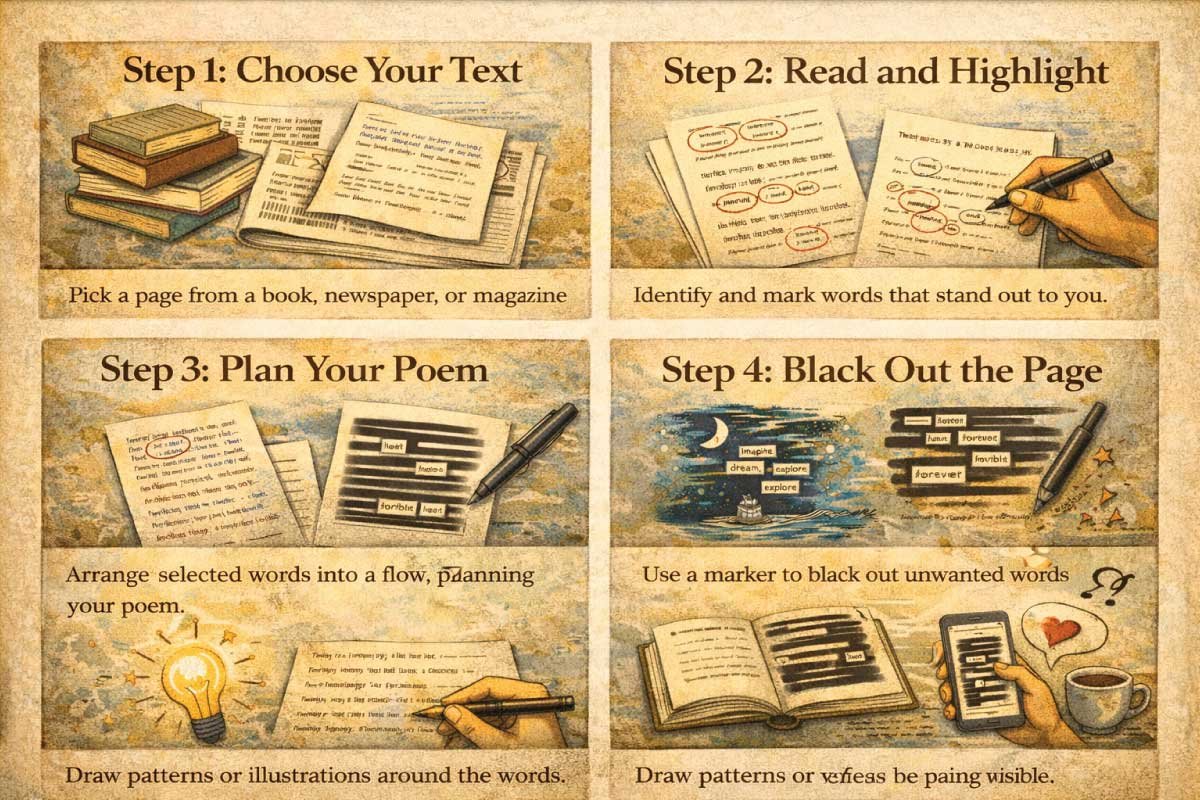
Step 1: Choose Your Text
The first step is selecting a page that inspires you. Newspapers, magazines, or old book pages work best. Look for interesting words, phrases, or sentences that stand out. Your text will serve as the foundation for your blackout poem and set the tone for your creation.
Step 2: Read and Highlight
Carefully read through your chosen page, identifying words or phrases that resonate. Circle, underline, or lightly mark these words with a pencil. This process helps you focus on potential themes, emotions, or ideas, making it easier to craft a poem that is both meaningful and visually appealing.
Step 3: Plan Your Poem
Before blacking out words, plan how your poem will flow. Arrange selected words into lines, consider rhythm, and think about the story or emotion you want to convey. This planning stage ensures your poem has coherence, impact, and artistic clarity while leaving room for creative experimentation.
Step 4: Black Out the Page
Using a marker, carefully black out all the words you don’t want to include. Only the words you’ve selected remain visible. Take your time to ensure a clean and clear design. The blacked-out sections form the background, while your poem stands out, creating a striking visual effect.
Step 5: Add Visual Elements (Optional)
For extra creativity, you can add visual elements around the visible words. Draw patterns, shapes, or illustrations to enhance meaning or artistic style. These details make each blackout poem truly unique, blending literary expression with visual art to create an eye-catching and personal masterpiece.
Step 6: Reflect and Share
Once completed, read your blackout poem aloud and reflect on its meaning. Consider how it expresses emotion or tells a story. You can also share your work on social media, in journals, or with friends, inspiring others while celebrating your creativity and unique artistic vision.
Why Blackout Poetry is Popular
Blackout poetry has become widely popular because it offers a creative, accessible, and therapeutic outlet for self-expression. Anyone can take ordinary text and transform it into a unique, meaningful poem. Its visual and interactive nature also makes it highly engaging, encouraging creativity, mindfulness, and social sharing.
The popularity of blackout poetry stems from several factors:
-
Accessibility: You don’t need advanced writing skills—anyone can try it with a newspaper or book page.
-
Creativity: It combines visual art and writing, allowing for personal expression.
-
Stress Relief: Many find it therapeutic, helping to reduce anxiety and encourage mindfulness.
-
Unique Expression: Each blackout poem is entirely unique, reflecting the poet’s perspective.
Blackout poetry is also shareable on social media platforms like Instagram, Pinterest, and TikTok, making it a trend among creatives of all ages.
Also Read:
Materials Needed for Blackout Poetry
Creating blackout poetry is simple and requires minimal materials. Using a few basic tools, you can transform ordinary printed text into beautiful, visual poetry. These materials allow beginners and experienced poets alike to experiment freely, combining words and art to create unique expressions.
Here’s what you need:
-
Printed Text: Old books, newspapers, magazines, or printouts
-
Marker or Pen: Black markers are most common, but colored markers add visual interest
-
Optional Tools: Pencil for planning, ruler for straight lines, or stickers and stamps for decoration
By using existing texts, blackout poetry is environmentally friendly and encourages repurposing materials that might otherwise be discarded.
Blackout Poetry for Beginners
Blackout poetry is an accessible and enjoyable way for beginners to explore creativity and self-expression. You don’t need prior experience, anyone can start with simple texts and basic tools. By experimenting with words, markers, and layouts, beginners can develop confidence, have fun, and discover their unique poetic voice.
- Start with short articles or poems rather than large book pages.
- Don’t worry about making it perfect; focus on fun and creativity.
- Experiment with different markers and colors.
- Keep a journal of your poems to track progress and creativity.
Remember, blackout poetry is about personal expression, not perfection.
Also Read:
Blackout Poetry Examples
Blackout poetry allows ordinary text to transform into powerful, creative expressions. By selecting key words and blacking out the rest, each page becomes a unique visual and literary work. These examples demonstrate how few words can create strong emotions, tell stories, or inspire reflection.
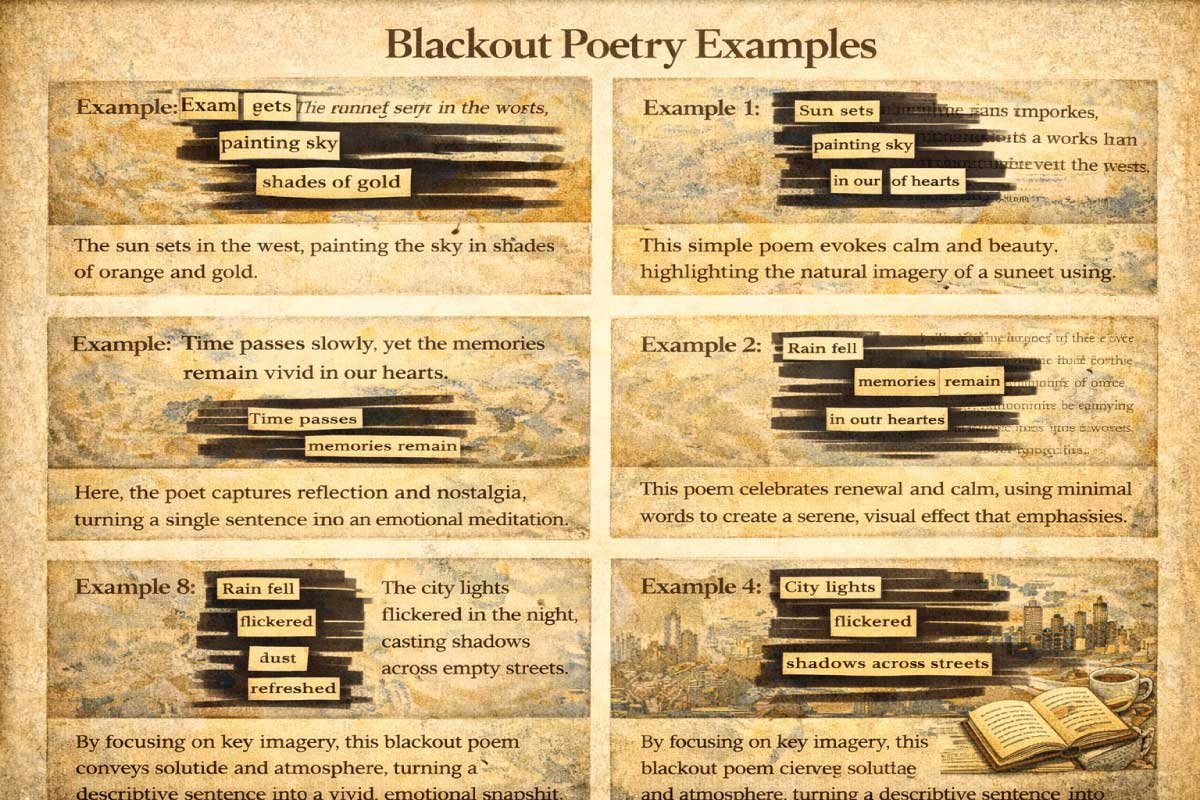
Example 1: Original text: “The sun sets in the west, painting the sky in shades of orange and gold.”
Blackout poem:
Sun sets
painting sky
shades of gold
This simple poem evokes calm and beauty, highlighting the natural imagery of a sunset using only a few carefully chosen words.
Example 2: Original text: “Time passes slowly, yet the memories remain vivid in our hearts.”
Blackout poem:
Time passes
memories remain
in our hearts
Here, the poet captures reflection and nostalgia, turning a single sentence into an emotional meditation on memory and the passage of time.
Example 3: Original text: “Rain fell gently, washing away the dust and leaving the earth refreshed.”
Blackout poem:
Rain fell
washing away
earth refreshed
This poem celebrates renewal and calm, using minimal words to create a serene, visual effect that emphasizes nature’s quiet transformation.
Example 4: Original text: “The city lights flickered in the night, casting shadows across empty streets.”
Blackout poem:
City lights
flickered
shadows across streets
By focusing on key imagery, this blackout poem conveys solitude and atmosphere, turning a descriptive sentence into a vivid, emotional snapshot.
Example 5: Original text: “She walked alone, listening to the whisper of the wind and the quiet of the forest.”
Blackout poem:
She walked alone
whisper of wind
quiet forest
This poem emphasizes introspection and connection with nature, demonstrating how blackout poetry can create mood, narrative, and emotion with just a few words.
These examples show how a few carefully chosen words can create powerful, emotional poems.
Also Read:
Blackout Poetry in the Digital Age
With the rise of digital art and social media, blackout poetry has adapted to online platforms. Digital tools and apps allow poets to create blackout poems on tablets and computers. These digital blackout poems can incorporate colors, animations, and interactive elements, expanding creative possibilities.
Sharing your work online also allows for engagement with a global community of poets and artists, inspiring collaboration and feedback.
Blackout Poetry and Mindfulness
Creating blackout poetry is an excellent way to practice mindfulness. The process of carefully selecting words, blocking out text, and focusing on the artistic outcome requires attention and presence. Many people use blackout poetry as a form of meditation, stress relief, and emotional processing.
This combination of creativity and reflection makes blackout poetry not only a form of artistic expression but also a tool for personal growth.
Also Read:
Conclusion: Start Your Blackout Poetry Journey
Blackout poetry is a unique blend of literature, art, and personal expression. Whether you are looking to explore your creativity, practice mindfulness, or simply enjoy the process of turning ordinary text into extraordinary poems, blackout poetry offers endless possibilities.
Start small, experiment with words, and don’t be afraid to express your emotions. With a page, a marker, and your imagination, you can create art that speaks to your soul and inspires others.
Explore the world of blackout poetry today—your next masterpiece is just a page away.
Also Read:
FAQs About Blackout Poetry
What is blackout poetry?
Blackout poetry is a creative form of found poetry where a poet takes an existing text, blacks out most words, and leaves only select words visible to create a meaningful poem. It combines literature, art, and personal expression.
What is the definition of blackout poetry?
Blackout poetry is a form of found poetry where a poet takes an existing text, blacks out most words, and leaves only selected words visible to create a meaningful poem. It combines literary expression with visual art.
Can you give examples of blackout poetry?
Example 1: Original text – “The sun sets in the west, painting the sky in shades of gold.”
Blackout poem – Sun sets / painting sky / shades of gold
Example 2: Original text – “Rain fell gently, washing away the dust.”
Blackout poem – Rain fell / washing away / dust
How do I start blackout poetry as a beginner?
Start with short texts like newspaper articles or book pages. Use a pencil to circle interesting words, then black out the rest with markers. Focus on creativity, not perfection, and experiment with colors, layouts, and visual elements.
What materials are needed for blackout poetry?
You need printed text (books, newspapers, magazines), a black marker or pen, and optional tools like pencils, rulers, or stickers. These materials allow for creative experimentation while transforming ordinary text into unique visual poetry.
Can blackout poetry help with stress relief?
Yes, blackout poetry is therapeutic. The process of selecting words, focusing on text, and creating visual art encourages mindfulness, reduces anxiety, and provides a calming, creative outlet for emotional expression and self-reflection.
How can I share my blackout poetry online?
You can photograph or scan your completed poems and post them on social media platforms like Instagram, Pinterest, or TikTok. Sharing allows engagement with a global community, inspires others, and helps showcase your creativity and artistic style.