
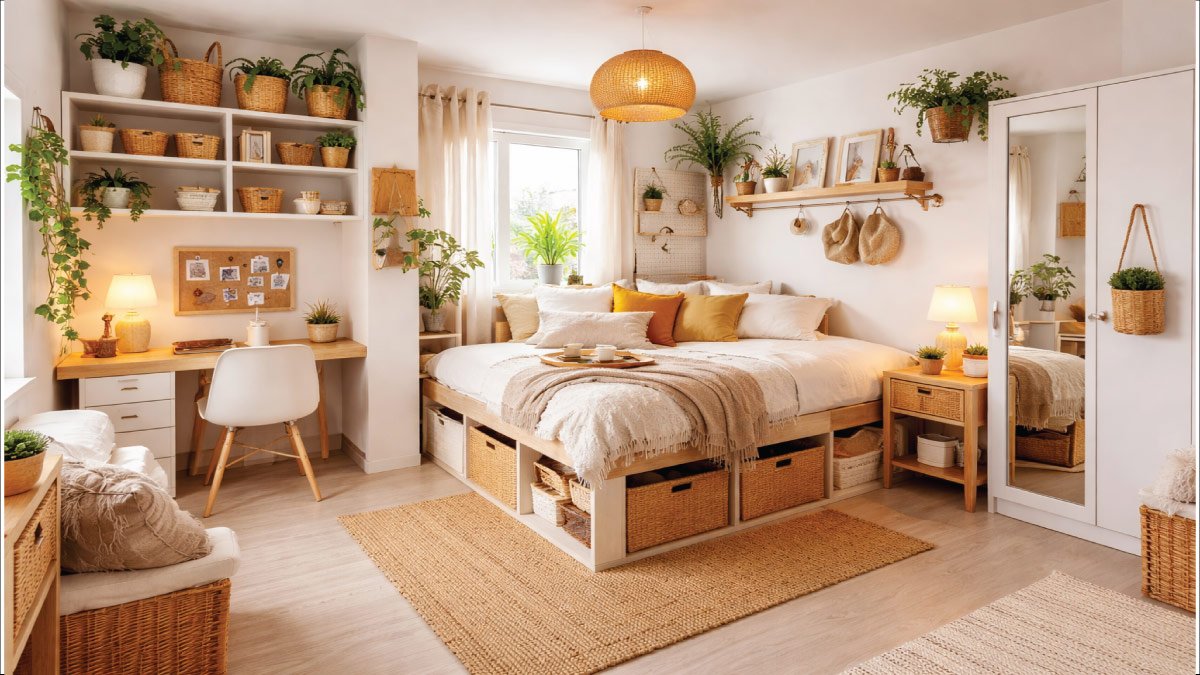
Living with a small bedroom can feel limiting—but it does not have to be. With the right design tricks, storage solutions, and layout choices, even the tiniest bedroom can feel open, functional, and relaxing.
The secret isn’t having more square footage—it’s knowing how to use what you already have. Whether you’re working with a compact apartment bedroom, a dorm room, or a small guest room,
These 18 small bedroom hacks will help you maximize space, improve organization, and elevate style without expensive renovations.
1. Use Light, Neutral Colors
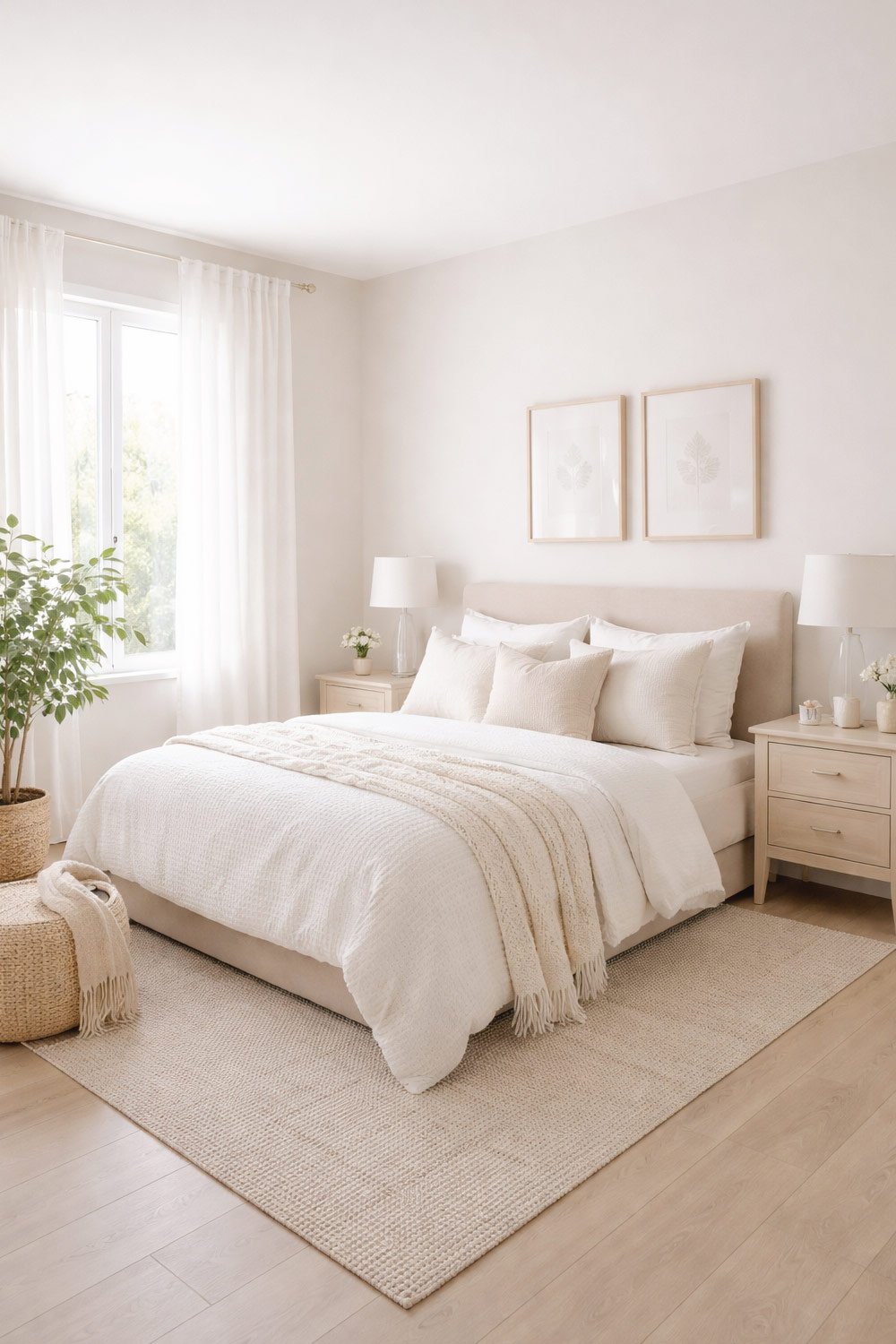
Choosing light, neutral colors is one of the simplest yet most effective ways to make a small bedroom feel more spacious.
Soft shades like white, cream, light gray, and gentle pastels reflect natural and artificial light, helping the room appear brighter and more open.
These tones visually push the walls outward, reducing the boxed-in feeling that small rooms can have. In contrast, dark colors tend to absorb light, making the space feel tighter and heavier.
By keeping walls, bedding, and curtains light, you create a calm, airy foundation that instantly enhances the sense of space.
Why it works:
Dark colors absorb light and make walls feel closer together, while light tones open up the room.
| Element | Best Choice | Avoid |
|---|---|---|
| Wall color | White, cream, light gray | Dark brown, navy |
| Bedding | Soft neutrals | Heavy patterns |
| Curtains | Light & sheer | Thick dark fabric |
2. Choose Multi-Functional Furniture
In a small bedroom, every piece of furniture should earn its place. Multi-functional furniture helps you maximize usability without overcrowding the room.
Items like storage beds, ottomans with hidden compartments, or fold-down desks allow one piece to serve multiple purposes, reducing the need for extra furniture.
This approach keeps the layout clean and efficient while still meeting your daily needs. By combining function and form, multi-purpose furniture frees up floor space, improves organization, and makes the room feel more intentional rather than cluttered or cramped.
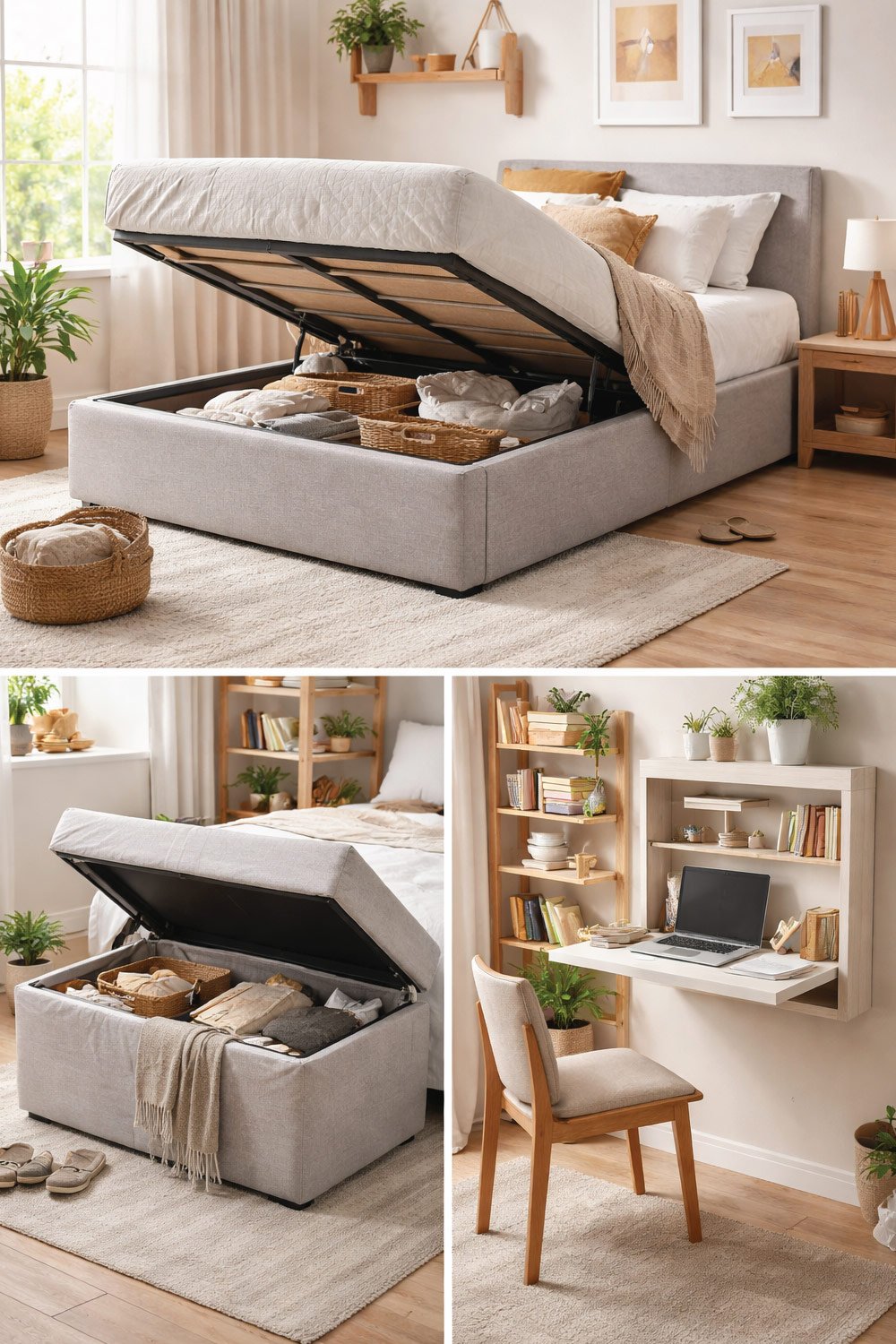
| Furniture Type | Function 1 | Function 2 |
|---|---|---|
| Storage bed | Sleeping | Under-bed storage |
| Ottoman | Seating | Hidden storage |
| Fold-down desk | Workspace | Wall décor when closed |
3. Go Vertical with Storage
When floor space is limited, looking upward is a smart design move. Vertical storage solutions take advantage of unused wall height, helping you store more without sacrificing valuable walking area.
Tall bookshelves, wall-mounted shelves, and over-the-door organizers draw the eye upward, which also creates the illusion of a taller room.
This strategy keeps the floor clear and the space feeling open. Vertical storage is especially useful for small bedrooms because it balances practicality with visual lightness, allowing you to stay organized while maintaining an uncluttered, spacious feel.
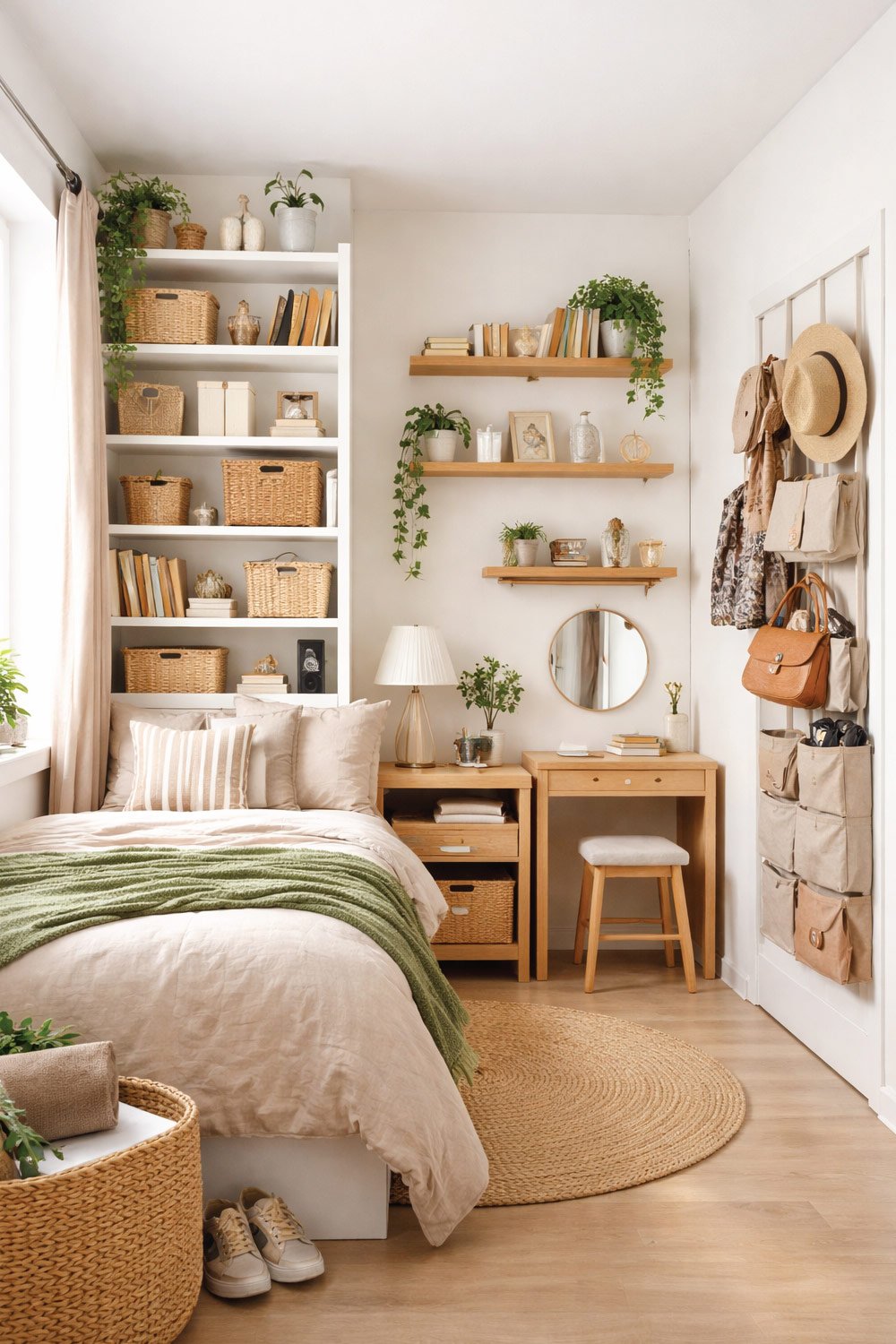
| Vertical Option | Best Use | Benefit |
|---|---|---|
| Tall bookshelf | Clothes, décor | Saves floor space |
| Wall shelves | Books, plants | Adds height |
| Over-door racks | Accessories | Uses unused space |
4. Install Wall-Mounted Lighting
Lighting plays a major role in how spacious a room feels, and wall-mounted lighting is ideal for small bedrooms.
By replacing table lamps with wall sconces, swing-arm lamps, or pendant lights, you free up nightstands and floor space.
This instantly reduces visual clutter and creates a cleaner look. Wall-mounted lighting also provides focused illumination exactly where it’s needed, such as for reading or ambient mood lighting.
With fewer objects competing for space, the room feels more open, functional, and thoughtfully designed.
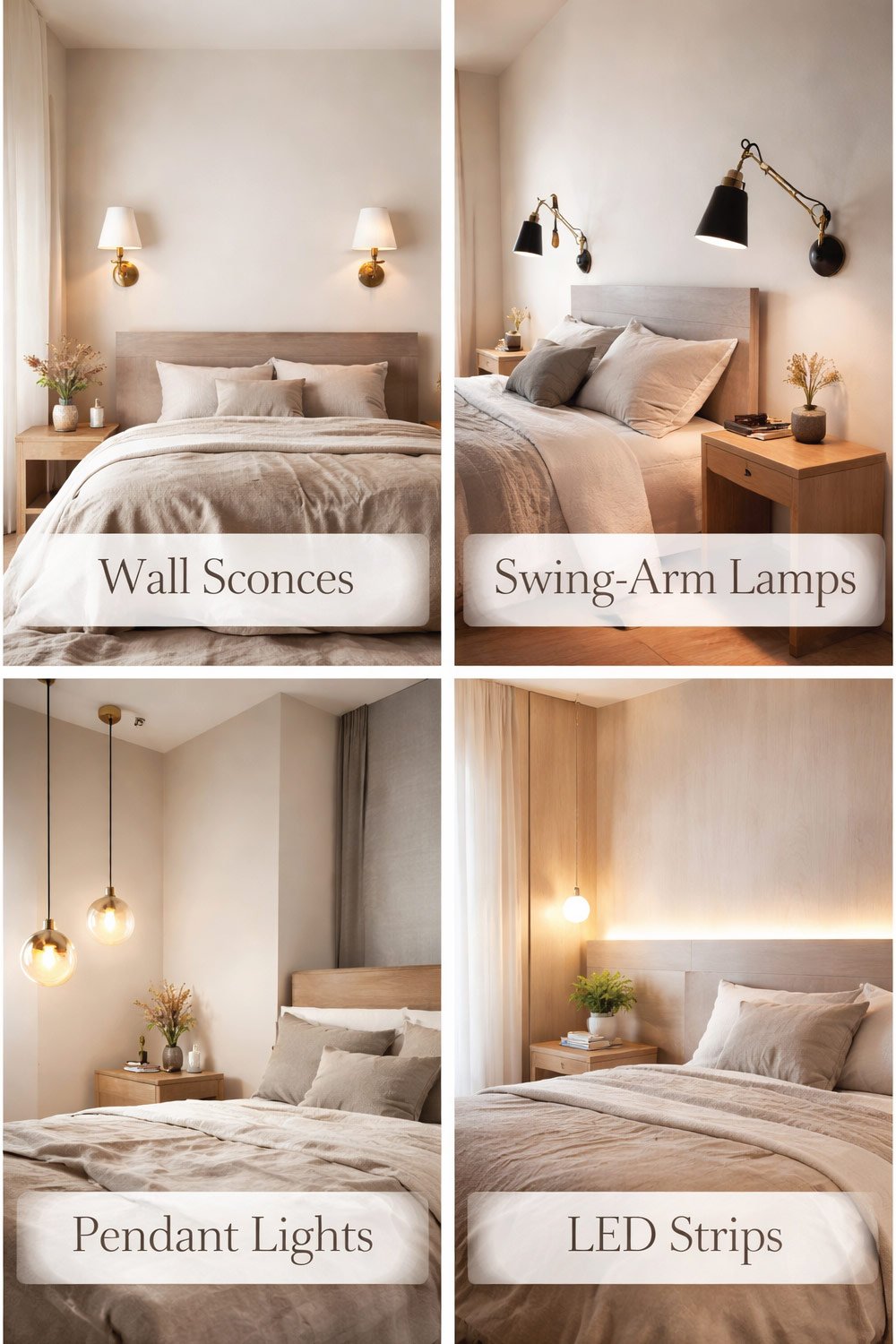
| Lighting Type | Space Saved | Ideal For |
|---|---|---|
| Wall sconces | Nightstands | Reading |
| Pendant lights | Floor space | Modern look |
| LED strips | Corners | Ambient lighting |
5. Use Mirrors Strategically
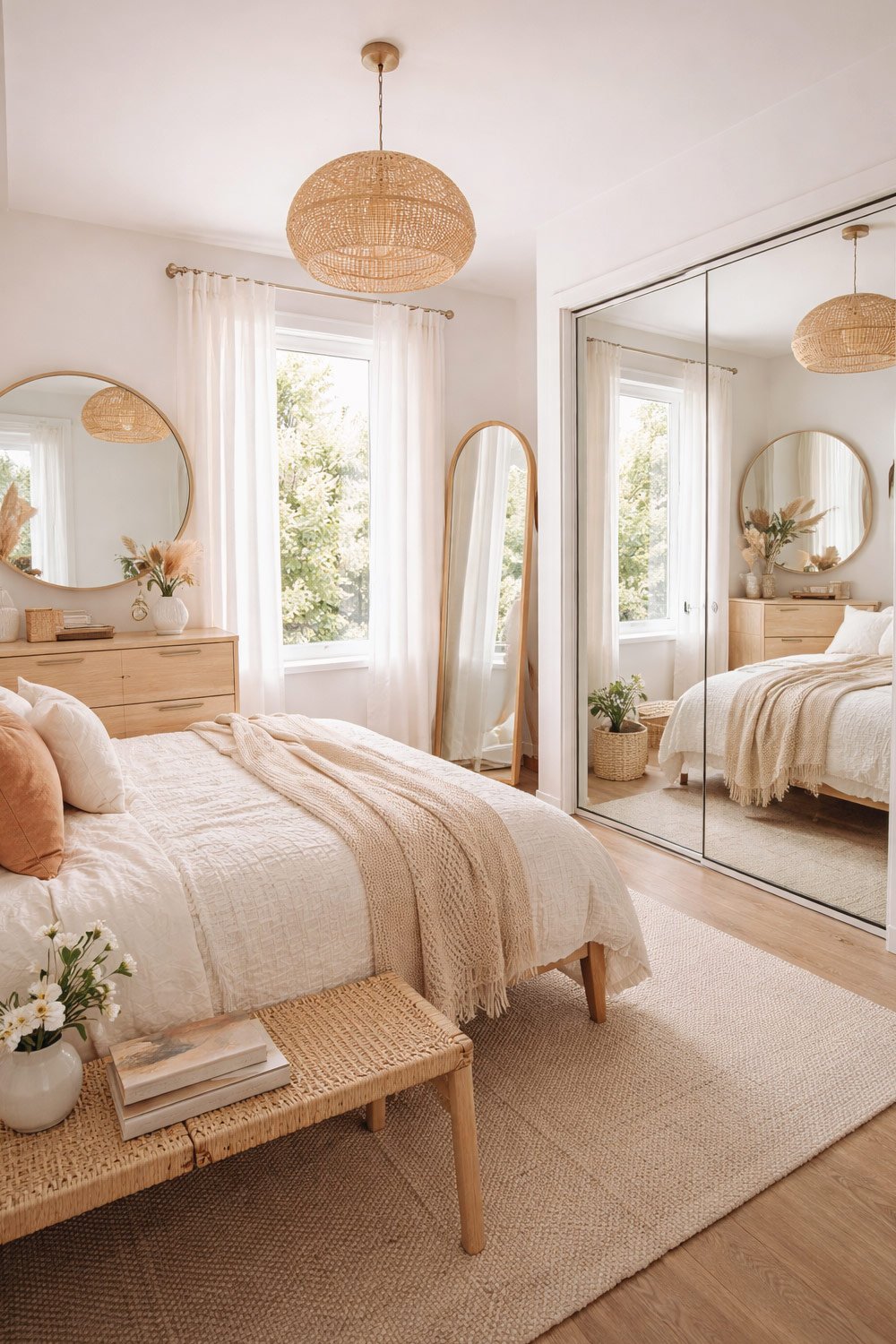
| Mirror Placement | Effect | Best Location |
|---|---|---|
| Opposite window | More light | Narrow rooms |
| Closet doors | Depth illusion | Small bedrooms |
| Full-length mirror | Height illusion | Near door |
Also Read:
6. Opt for a Floating Nightstand
Floating nightstands are an excellent choice for small bedrooms because they remove visual and physical bulk from the floor.
By being mounted to the wall, they keep the area beneath open, which makes the room feel less crowded and more modern.
This open space also improves airflow and makes cleaning easier. While floating nightstands usually offer minimal storage, they are perfect for essentials like a lamp, phone, or book.
Their light visual weight helps maintain a sleek, uncluttered look that enhances the overall sense of spaciousness.
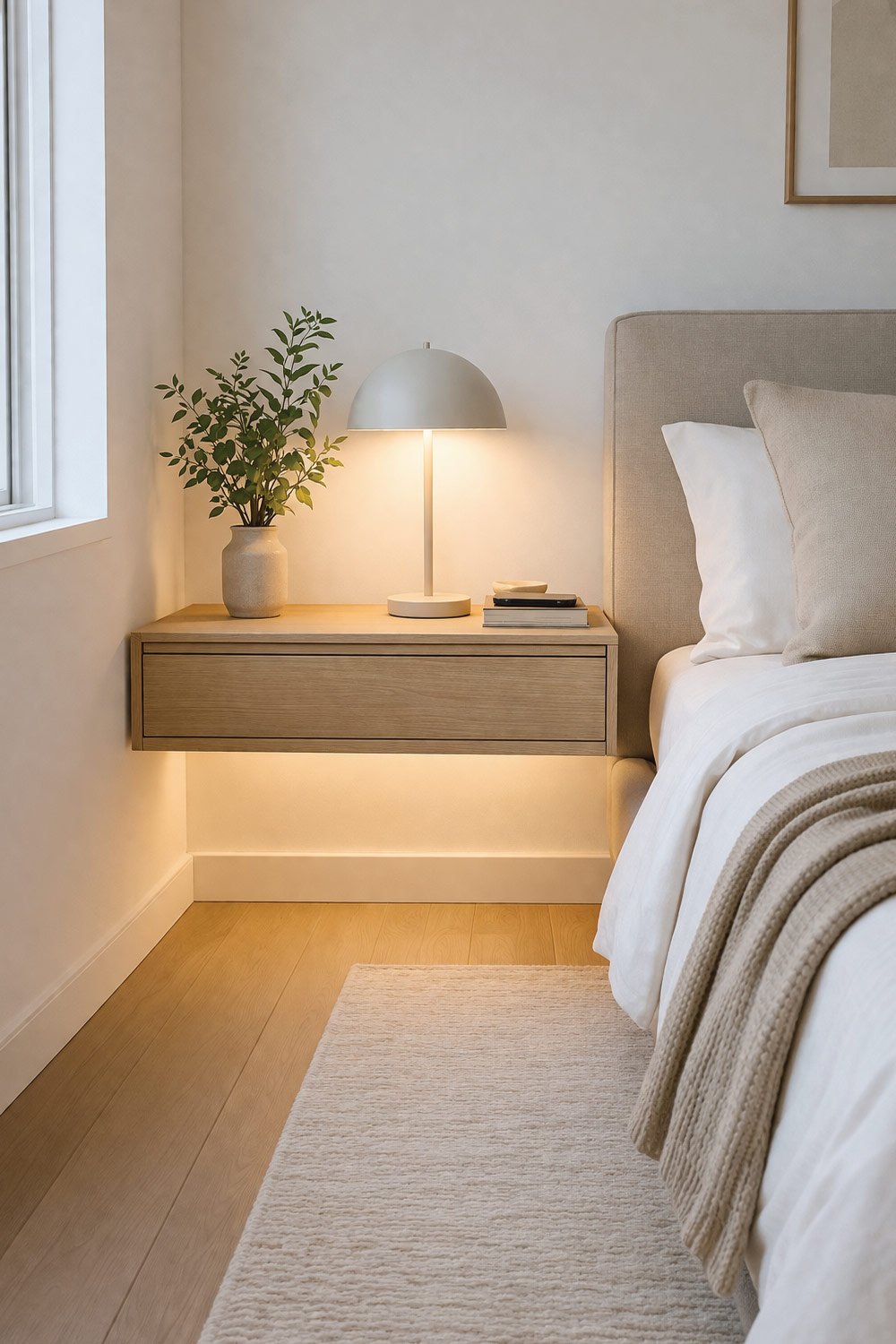
| Feature | Floating | Traditional |
|---|---|---|
| Floor space | Open | Crowded |
| Visual weight | Light | Heavy |
| Storage | Minimal | Larger |
7. Keep Bedding Simple
Simple bedding plays a major role in reducing visual clutter in a small bedroom. Solid colors and subtle textures create a calm, cohesive look that doesn’t overwhelm the space.
Heavy patterns, bold prints, or too many decorative pillows can make the bed feel bulky and chaotic. By limiting pillows and choosing lightweight fabrics like cotton or linen, the bed appears cleaner and more inviting.
A streamlined bedding setup allows the eye to rest, making the entire room feel more organized, open, and comfortable despite its limited size.
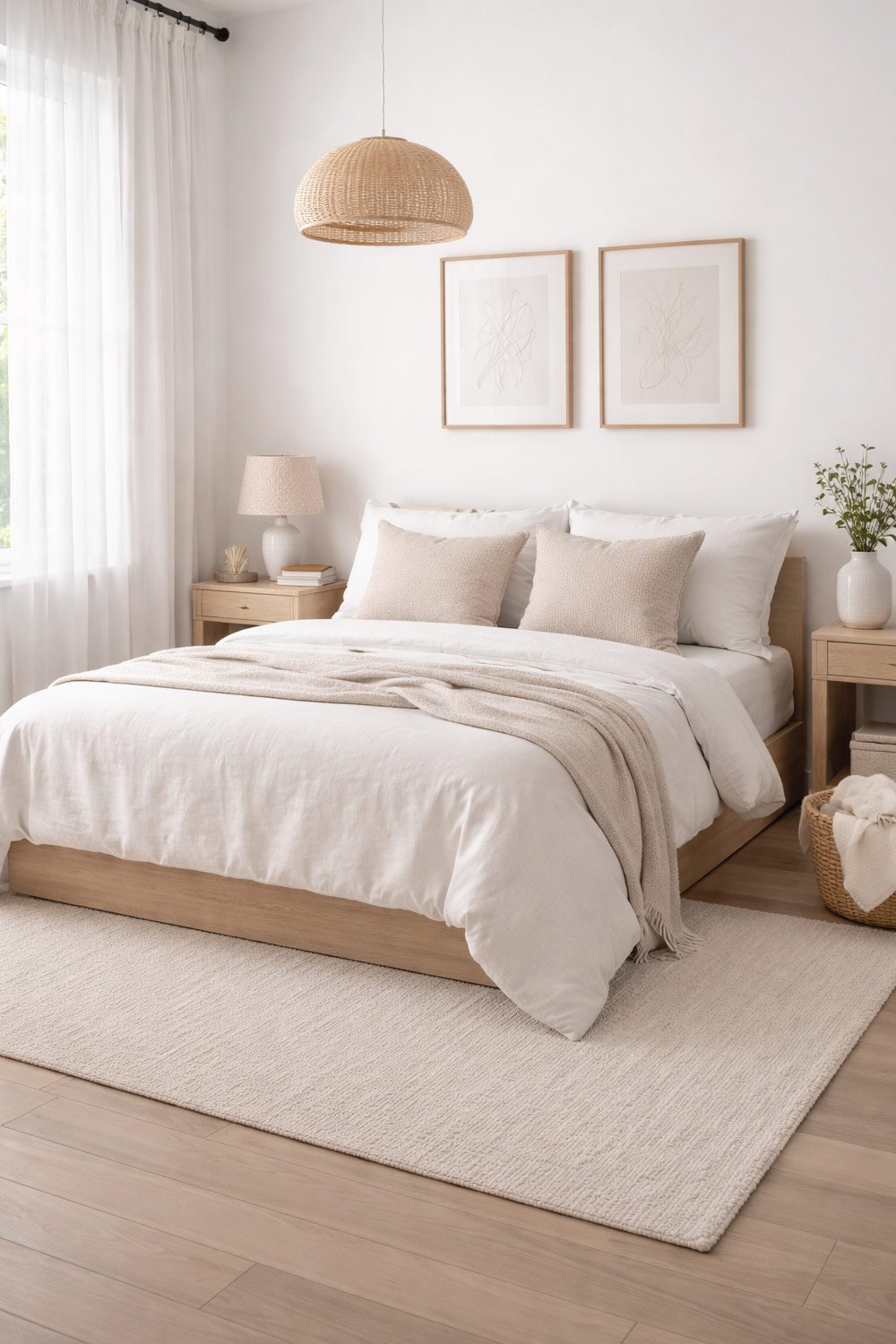
| Bedding Element | Best Choice | Reason |
|---|---|---|
| Comforter | Solid color | Clean look |
| Pillows | 2–4 max | Less clutter |
| Texture | Linen, cotton | Lightweight feel |
Also Read:
8. Use Under-Bed Storage Wisely
Under-bed storage is one of the most effective ways to maximize space without changing the room’s layout.
This often-overlooked area can store shoes, clothes, or extra bedding while keeping them neatly out of sight.
Using organized solutions like storage bins, rolling drawers, or vacuum-sealed bags prevents clutter from spilling into visible areas.
The key is to store items you don’t need daily, keeping access practical but minimal. When used thoughtfully, under-bed storage increases functionality while preserving a clean, spacious bedroom appearance.
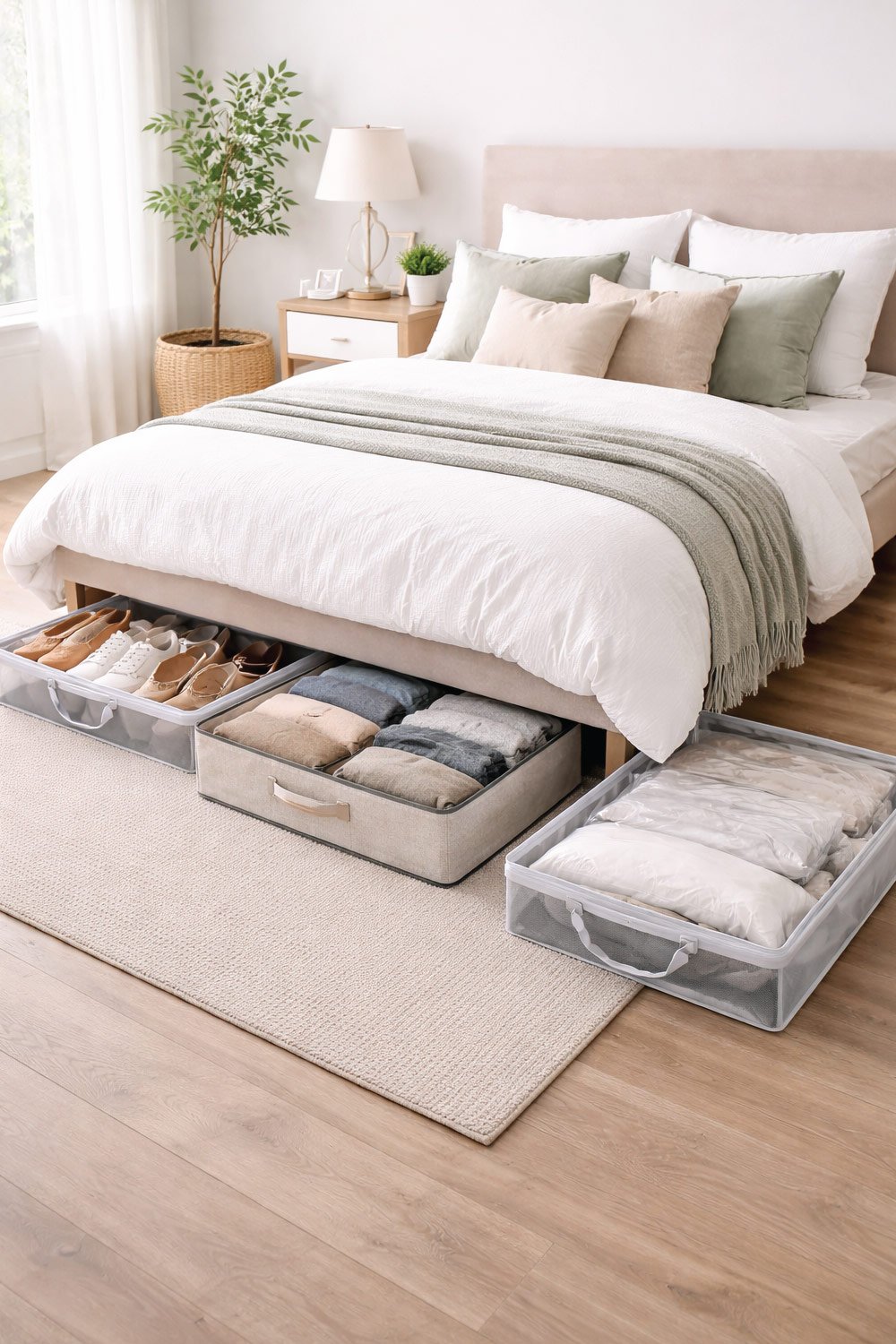
| Storage Type | Ideal Items | Accessibility |
|---|---|---|
| Storage bins | Shoes | Easy |
| Drawers | Clothes | Very easy |
| Vacuum bags | Bedding | Occasional |
9. Choose Furniture with Legs
Furniture with visible legs creates a sense of lightness that is especially valuable in small bedrooms. By allowing light to pass underneath, these pieces reduce visual heaviness and make the room feel more open and breathable.
Beds, dressers, and chairs with legs appear less bulky than solid, floor-hugging furniture. This design trick subtly increases the perception of space without reducing functionality.
Choosing furniture with legs also makes cleaning easier and contributes to a more modern, airy aesthetic that prevents the room from feeling cramped.
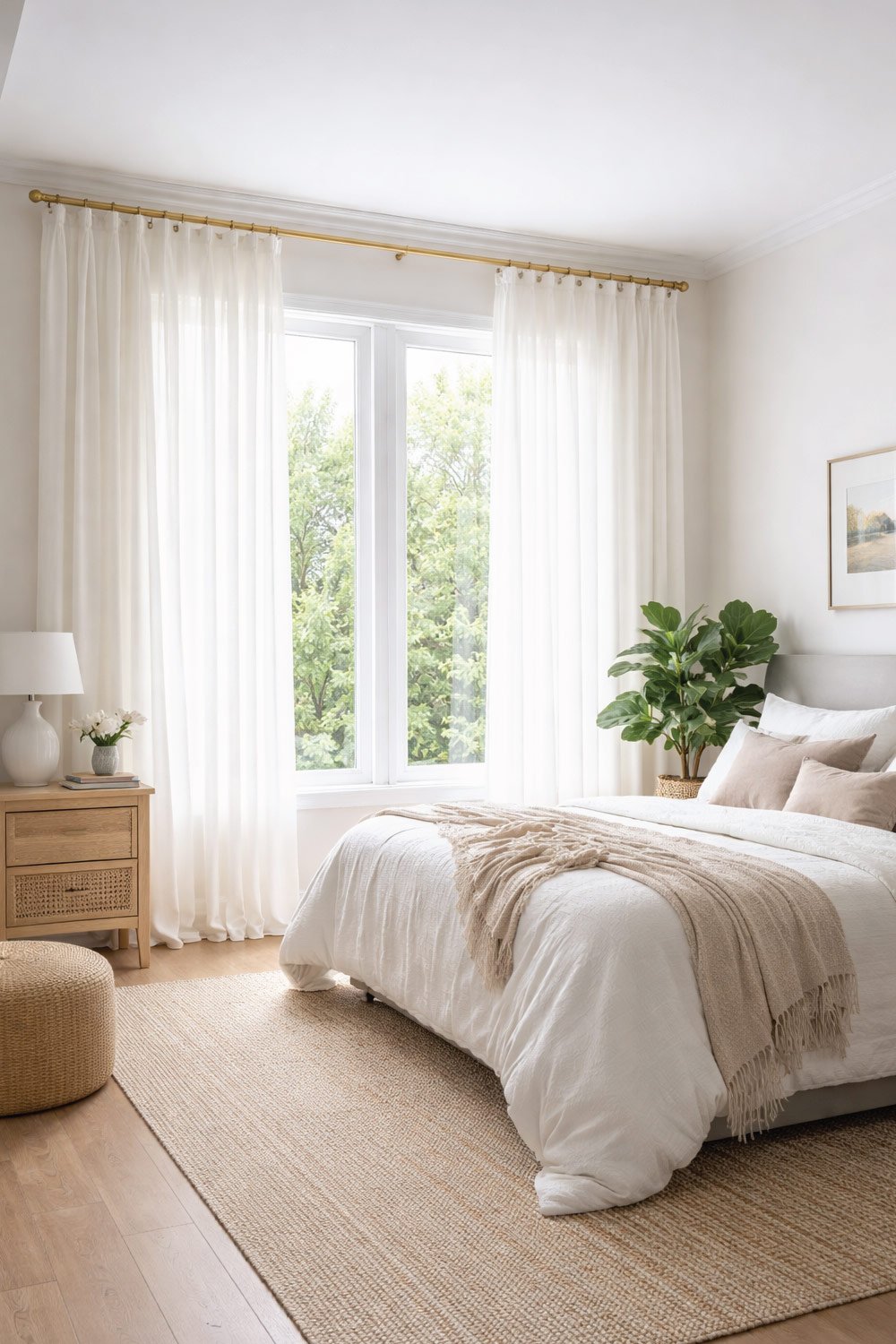
| Furniture | With Legs | Without Legs |
|---|---|---|
| Bed | Airy | Heavy |
| Dresser | Light look | Bulky |
| Chair | Spacious | Crowded |
Also Read:
10. Declutter Ruthlessly
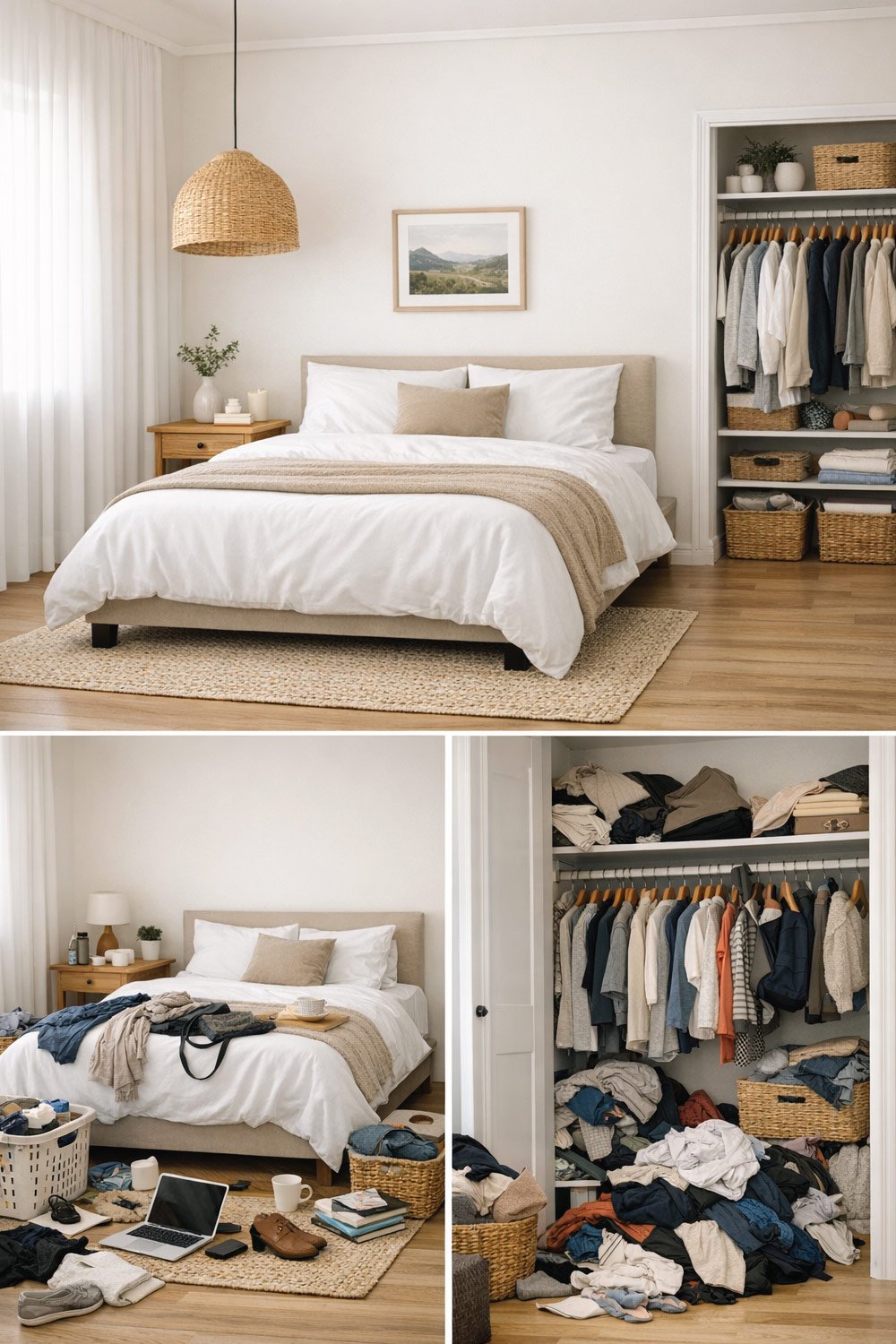
| Area | Keep | Remove |
|---|---|---|
| Closet | Regular wear | Unused clothes |
| Nightstand | Essentials | Random items |
| Floor | Nothing | Everything |
11. Use Sliding or Pocket Doors
Traditional hinged doors swing into a room, taking up valuable floor space that could be used for furniture or movement.
Sliding or pocket doors are a smart alternative for small bedrooms because they eliminate the swing radius entirely.
Sliding doors glide along a track, offering a modern, streamlined look, while pocket doors disappear into the wall, creating a clean and minimalist aesthetic.
Both options free up space around the doorway, allowing for more flexible furniture placement and contributing to a less cramped, more functional bedroom design without sacrificing style or accessibility.
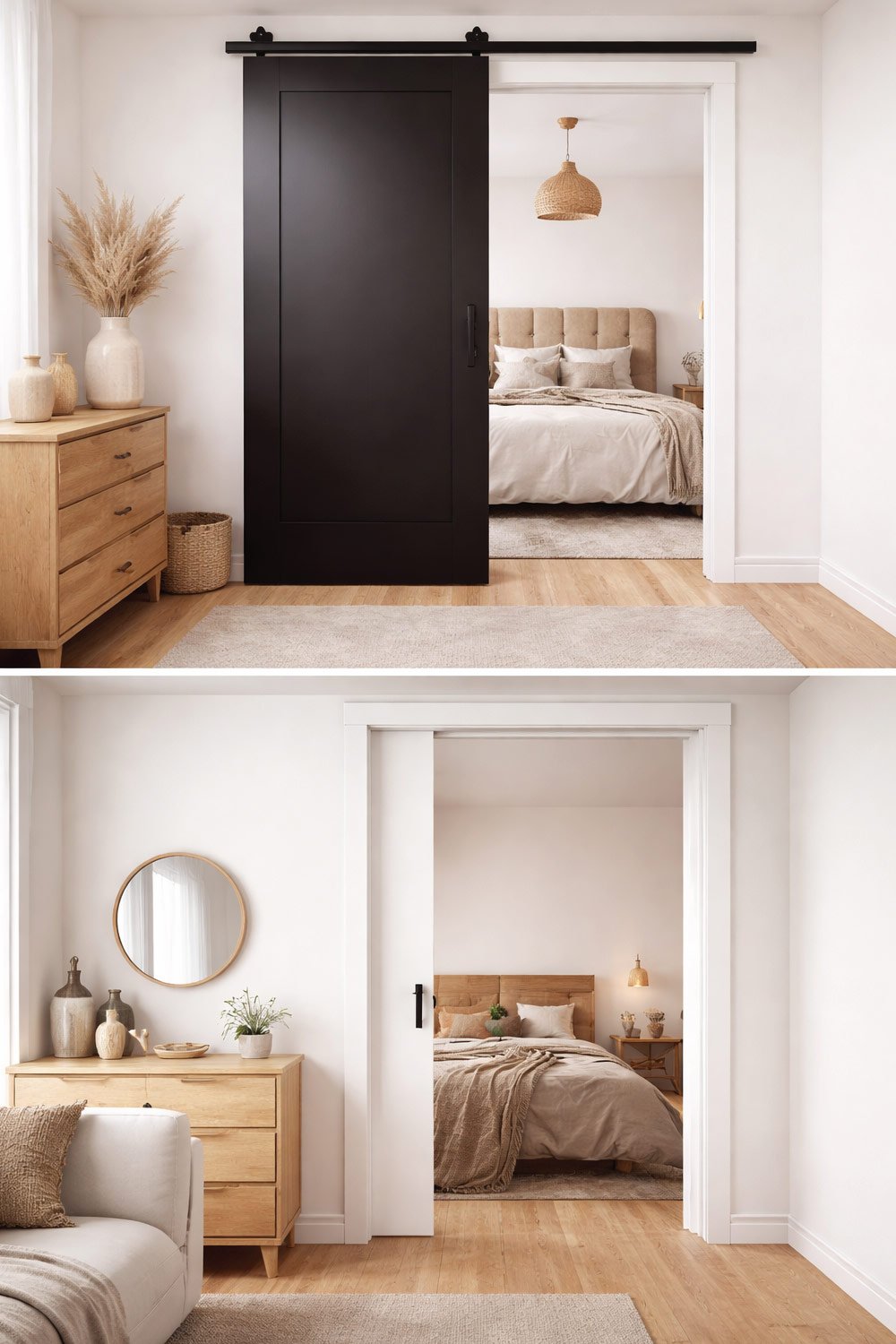
| Door Type | Space Use | Style |
|---|---|---|
| Sliding door | Minimal | Modern |
| Pocket door | Hidden | Clean |
| Hinged door | Large | Traditional |
Also Read:
12. Hang Curtains Higher Than the Window
Mounting curtains close to the ceiling is a subtle but highly effective trick for making a small bedroom appear taller.
When curtain rods are positioned higher than the window frame, the eye is drawn upward, creating the illusion of height and spaciousness.
Pairing this with floor-length curtains adds elegance and continuity, while lightweight, sheer fabrics keep the look airy and bright.
This technique not only enhances vertical perception but also makes the room feel more luxurious and open, proving that even small changes in curtain placement can significantly impact the overall sense of space.
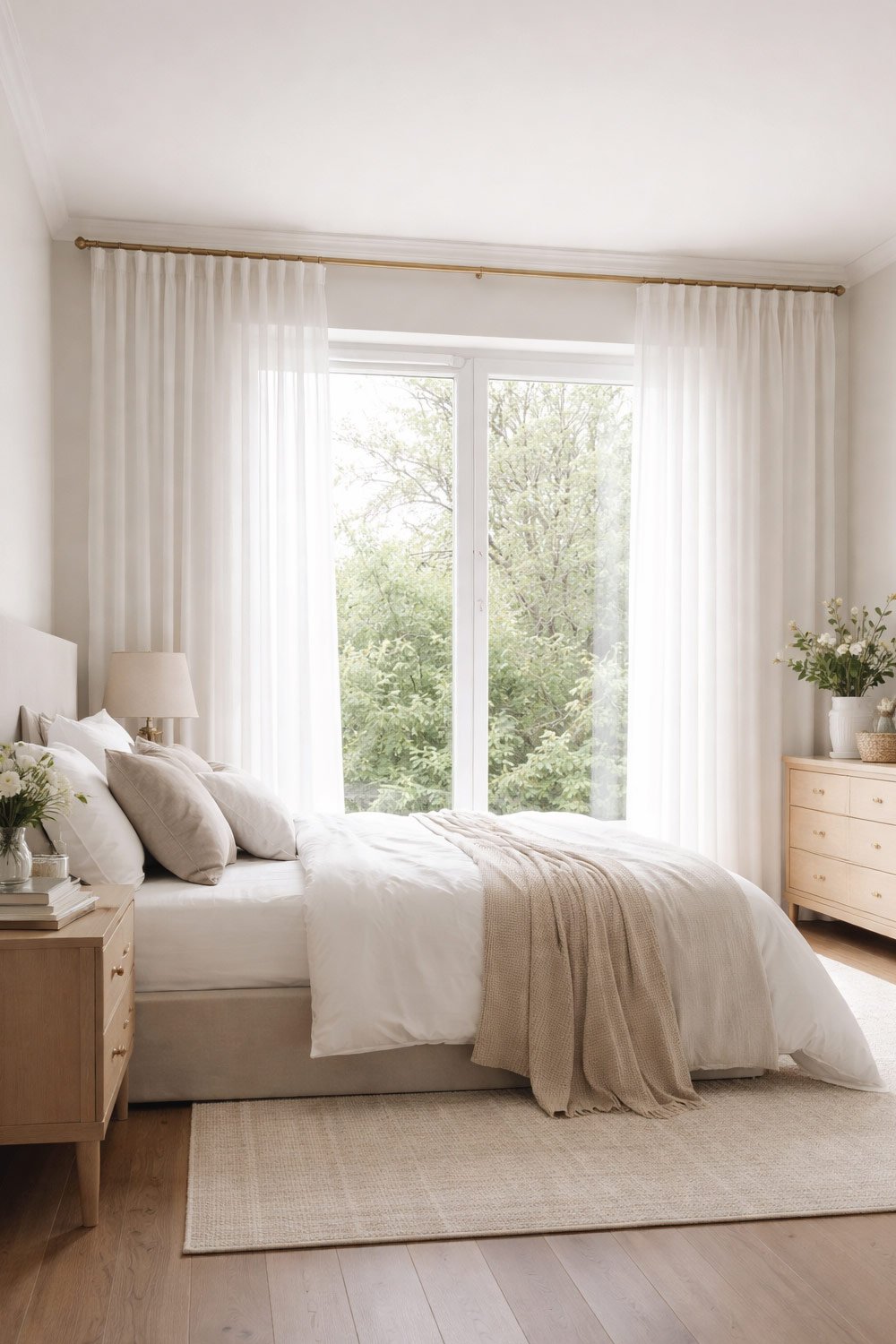
| Curtain Tip | Visual Effect |
|---|---|
| Ceiling-mounted rods | Taller room |
| Floor-length curtains | Elegant look |
| Light fabric | Airy feel |
13. Use a Loft Bed (If Ceiling Height Allows)
Loft beds are a clever solution for maximizing floor space in bedrooms with sufficient ceiling height.
By elevating the bed, the area underneath can serve multiple functions, such as a desk for work, a seating area for relaxation, or extra storage.
This vertical approach effectively doubles usable space without expanding the room’s footprint.
Loft beds are especially useful in compact bedrooms where every square foot counts, allowing for a functional, organized, and visually open environment.
They also add a fun, dynamic element to the design while maintaining practicality.
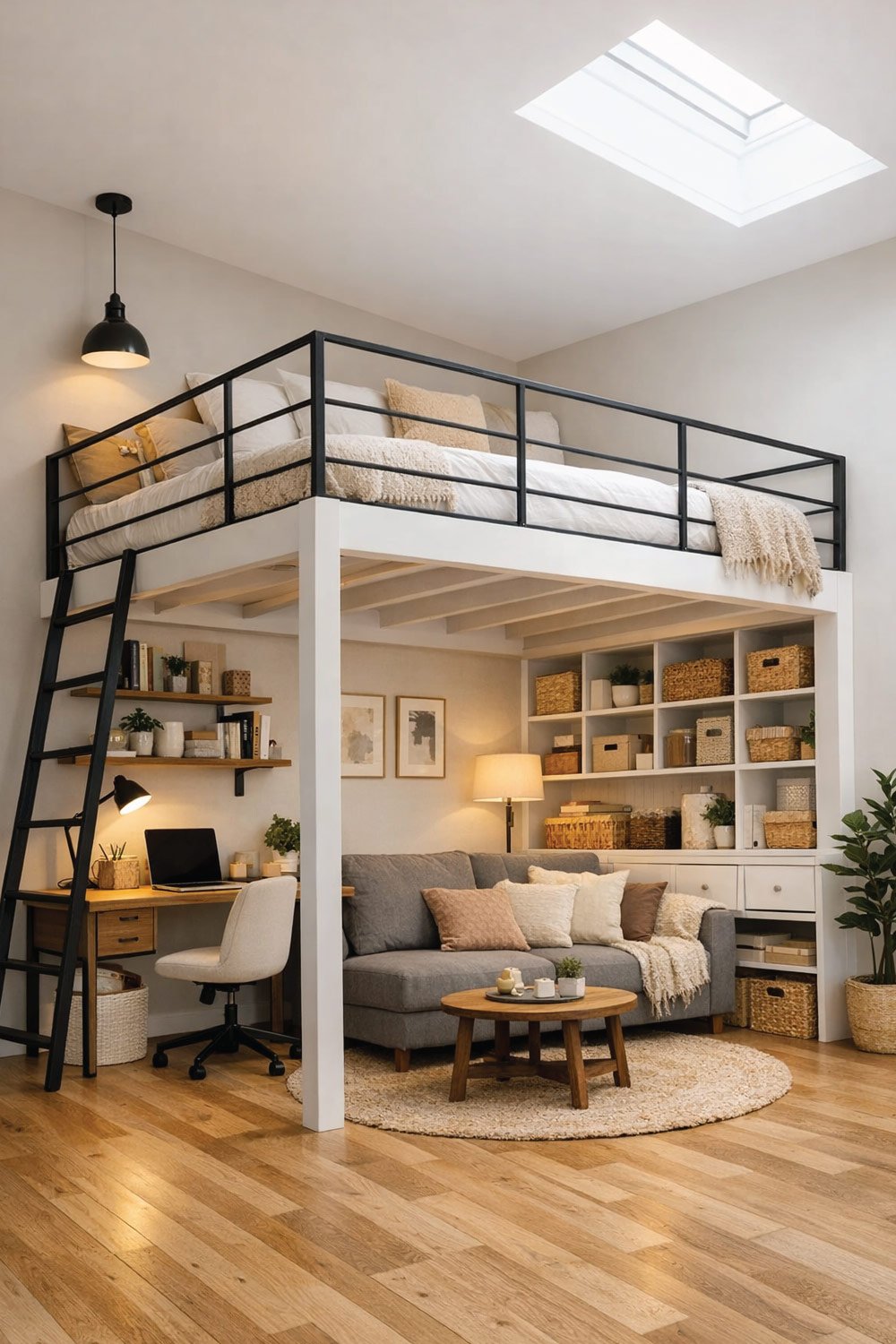
| Under-Loft Use | Benefit |
|---|---|
| Desk | Work zone |
| Sofa | Lounge space |
| Storage | Organization |
Also Read:
14. Stick to One Statement Piece
In small bedrooms, less is more when it comes to décor. Instead of filling the room with many small decorations, choosing a single statement piece creates focus and a sense of intentional design.
This could be a bold headboard, a large piece of artwork, or an area rug that anchors the space. A single focal point draws attention and adds personality without overwhelming the room.
This strategy keeps the bedroom visually organized, stylish, and airy, proving that carefully selected elements can make a stronger impact than multiple competing items.
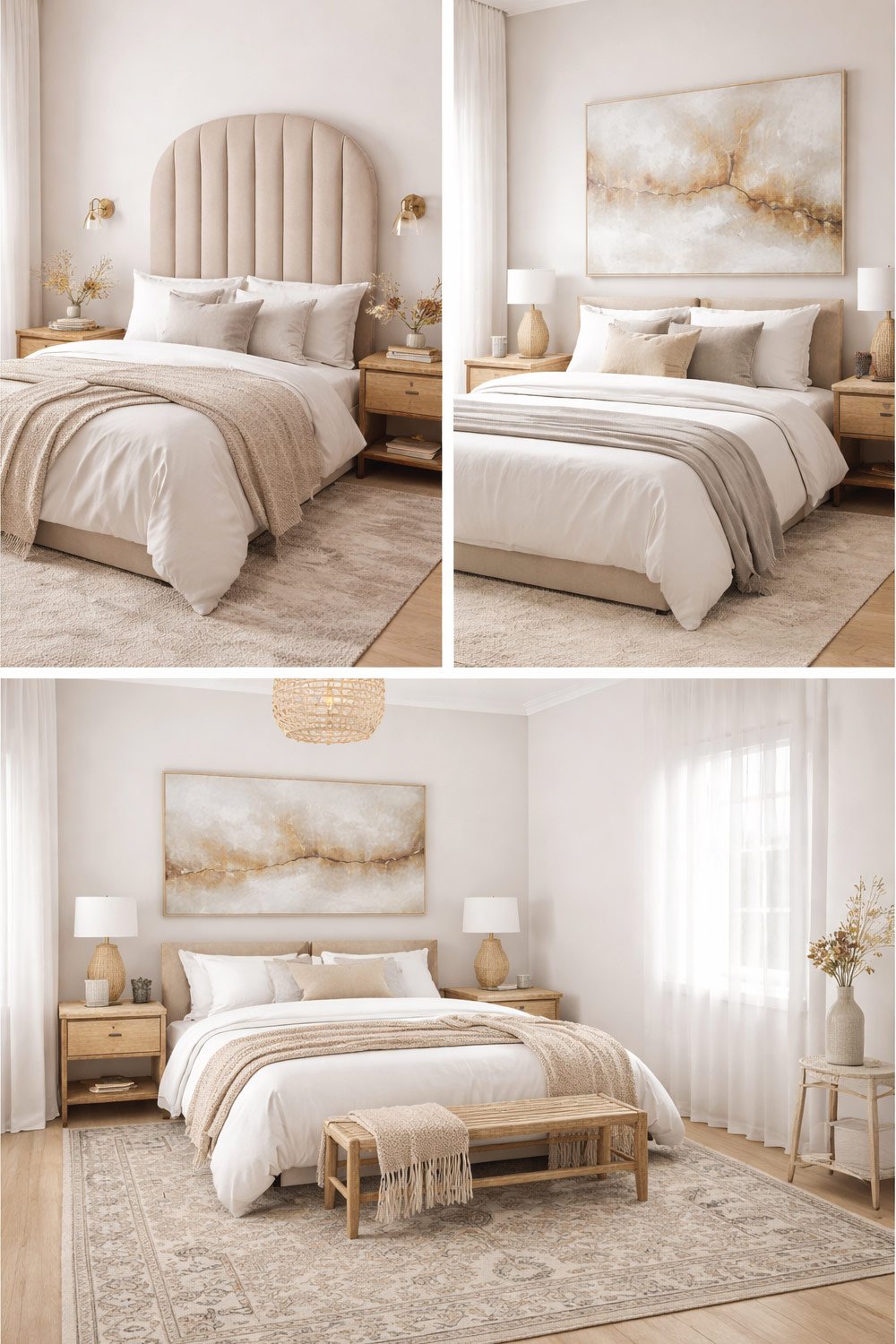
| Statement Piece | Impact |
|---|---|
| Bold headboard | Anchors room |
| Large art | Adds personality |
| Area rug | Defines space |
15. Use Foldable or Stackable Furniture
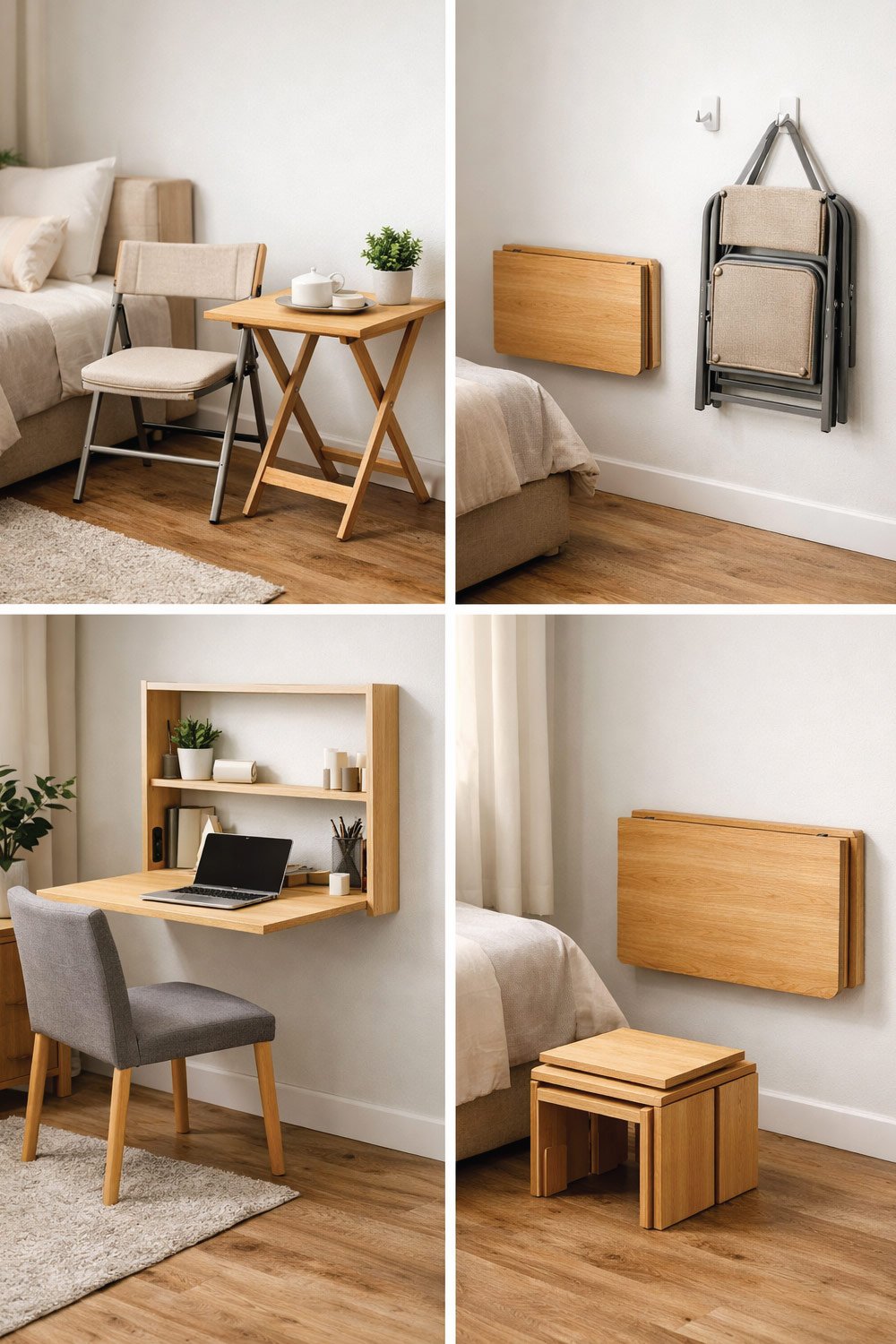
| Furniture | When Used | When Stored |
|---|---|---|
| Folding chair | Guests | Wall hook |
| Fold-down desk | Work hours | Flat |
| Nesting tables | Flexible | Compact |
Also Read:
16. Organize Inside the Closet
Closets are often the key to keeping a small bedroom clutter-free. A well-organized closet prevents overflow from spilling into the room, maintaining a clean, open feel.
Tools like shelf dividers help create neat stacks, hanging organizers store shoes and accessories efficiently, and double rods maximize vertical hanging space.
By using every inch strategically, your closet becomes a highly functional storage zone that reduces visual clutter.
Keeping your belongings orderly inside the closet ensures that the bedroom itself remains spacious, serene, and easy to maintain, making the overall design feel intentional rather than cramped.
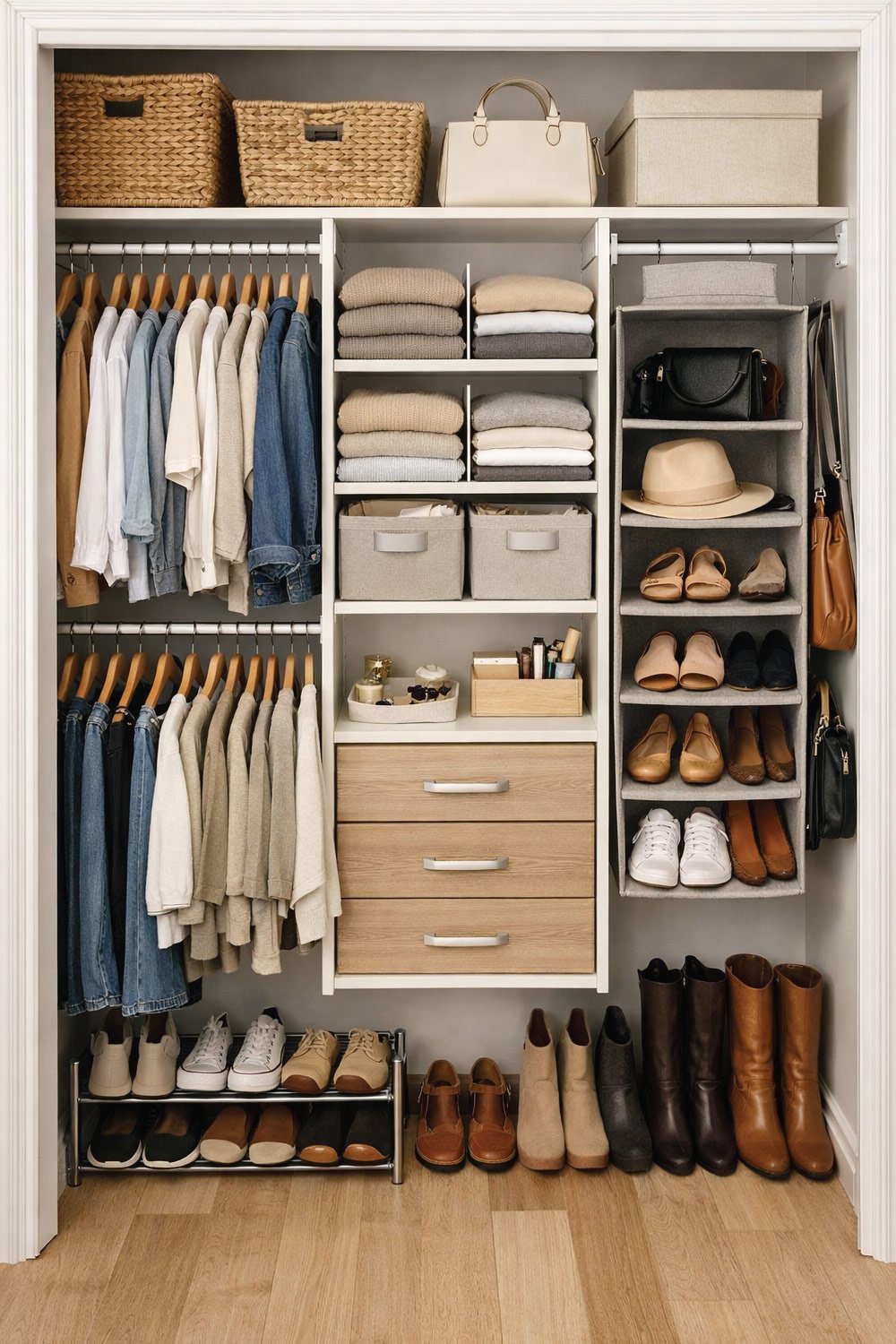
| Closet Tool | Purpose |
|---|---|
| Shelf dividers | Neat stacks |
| Hanging organizers | Shoes, bags |
| Double rods | More hanging space |
17. Add Plants (But Keep Them Minimal)
Introducing plants into a small bedroom can bring vibrancy and life without overwhelming the space, as long as you keep them minimal.
Hanging plants utilize vertical space and free up surfaces, small potted plants can sit on shelves for subtle greenery, and tall slim plants work well in corners to add height and texture.
Plants improve air quality and introduce natural elements that make the room feel more inviting.
By choosing the right size and placement, greenery becomes a refreshing accent that enhances the bedroom’s aesthetic while maintaining its openness.
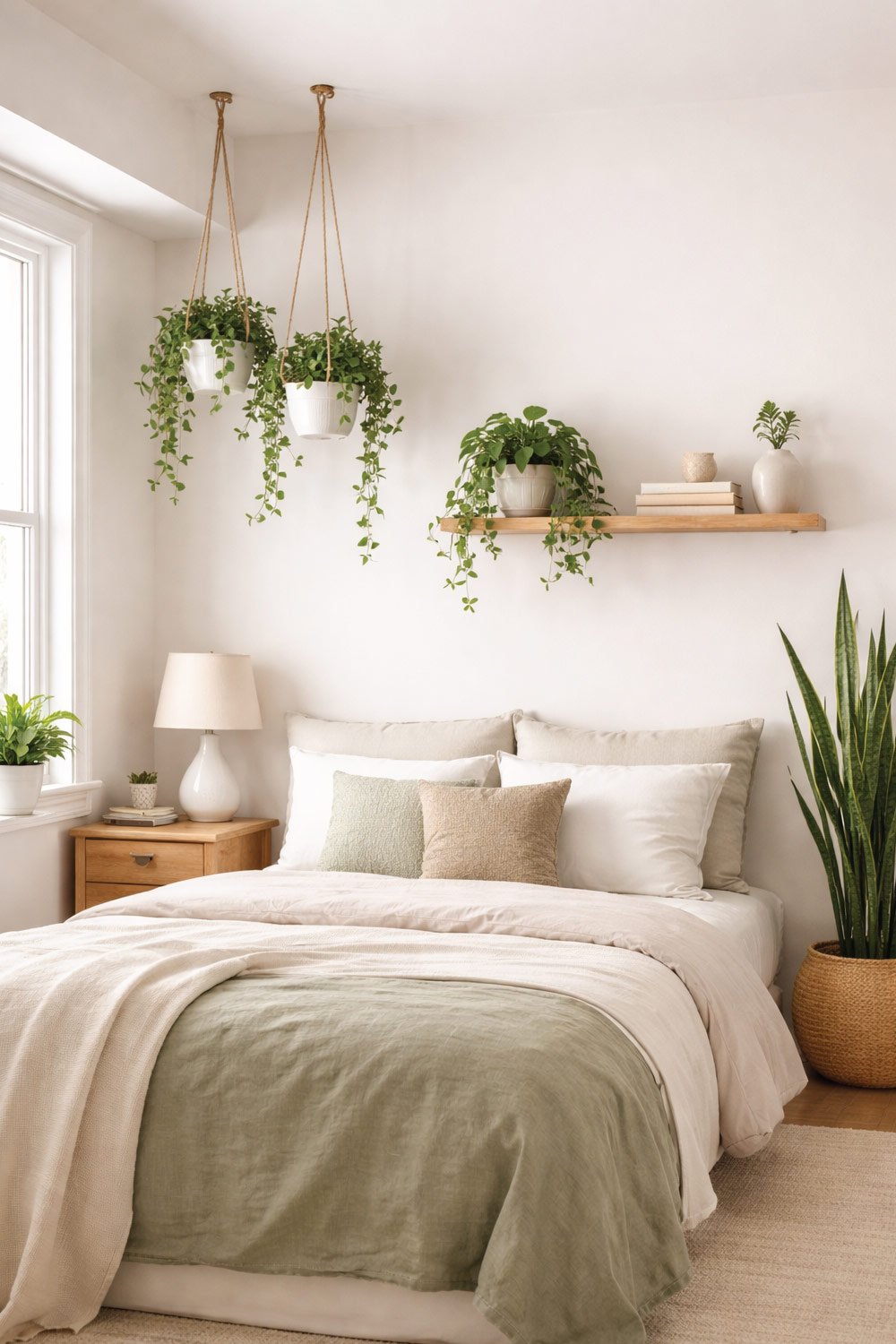
| Plant Type | Best Spot |
|---|---|
| Hanging plant | Ceiling |
| Small potted plant | Shelf |
| Tall slim plant | Corner |
Also Read:
20 Budget Bedroom DIY Ideas to Transform Your Space Affordably
18. Use Rugs to Define Space
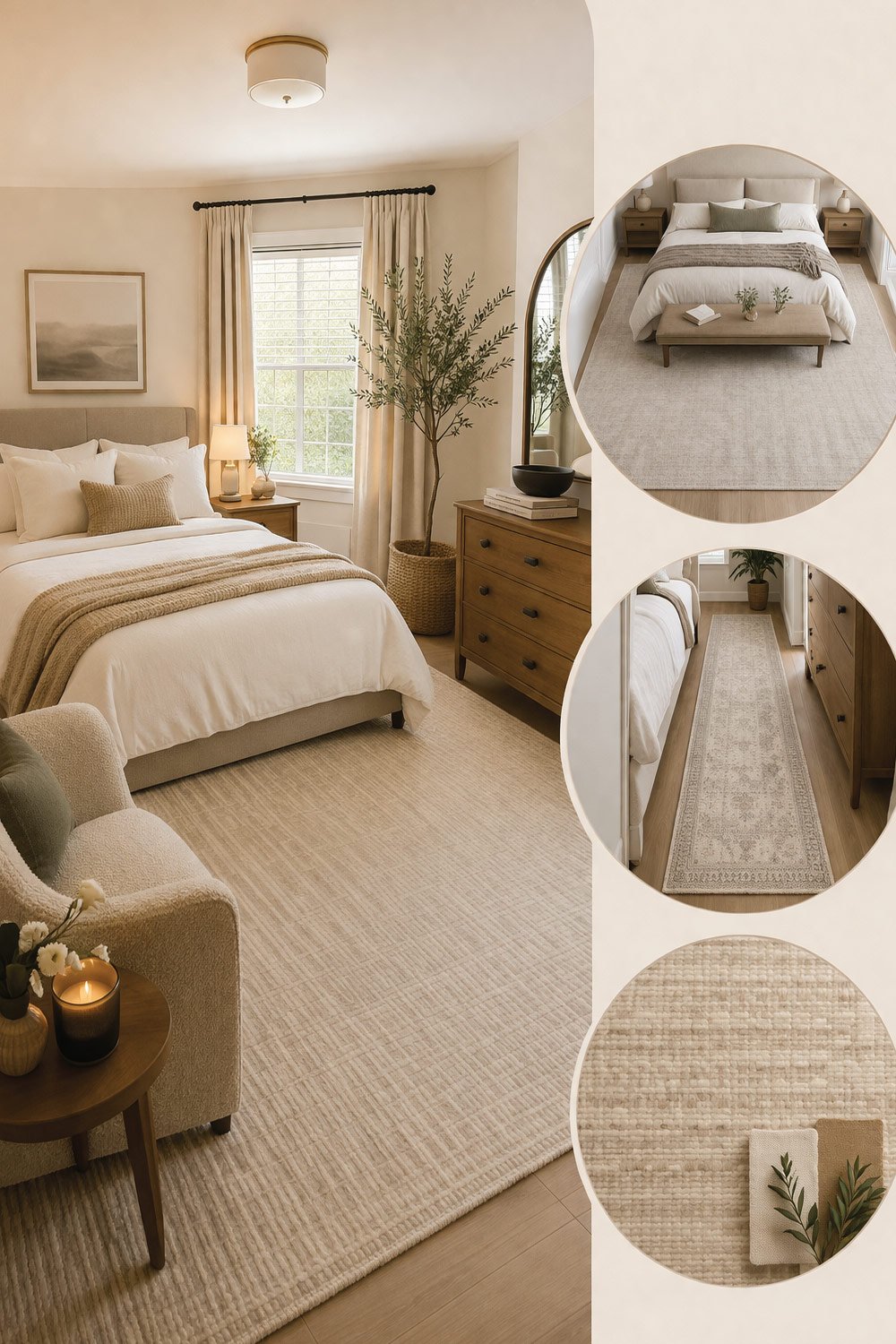
| Rug Size | Effect |
|---|---|
| Large rug | Makes room feel bigger |
| Runner | Elongates space |
| Neutral tone | Keeps balance |
Final Tips for Small Bedroom Success
To wrap it all up, here are some quick, practical tips you can apply immediately:
Measure your room before buying furniture
Prioritize storage over decoration
Stick to a cohesive color palette
Keep surfaces mostly clear
Invest in quality over quantity
Rotate décor seasonally to avoid clutter
Always think vertically
Edit your space regularly
Conclusion
A small bedroom doesn’t have to feel cramped or chaotic. With smart furniture choices, thoughtful layouts, and intentional design, you can turn even the smallest space into a comfortable, stylish retreat. Start with one or two hacks, build from there, and watch your bedroom transform—without knocking down a single wall.